Some people are curious about the equipment I use. Here are some simple answers.
Shelter
I use a tent. The new materials available are amazing. This one is made with a material called cuben fiber (although it will be branded as “Dyneema” in the future). The material was originally used in sails for competitive sailing. It is extremely strong, lightweight, water-repellent, and expensive. The specific product I have is a Zpacks Altraplex. I liked it because it is generally built for taller folks. It uses a hiking pole as a key support and has a large screened entry. In summary, it is roomy, weighs less than 18 ounces, is designed to manage condensation, and has a nice combination of slick backpacking features. The only downside is that it costs more than many elective surgeries.
I have used a tarp in the past. It is the ultimate lightweight shelter. However, between the bugs and mice, I just couldn’t bring myself to use a tarp on this trip. Of course, my hands down best choice is cowboy camping (just sleeping under the stars with no shelter) which I will hope to do as often as conditions permit.

I use an inflatable air mattress and a “mummy” style sleeping bag. The bag is filled with water proofed goose down and purportedly rated to be comfortable down to 15 degrees farenheit. Did you know there are sleeping bag temperature ratings? I bet 90% of the people who share a bed with another person know that undoubtedly the rating must be wrong. Would you and your spouse agree on a temperature where the bed coverings are just right? Aside from eye-of-the-beholder issues, who temperature rates sleeping bags professionally? I imagine a meat locker where the tester is inside in a sleeping bag and his or her colleagues are on the outside adjusting the temperature setting. Think of the level of trust the tester must have in the folks on the outside. I would imagine the folks on the outside must not like pranks nor be easily distracted.
Returning to the topic, my sleeping bag is long enough to suit me and wide enough in the shoulders to avoid claustrophobic feelings. The name mummy describes the design that has an incorporated hood that can be drawn tight or left loose. The bags are designed to contour your body. There are two drawbacks to mummy bags. The first drawback relates only to side sleepers like me. You can try to be one with the bag and end up on top of the side zipper half the time; or you turn within the bag and end up with your face mashed half in the side of the hood and one ear poking out of the opening. A second peculiarity of mummy bags is that your ears are muffled inside the bag. If you have an active imagination about night sounds, this can lead to a lot of hood-on / hood-off moments throughout the night as you try to discern between the sound of wind versus an impending wildlife encounter.
A growing trend among backpackers is to use a down quilt. The rationale is that a quilt does not have a zipper or a hood. Therefore it reduces weight and avoids the potential equipment failure associated with a busted zipper. Moreover, it can be easily shaped to cover and uncover as needed. One simply wears a hat or cap at night to keep the head warm. My bag is still relatively new, but when it fades I might try a quilt. As long as there aren’t bugs crawling around, it makes a lot of sense.
Cooking
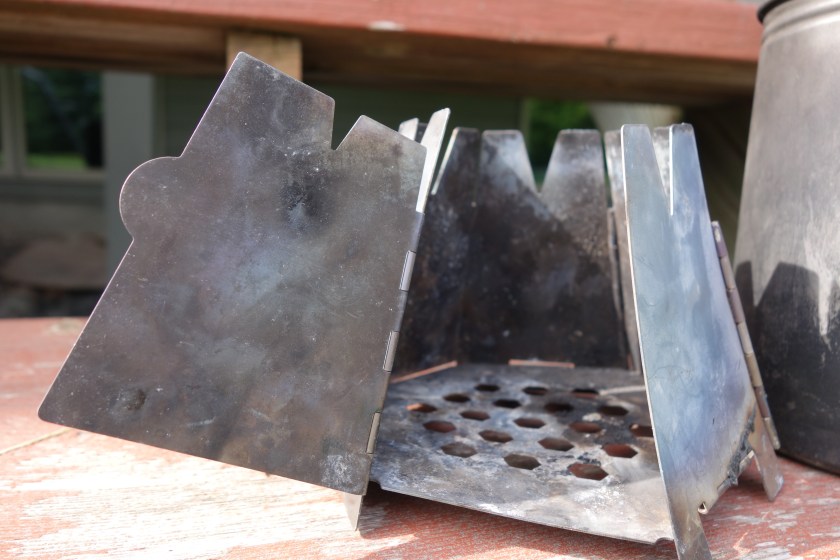
That mental image of a cast iron dutch oven sputtering over an open fire pit is dated. Due to fire dangers, scarcity of wood on popular trails, a move to “Leave No Trace” principles, and, frankly, the actions of idiots, open fires are rare. The majority of backpackers use some type of stove to cook. There are three main types of fuels. The most common two are alcohol or pressurized gas in a canister. A third type is a solid fuel in the form of “esbit” tablets. More rare is a miniature wood burning stove where small sticks are the fuel. Obviously, if your meal plans revolve around heat, then fuel is your Achilles heel. Gas and tablet people need to bring enough but avoid carrying too much. Likewise, wood stoves require combustible wood (and an absence of burn restrictions during fire season). The reward for the successful stove strategy is a warm meal, a hot beverage, and a last-resort method to sterilizing water.
Well, you might not believe it, but there is a fairly passionate split in the backpacking world. Many “ultralight” backpackers have switched to “stoveless” cooking. This involves bringing a watertight container (usually plastic) and simply adding filtered water to dry ingredients and let it hydrate over several hours. For example, around noon one would finish the lunch they had prepared that morning and then add water to the dinner ingredients and put this in their pack so that everything is ready to eat in the evening. Proponents argue that they do not need to bring a stove or fuel and thus save weight. Detractors are limited to those few people who have an imagination and can visualize mushy food at the ambient air temperature.


 backpacking over the hill