A long distance hike requires planning. At a minimum, there’s the path and mileage and opportunities to get food and water. For the most popular trails, there has evolved a basic set of GPS locations, topographical maps, and descriptions of communities along the way that might provide food, shelter, resupply packages, or other services.
You first need to decide on a direction. The Triple Crown of U.S. trails (Appalachian, Continental, and Pacific Trails) have historically been followed from south to north. The arguments for this approach include following warmer weather (snow melt) north, starting and finishing earlier, and tradition. Going in a northbound direction is called a “NoBo.” The problem with this approach is that in the case of western trails (PCT and CDT) you are likely to experience two snow challenges in mountains. The first is early on when entering the Sierras or San Juan’s. Remaining winter snow can be a challenge. And if you are not careful towards the northern end, early fall snow in the Cascades or Rockies can be a risk.
A southbound (“SoBo”) trip has some advantages. Satellite imagery and snow sensors tell exactly what starting conditions will be like relative to snowpack. Additionally it is less crowded. The biggest negative is the challenge of getting through the southern end of mountain ranges before winter snows begin.
I’m going SoBo on this trip. I have estimated hiking speeds and developed a resupply plan. One goal will be to eat more. On my CDT SoBo, I lost about 50 pounds.
In 2016 I was able to convert my body fat to facial hair.
I was never good at good-byes and keeping in touch. As a result, I’ve lost some good friends and probably lowered the quality of my life. It also explains why it should not be a surprise I stopped writing this blog the day I finished the Continental Divide Trail (CDT).
Very soon I will take another backpacking trip. To bridge the gap between one trail ending and another beginning I wanted to provide a brief reflection on the CDT.
I ended up walking about 2,700 miles. It took me 4 ½ months. I lost 50 pounds, 49 of which I really needed to lose. I swear I lost about a half inch of height. I grew a beard, lost some hair, acquired two scars I still have, and my right pinky knuckle will always be smashed and crooked. It took me about 6 months to regain complete touch in my fingertips. Clearly, this was a great trip.
238 lbs of optimistic ignorance
188 lbs of happy experience
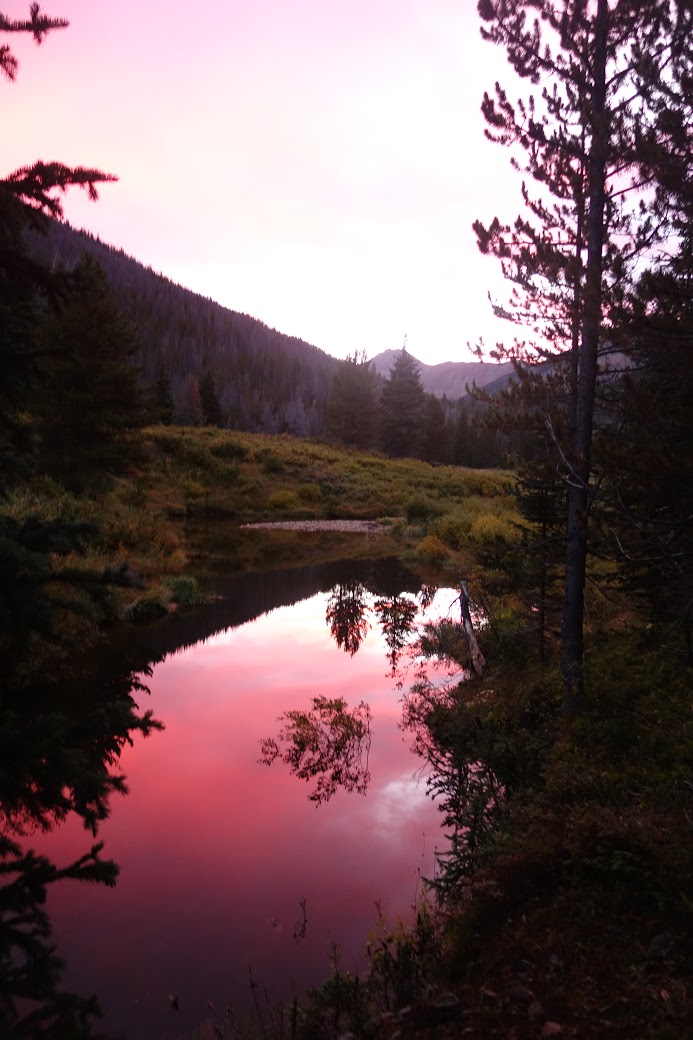
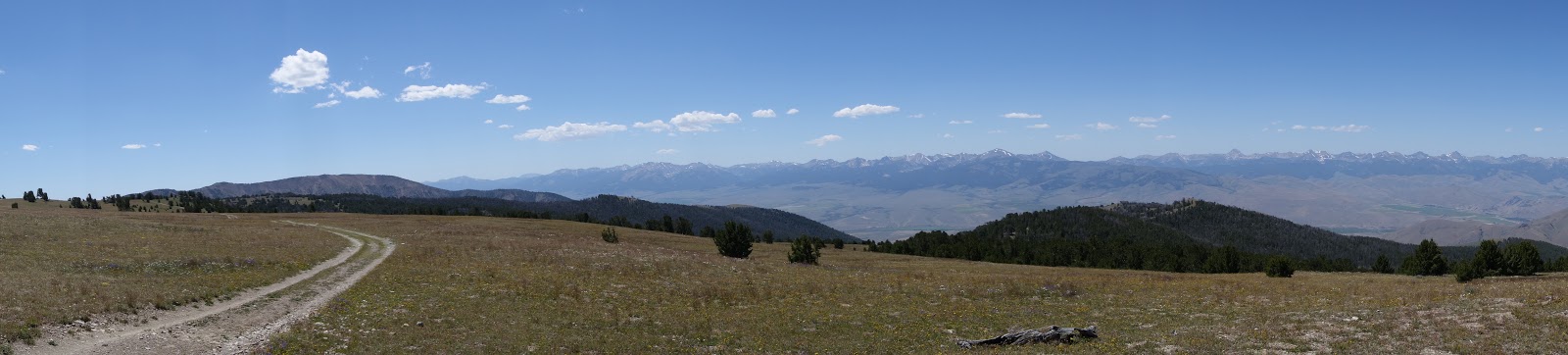
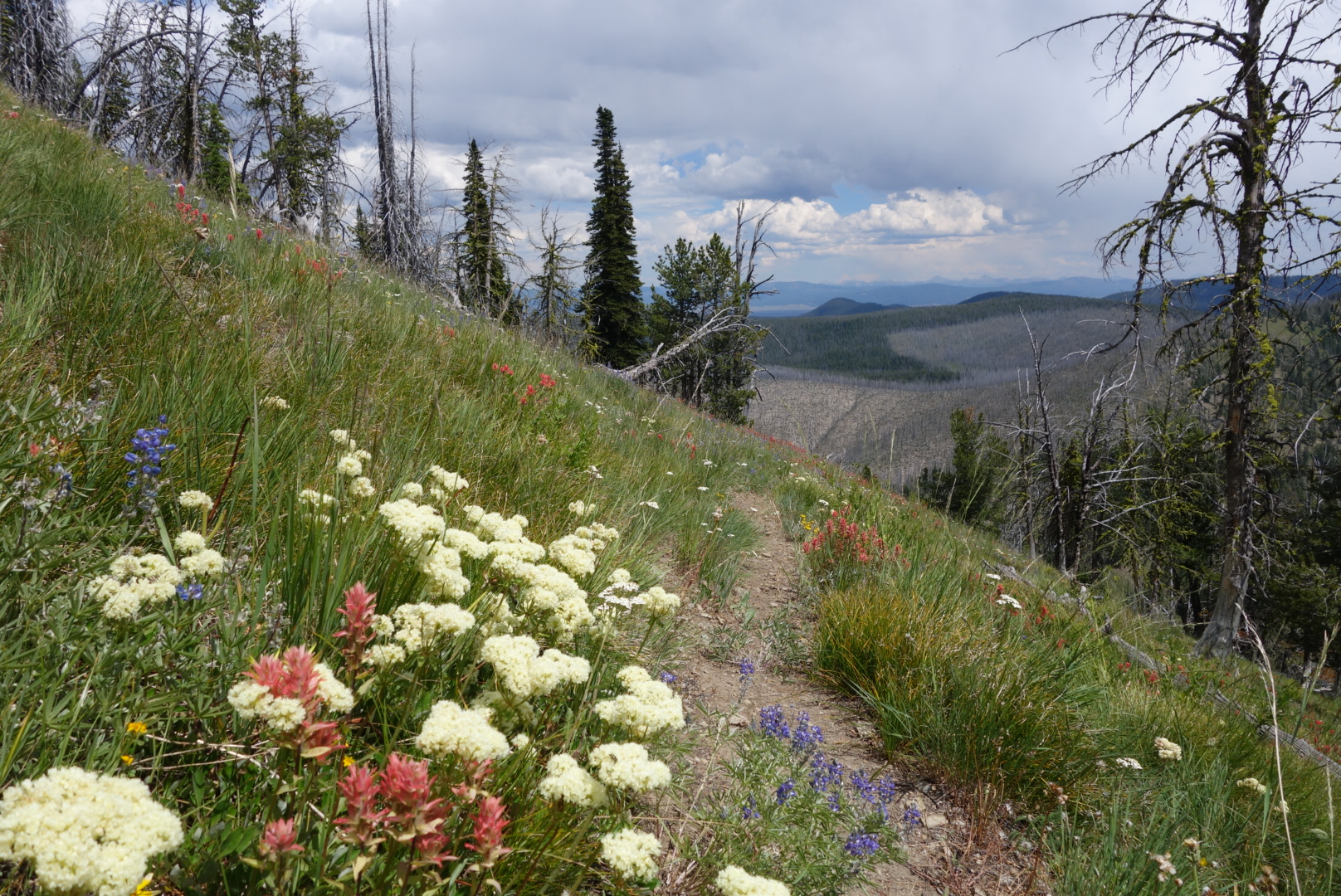
In spite of that list of physical things, I still have flashbacks. There is no specific trigger, but sometimes an image will just pop up in my mind. It is usually a view from up high or a beautiful sunset or a hell of a storm. But it is vivid and real and feels like a micro-vacation. I’m not sure how long these flashbacks will continue. I hope forever.
This slideshow requires JavaScript.
This slideshow requires JavaScript.
The CDT is a tough trail. In the hiking community the catch phrase associated with the trail is “embrace the brutality”. That’s a bit of hyperbole. I think it comes from people who have had the luxury of following a well-marked, established trail with trail signage every 200 feet. The CDT is like a youngster, still maturing and filling out and finding its way.
I am so glad I went southbound. Once the trail was clear enough to start south from the border with Canada, my only specific weather risk was to get through Colorado before heavy snows might force me off. Northbounders face two snow risks: lingering snow in southern Colorado and early snow in Glacier National Park. Plus, the thunderstorm risks in Colorado challenge northbounders. Lastly, Montana burns every August.
Surprisingly, the people I met were an incredible piece of the trip. Almost all other backpackers were friendly and helpful. Strangers in towns or drivers picking up hitch hikers were generally curious, helpful, and engendered in me a sense of pay-it-forward. I know there were a few jerks along the way and there is this annoying sub-culture in backpacking to be fast or to have done a lot of miles. But I must work hard to pull those memories forward.
Lucky Strike, Curtis, and Cristiana
Crunchmaster, Grizzly, Snakebite, and Lucky
Lucky Strike, Curtis, and Cristiana
Crunchmaster, Grizzly, Snakebite, and Lucky
What about the animals? I still get goose bumps when I recall startling bull elk with huge antlers and watching them crash through the forest. Moose, marmots, mice, mountain goats. Cattle herds that would either stampede away or, sometimes, give the star treatment and follow like a pack of groupies. Bears. If you read the blog, you know I had an unpleasant situation with a black bear and her cubs outside Leadore, Idaho. I still remember that. I replay what I should’ve done different and what I did right. I have no desire to be close to a bear again. I don’t hate them, but I think they are too unpredictable to be near. Still, I am very grateful I was able to see so many animals in their natural habitat.
I learned a few lessons I wanted to jot down so I don’t forget them:
Do not roll-the-dice to get through one more pass during a lightning storm.
Down mittens are excellent around the house, but not so much outdoors.
My go-to medical technology is duct tape.
There is no prize money for finishing the trail the fastest. I am not the fastest. Or fast.
Do not hike with somebody who is carrying emotional baggage, it will weigh you down.
Always let the tallest hiker go first in the morning, they will clear all the spider webs.
It felt good to be cleaned up. I was all set and went to the restaurant to get a breakfast burrito to go. Nancy made a delicious one and I went over to the highway to hitch.
Two and a half hours later, I finally got a ride. I am doomed for hitchiking. Humans are very good at quickly asessing situations and categorizing. When they see a middle aged man with a white beard, the immediate thought: at this age, why cant he get his own transportation? Must be homeless or broke. Or on parole.
The guy who eventually gave me a ride was on vacation, trying to catch cutthroat trout in seldom fished streams. Small world: he had been in commercial real estate and was familiar with the company I worked for in Houston.
I started hiking around 10. It was mostly thick, young trees. I noticed something brown and large ahead on my right. It was moving towards the trail. I froze. An elk or moose. I slowly reached for my camera. It was a bull elk. He heard me unsnap my camera case. We both stood still. Eventually, he continued on toward the trail. I was able to start the movie function on my camera, but it wasn’t zoomed in enough. He did poke through the trees, took about 2 seconds to recognize me, and bolted.
The rest of the day was spent feeding the mosquitos and flies. Poor things.
I ended up doing about 18 miles and managed to end up camping at a ridge line which meant a nice breeze. One other through hiker came through and camped but I didn’t catch his name.
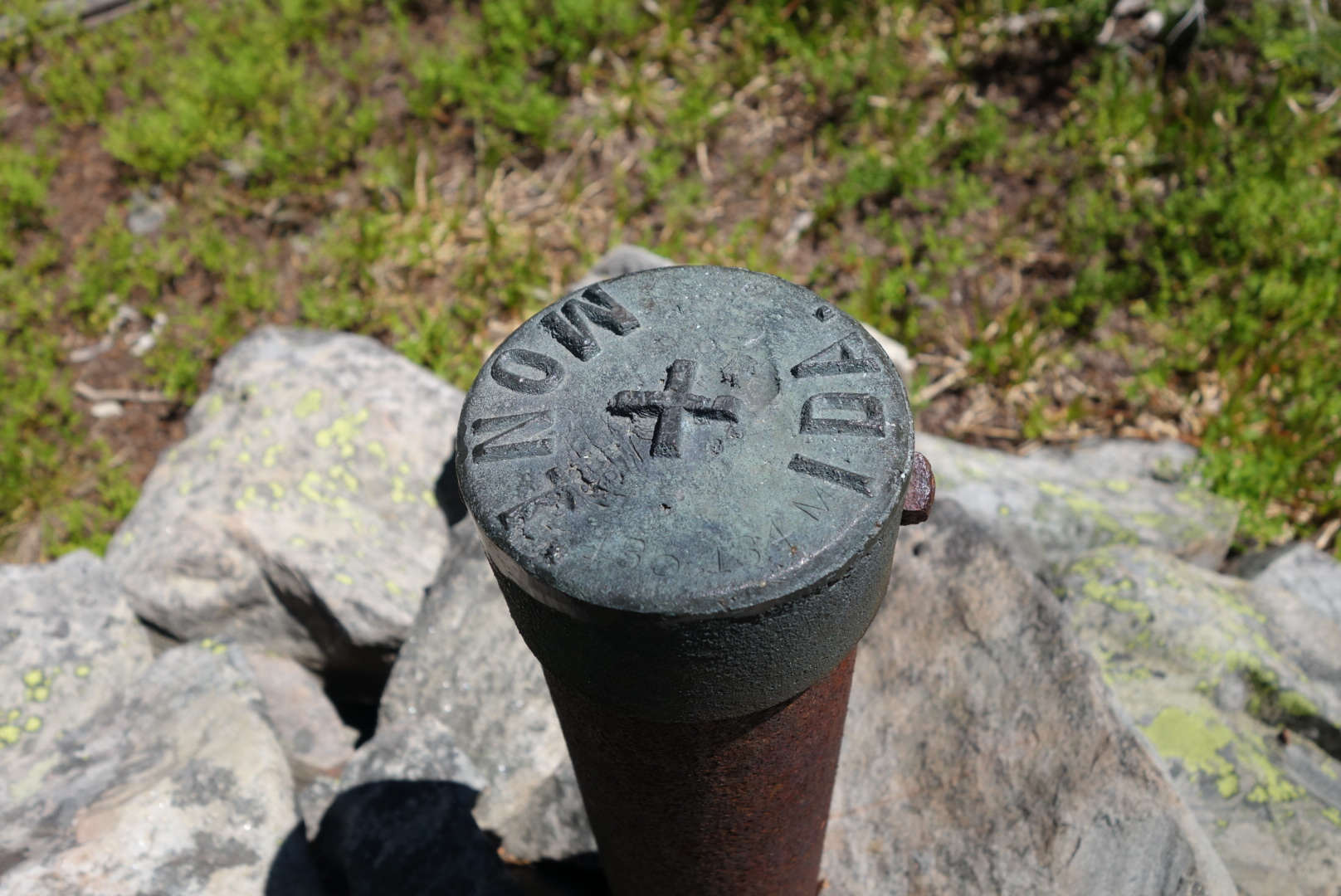
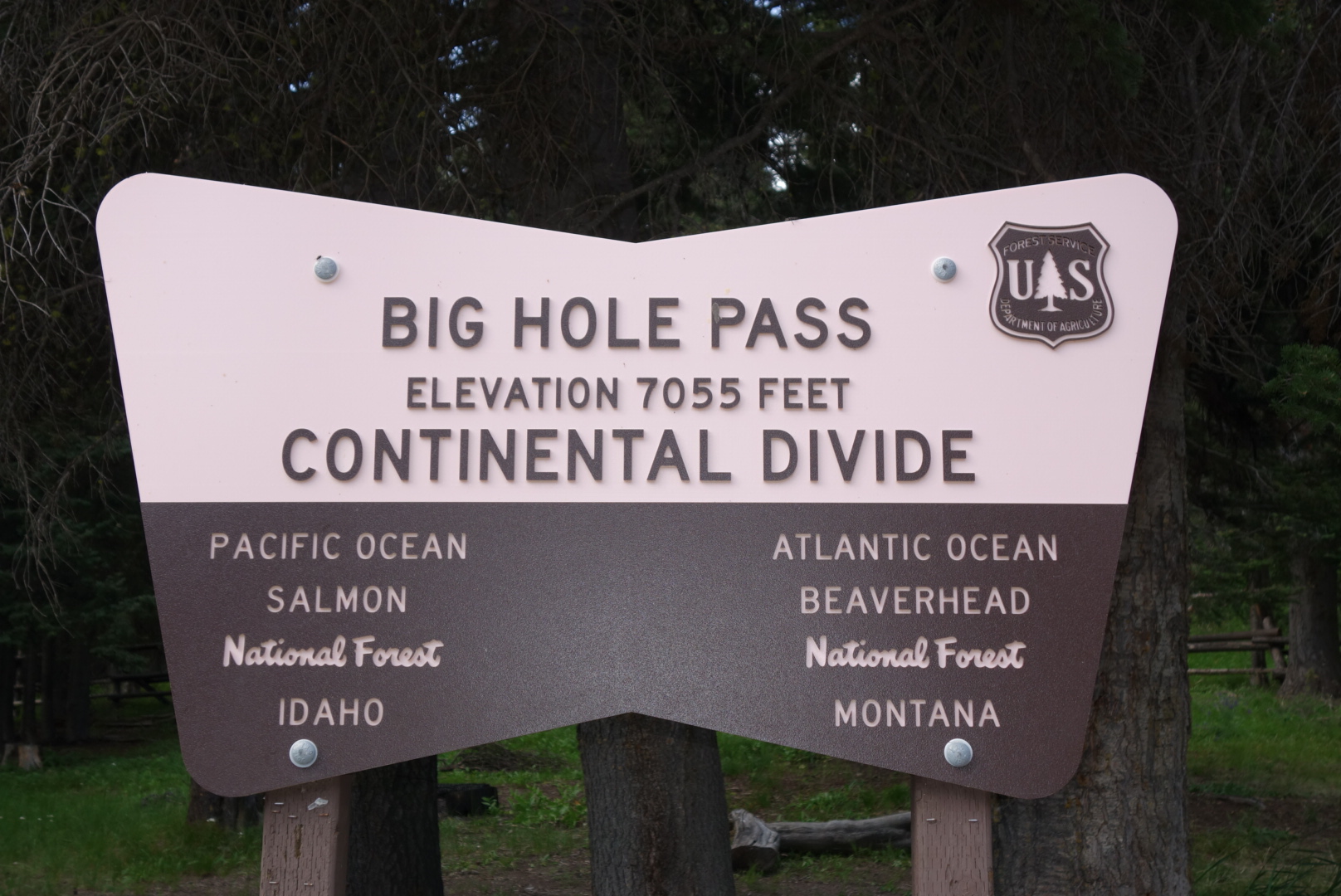
Judging from the the number of these, Idaho and Montana don’t entirely trust each other.
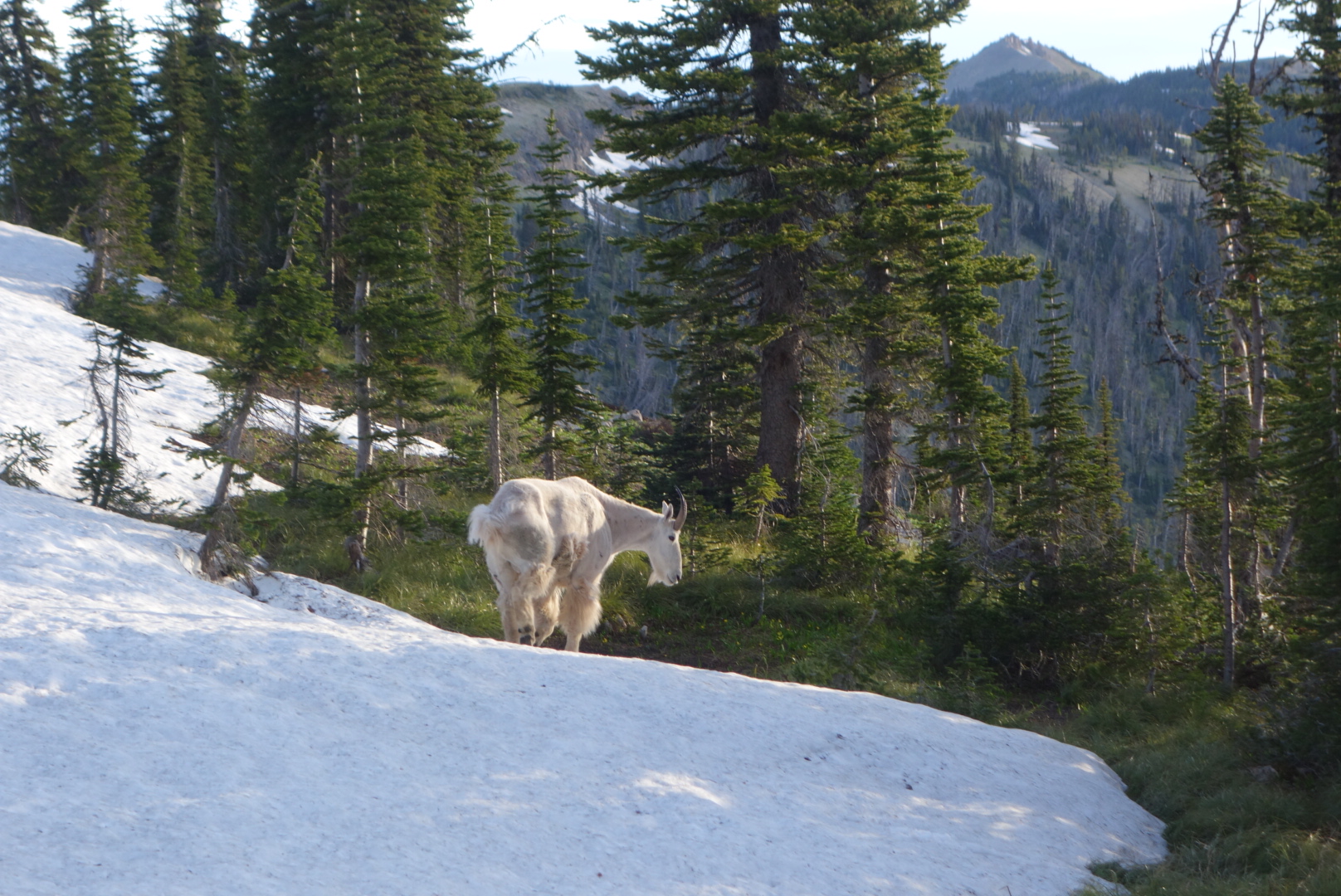
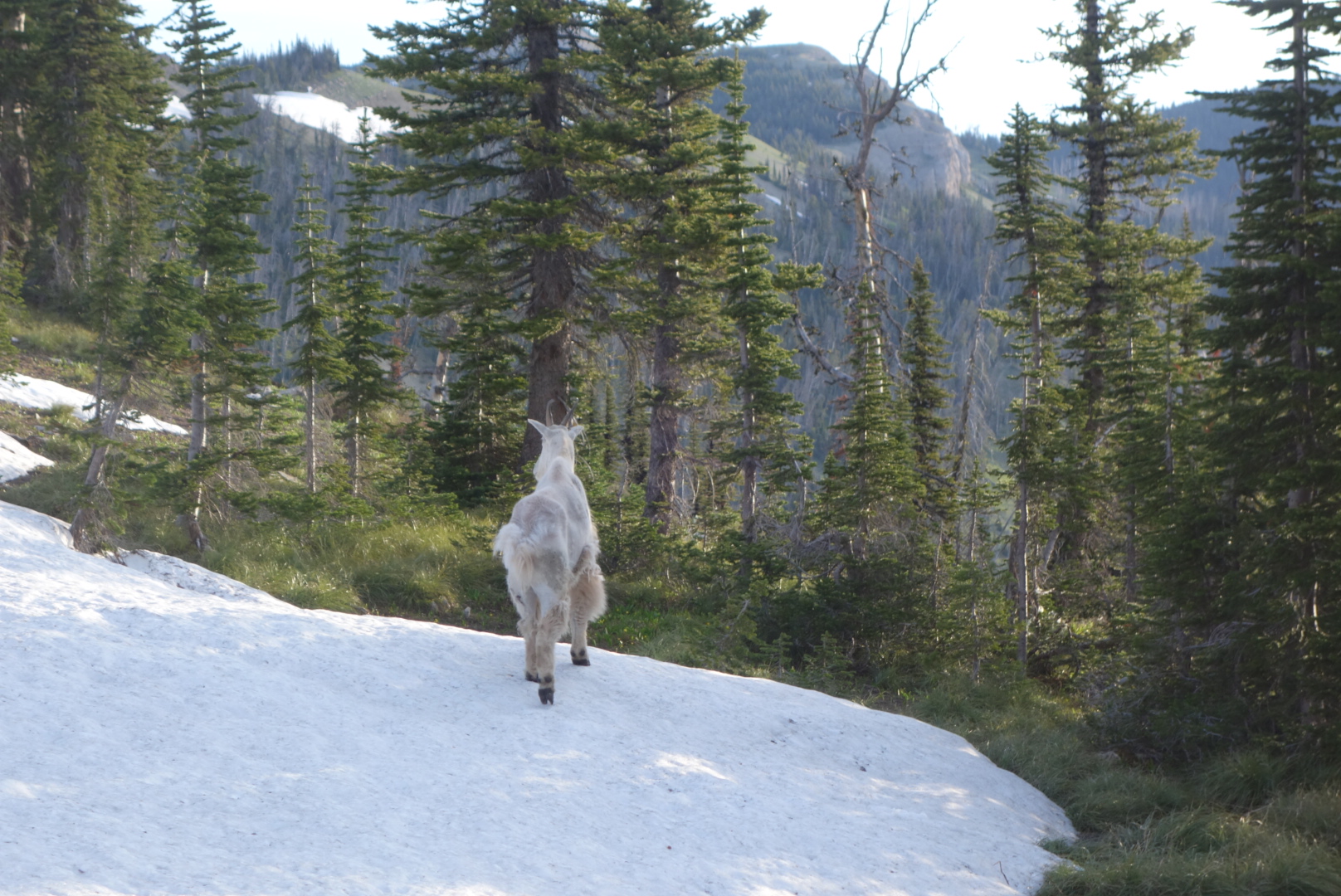
During the night, Lucky said he heard a crunching sound. We camped near a 30 foot snow field. Some critter probably walked across. In the morning, however, it was clear we had a new, temporary teammate.
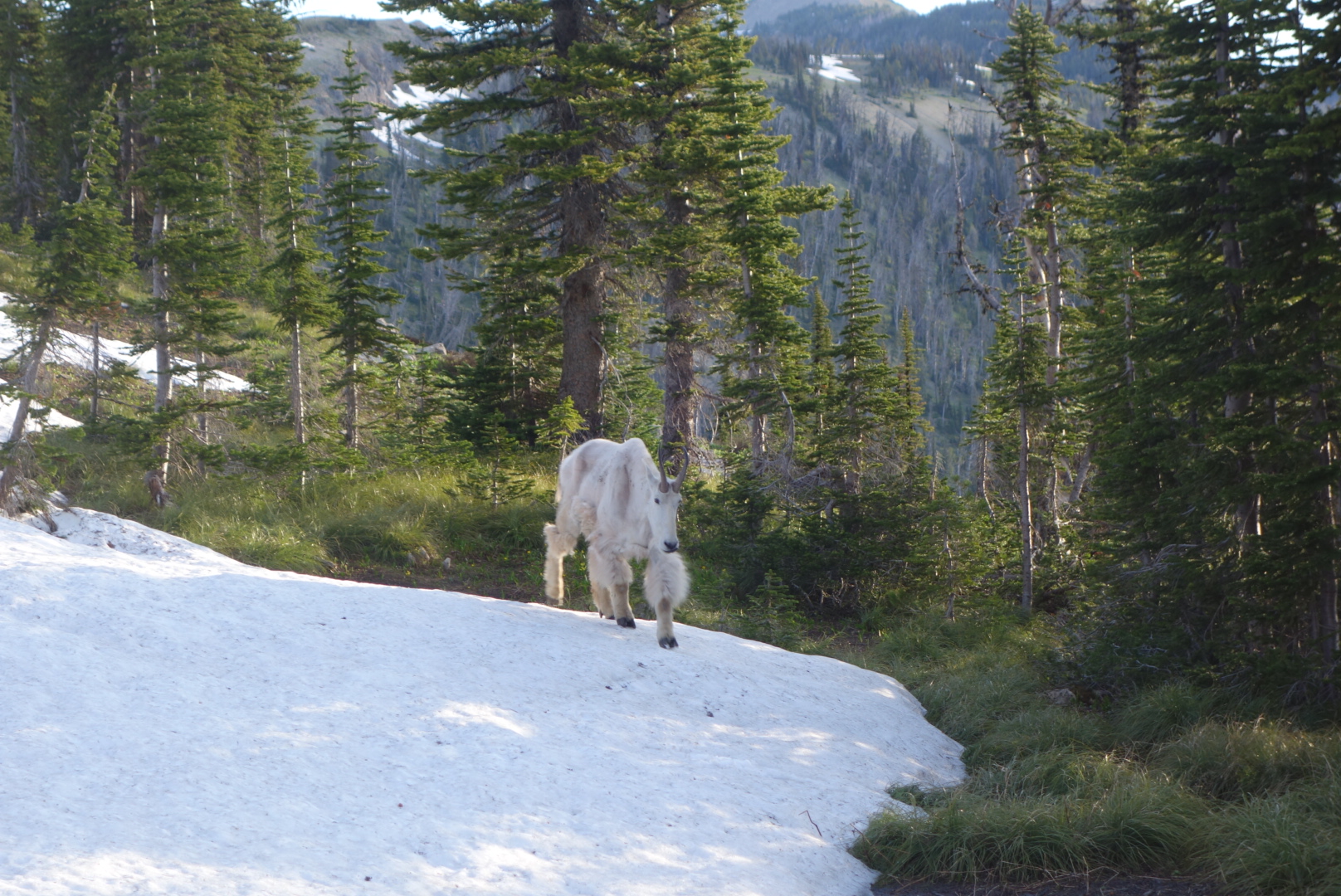
An old mountain goat was hanging out within 15 feet of our camp, walking calmly back and forth. As luck would have it, my camera battery had drained due to cold. So I frantically tried to charge it while the goat was so close. Eventually I got a couple pictures of the old guy. The Bob Marshall Wilderness does deliver.
This old goat was patient with photos
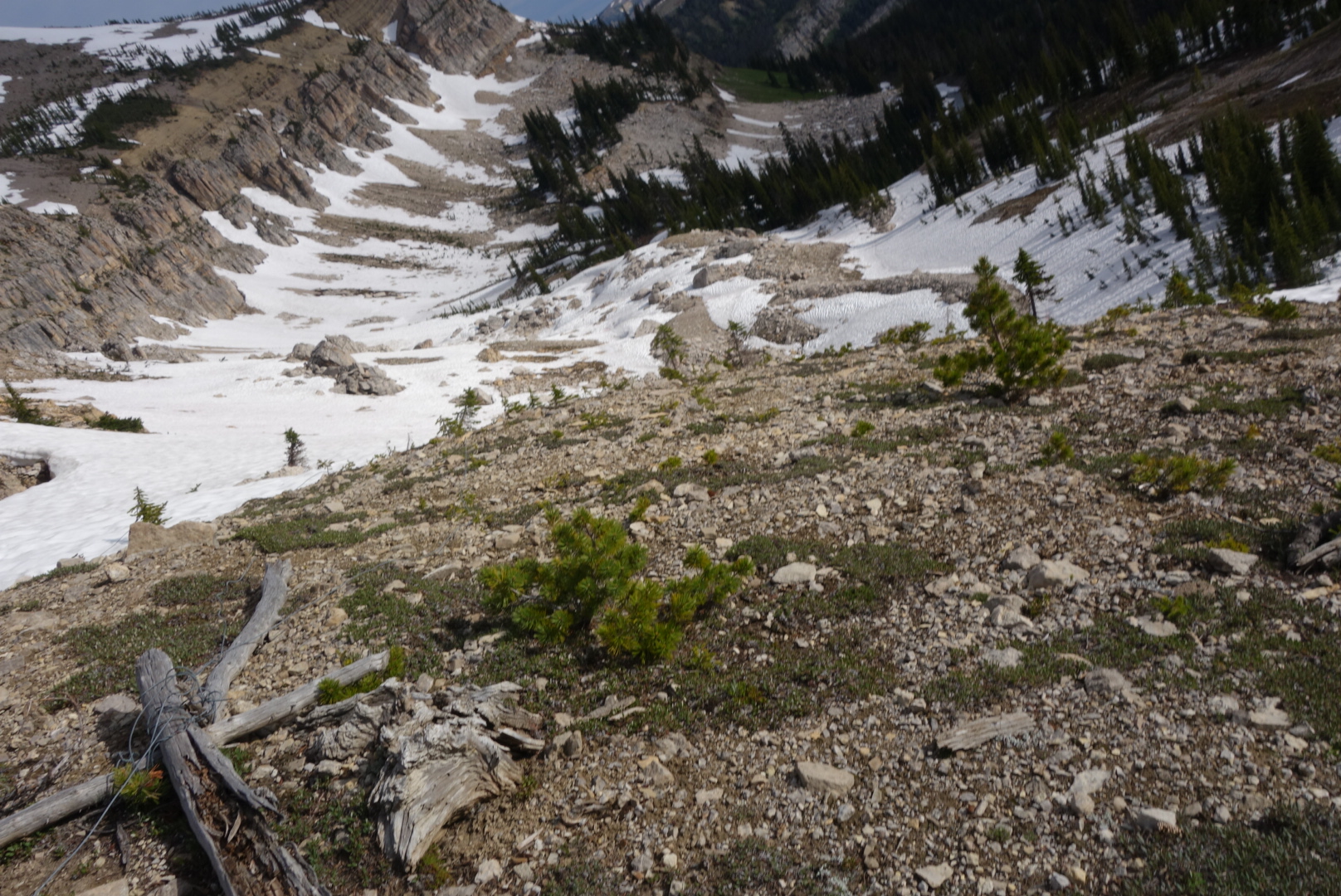
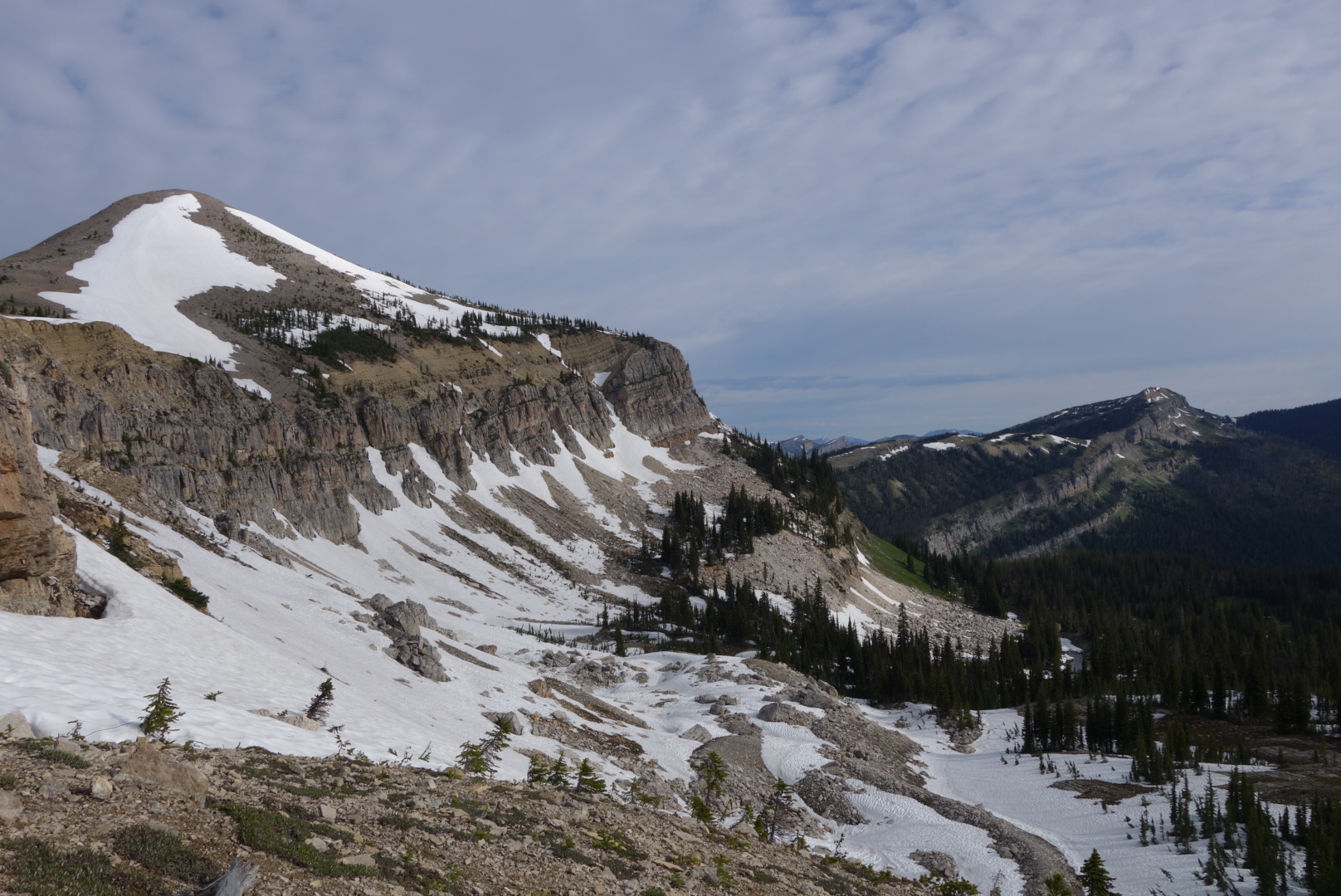
Our first challenge of the day was getting over Switchback Pass. This was supposed to me a smooth series of switchbacks that led easily over a high pass. However, due to the snow fields it was precarious. The trail was high on the steep snow fields. Since I am naturally brilliant, I had reduced pack weight in East Glacier by getting rid of my micro-spikes and ice-ax. We chose to go along the bottom of the snow field. This was slightly more level and had less snow. Of course, the trade-off was a sheer drop off of 100 feet if we slipped in the mud.
Thus far, Lucky has been our main pathfinder. I am pretty good with balance (that ballast I carry in the middle comes in handy) and open area routing. As a result, I led us over to a point directly below where the pass was located. The only thing between us and the pass was a steep snow field of about about 150 to 200 feet. At that point, I decided the only logical thing to do was to yield the lead to Lucky. He had microspikes and the Trail Name to make it all possible. Eventually we got on top and were very relieved.
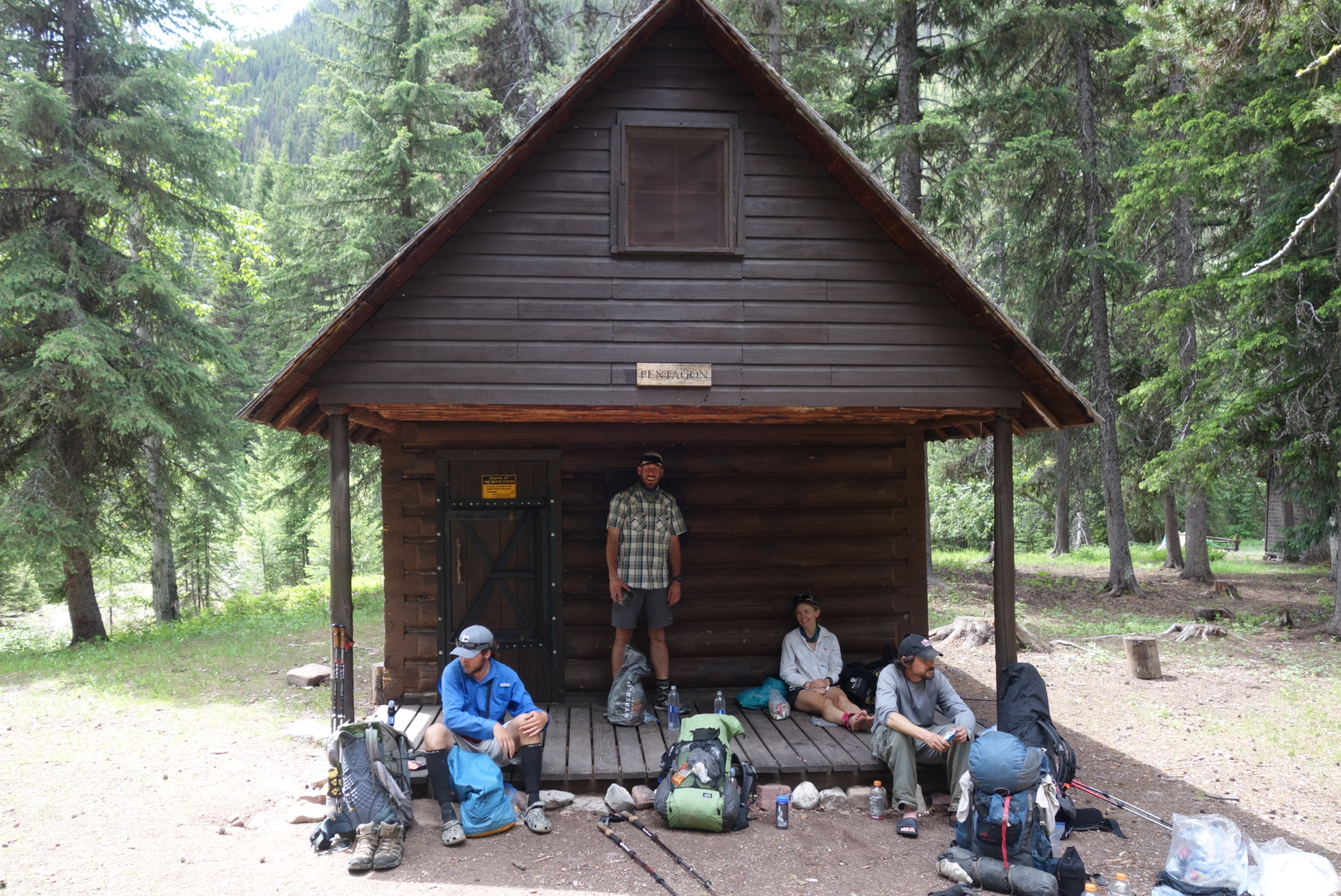
Looking down from Switchback Pass.The rest of the day found me hiking alone. Lucky’s injury was clearly hurting him. There were a lot of blowdowns and I scraped the heck out of my shins. I arrived at the Forest Service back country cabin at Pentagon Creek. Not only did my current group show up, but also the first team I started hiking with. The Forest Service outhouse was unlocked and most of us took advantage of the opportunity and gave high marks to the quality of the privy. We have been in the woods awhile.
(Left to right) Crunchmaster, Grizzly, Snake Bite, and Lucky. Pentagon Cabin.As the afternoon wore on, I eventually found myself getting ahead of Lucky and STD, but trailing Grizzly and the others. I enjoyed the time and really appreciated the Bob Marshall Wilderness. It just has a feeling of being in the wild. I had read some comments about it being boring, but I truly felt like I was in remote wilderness.
While navigating the many blowdowns, I eventually came to the last hill. It was a climb over Larch Hill to the day’s destination, My Lake. I chugged up the hill, my thighs protesting, my lungs working overtime. To take my mind off the challenge, I thought of what I would say when I reached the Grizzly group. When I finally staggered into the campsite, I told them “Look, you can camp anywhere you want, but I just want you to know that this is My Lake.” At first they thought I was insane, but quickly they realized the altitude had caused me to come up with corny humor.
Ironically, I fell sleep to the sound of jet engines as I was sleeping under some type of common flight path.
Today was a real hiking day. Lucky, Steven the Destroyer (STD), and I left for a destination called Strawberry Creek.
Initially we walked along old 4 wheel drive roads. We ascended over some blowdowns (trees that have fallen down across the trail). The day saw us walk in environments ranging from open, recovering burn ares, to thick forests.
At one point we came to a meadow that sloped up and the morn I ng breeze blew down the hill. Lucky saw a black bear at the top of the meadow. It eventually heard us,got on it’s hind legs, and ultimately bolted away.
Towards the latter part of the day we came to a juncture. The map indicated a traditional route around a lake or an “alternative” that was shorter but of mixed quality. While Lucky and STD rested, I went ahead on what I thought was the traditional route. Quickly, I became aware it was the alternate.
I thrashed back and forth through a thick bog with a lot of down trees. My feet were soaked. Eventually, I just decided to climb up hill, relying more on common sense than electronics. Finally reached the trail and wanted to leave signs for the other guys. I made an arrow and wrote “Lucky” but hesitated to add “STD” to avoid the perplexion a traveller might have coming across a sign pointing to Lucky STD.
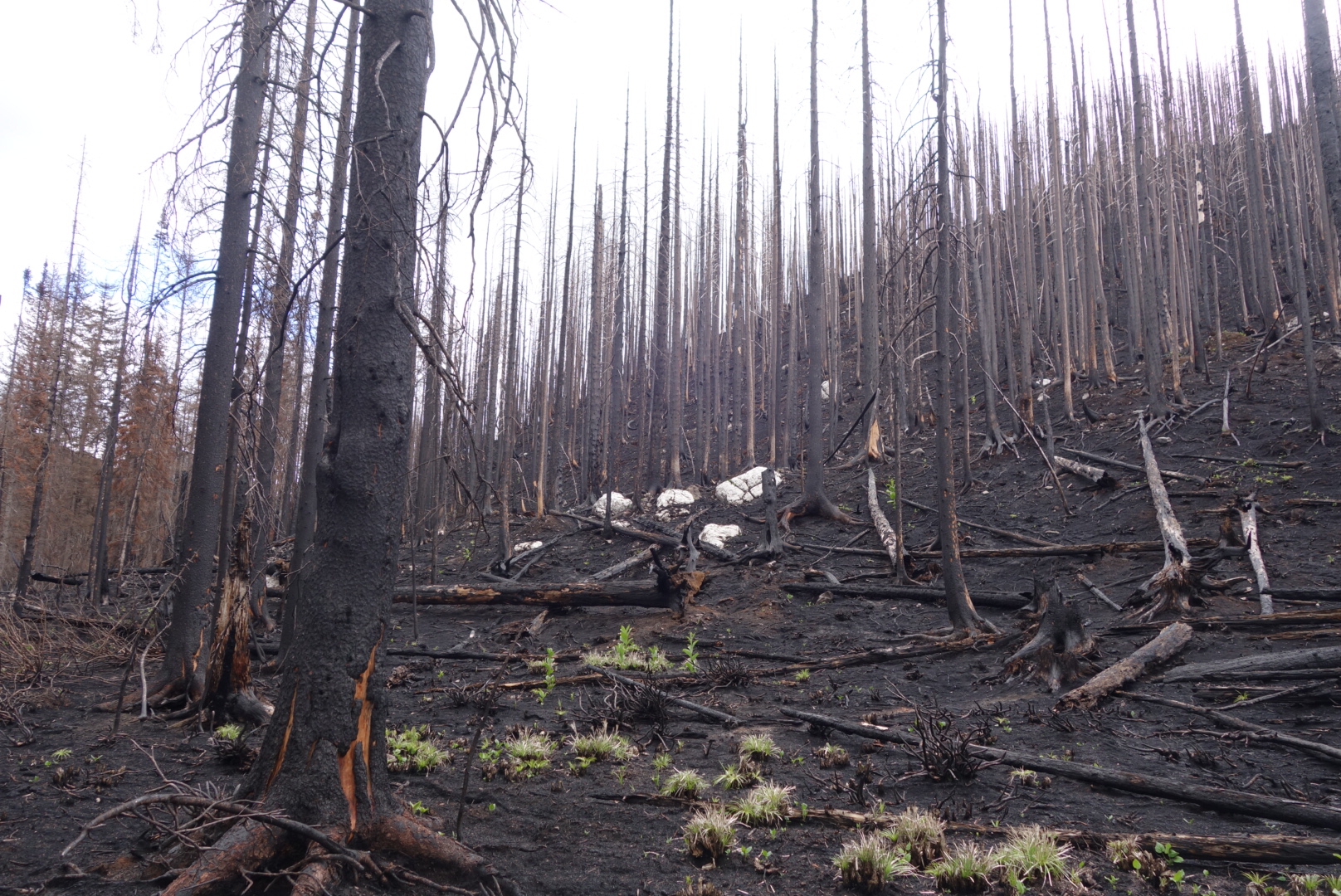
The trail took me through an area tha had just burned this year. It was eerie. Scarecly any green penetrated the harsh black, only ocaisionally broken by stark white rock. At last, coming over a pass I found a meadow which had fresh water, greenery, and campsites. I hoped that Lucky and STD would catch up, but was not sure. Eventually they did and we camped in a meadow for a night that was clearly going to get cold.
Note: I am way behind on blog updates. Have not had connectivity. Sending this from 8500′ mtn in Scapegoat Wilderness. Will eventually catch up.
I finally started climbing up. It was interesting to note the breathing difficulty the higher up I went. I was hiking with Lucky and Steve. However, there is a knot of southbound hikers so we passed and were passed by some.
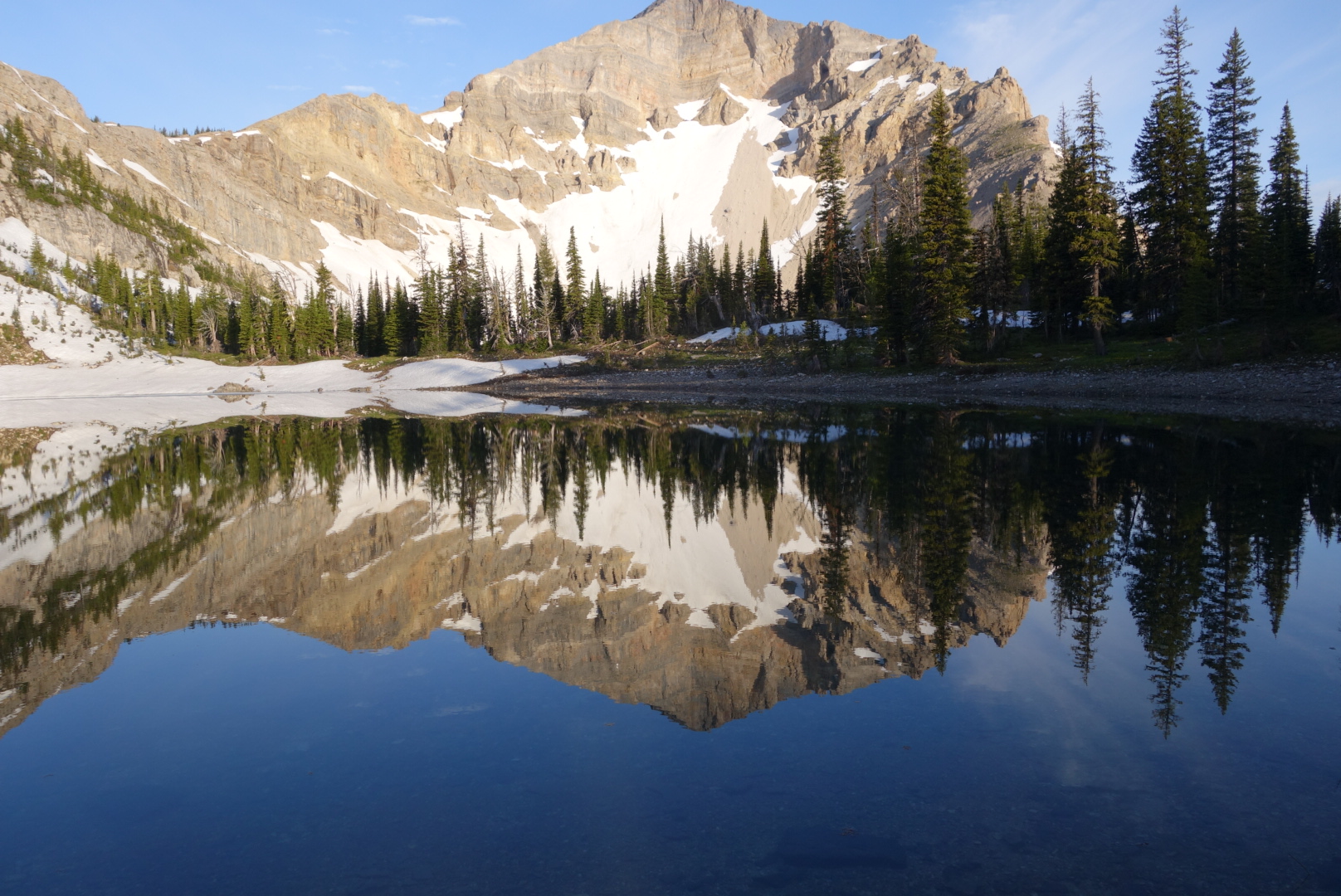
Finally reached a beautiful glacier fed lake and camped for the night. Overnight a mountain goat entered our camping area and just hung out.
Well, that bear video I discussed yesterday was tested today.
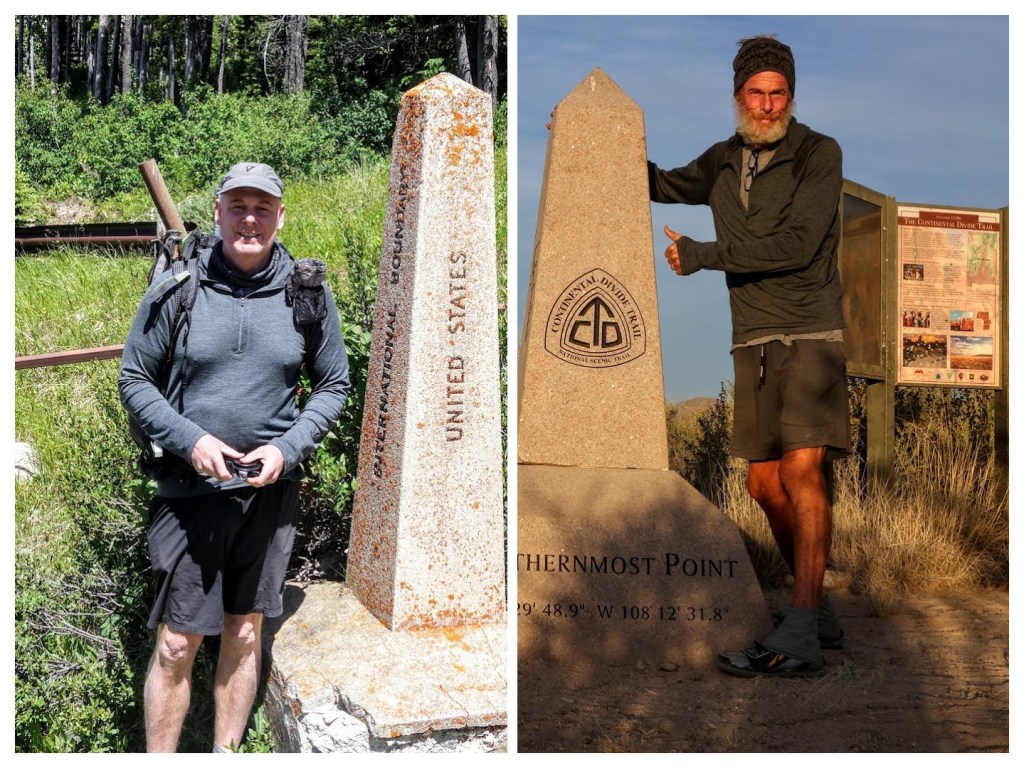
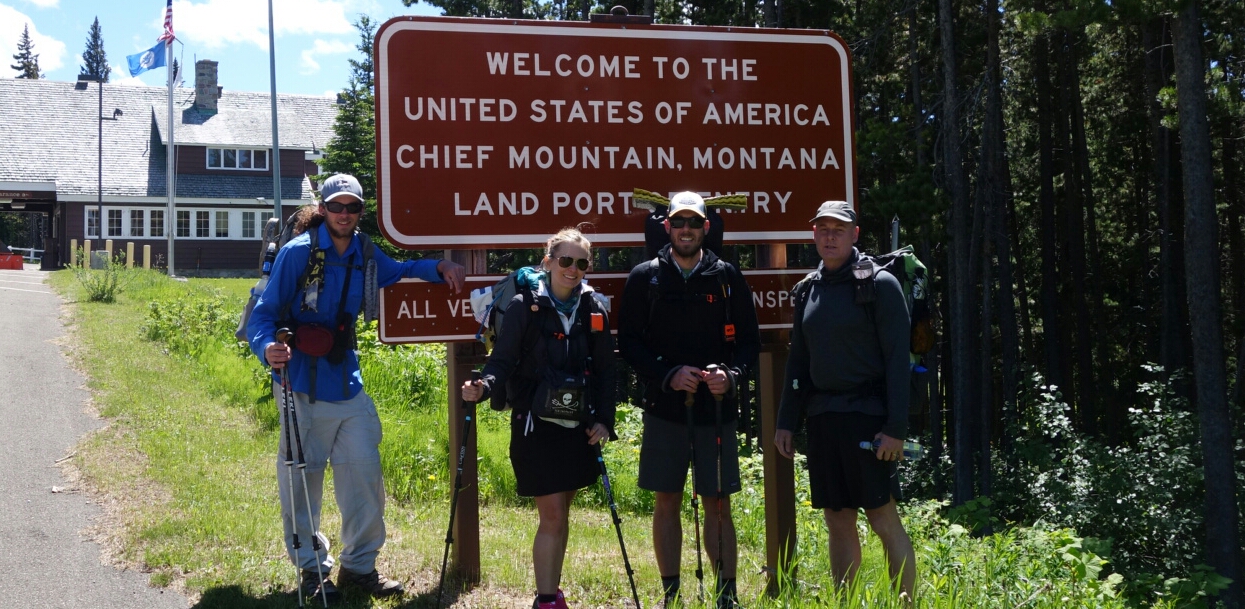
Before that, a little background. I shuttled to the border crossing with three experienced hikers. After border photos we started hiking around 2:00. Very easy hiking with great weather.
We basically walked up a valley to a lake for 10 + miles. At the lake the mountains climb sharply from the shore.
Great first day.
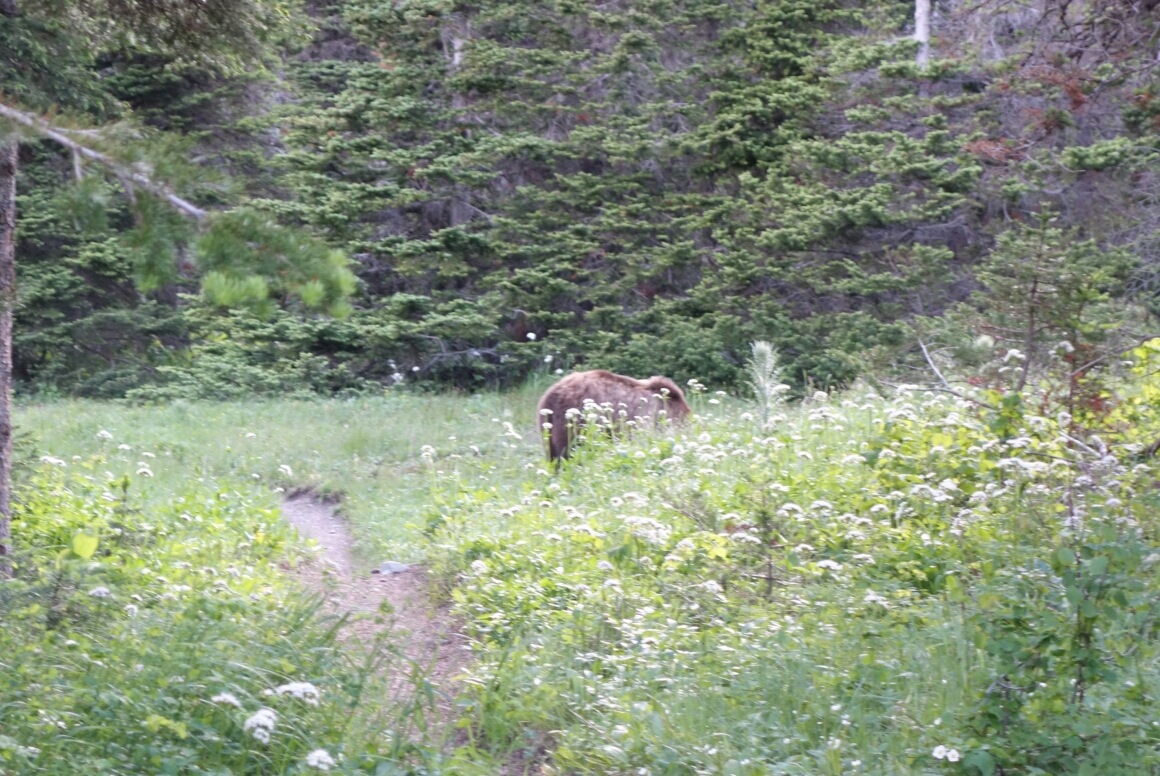
Oh, I almost forgot. We had a large grizzly come through camp like he owned the place. The only thing that eventually spooked him was one of the guys I’m hiking with banged on the metal bear box. The hiker’s trail name? Grizzly Bait. Couldn’t make this up if I tried.
On reflection, we all had bear spray, stayed as a group and walked backwards away. So far, good script. Bear had not seen video and kept coming down path through camp. He knew where cooking area was and could not care less how much we yelled. In the sequel, loud percussion will be featured.
Can’t wait for tomorrow as it is supposed to snow and we climb 2400 feet up over Red Gap Pass which allegedly has a steep snow field to traverse. Yes!
Completing final steps before taking the first step.
After some hurry-up-and-wait, I received my official backcountry permit for Glacier National Park. I am officially permitted to hike in the woods. I even had to take a test on bear safety.
If you’ve been to the Boundary Waters and sat through the bear video, you’ll appreciate the order of magnitude here. For example, I recall the Boundary Waters instructions were to yell, bang pots, and throw stuff at any bear in camp. Here, you are supposed to stop, speak firmly, walk backwards, and not look the bear in the eye. And whatever you do, don’t run.
However, if this fails to avoid an encounter, you are supposed to use bear spray and/or play dead while laying on your stomach with your hands clasped behind your head, presumably to protect vital organs. Of course, the video says if the bear is deliberately attacking, not just startled, you should fight with sticks and rocks or climb a tree.
I wanted that permit very much, so I kept my mouth shut. Still, I was left a bit confused. For example, who penned the scientific study on the importance of avoiding eye contact to prevent mauling? Were volunteers divided into two groups of Direct Stare and Averted Eyes and then put in the pathway of a grizzly? What was the sample size? Another question I had was discerning between whether I was being attacked or just encountering a startled bear. I’m sure there are some people adept at quickly discerning the difference, but personally, I still need a few seconds to decide between paper or plastic bags and indoor or outdoor seating. Lastly, regarding the old playing dead thing; have these people not watched Revenant?
Please don’t think I am disrespectful of the National Park Service. They are trying to preserve and administer access to some of the world’s treasures. Permit systems control volumes, track hikers, and increase safety for people and animals.
Swiftcurrent River
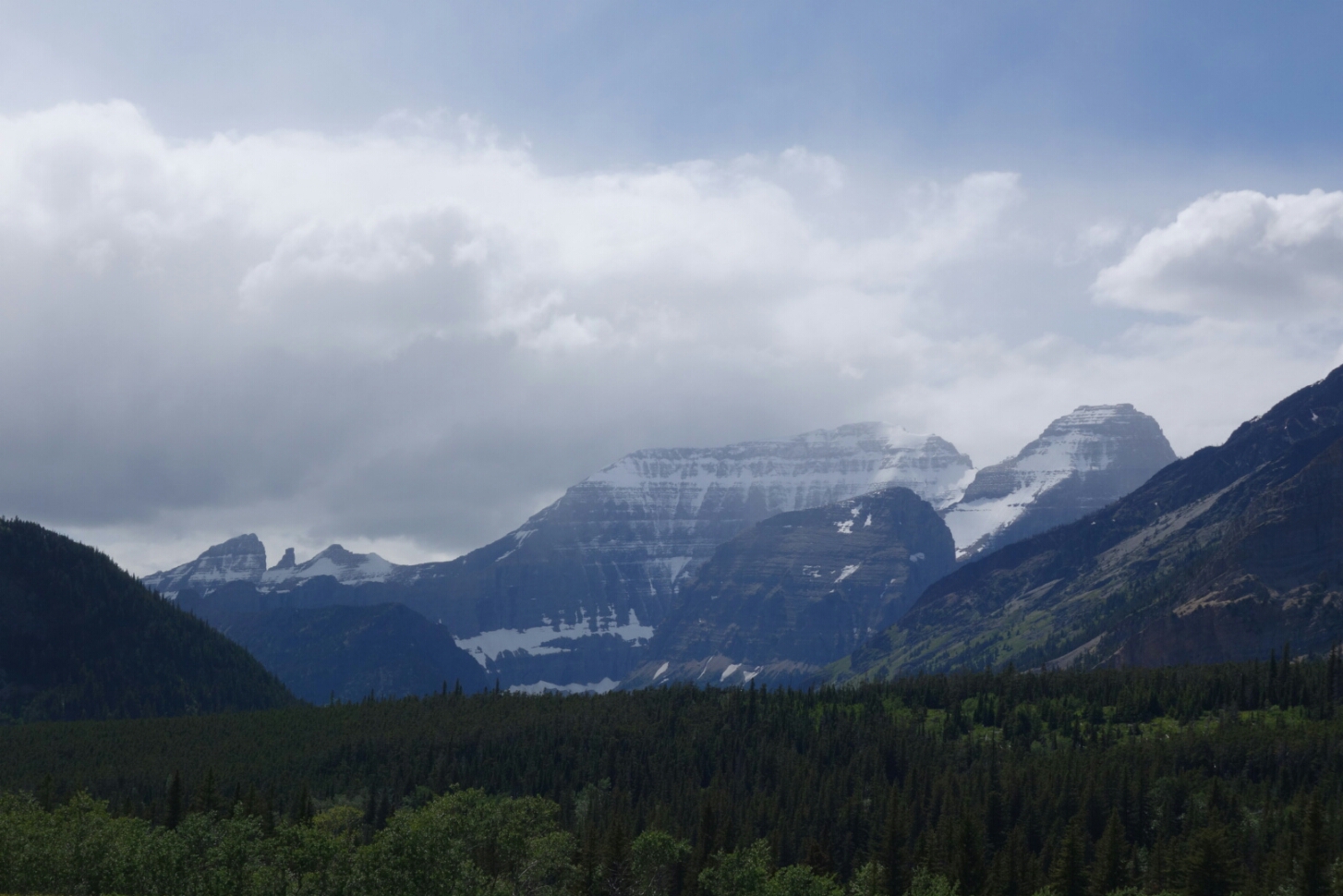
Glacier National Park is stunning. I still have not seen the tops of most peaks due to storm clouds. But what I have seen is amazing. Just this afternoon I enjoyed a five mile walk in sun, rain, and snow.
I take a shuttle van to the Canadian border tomorrow and start walking south in the afternoon. Fitting my current physical condition, I am going to hike the Belly River. Most likely I will not be able to post for two days until I approach another park lodge.
Until then, I hope you stay safe and either avert your eyes or attack.
I finally left the Twin Cities on the 10:30 pm Amtrak. I had not been on Amtrak since living on the east coast. Train travel has some merits. It is interesting to watch the country change and unfurl. Heading fron the midwest to Rockies, the soils grow thinner, the land use more scattered, and making a living gets harder. On the other hand, some train travel situations are not so good. Since I boarded at night, everyone in my car was sleeping. I dubbed it Clan Snorton based on the amount of snoring. While I generally consider myself an above average snorer, I was totally outclassed. Plus, there were a couple chatterboxes on board. (Tip: bring earbuds or headphones on train.)
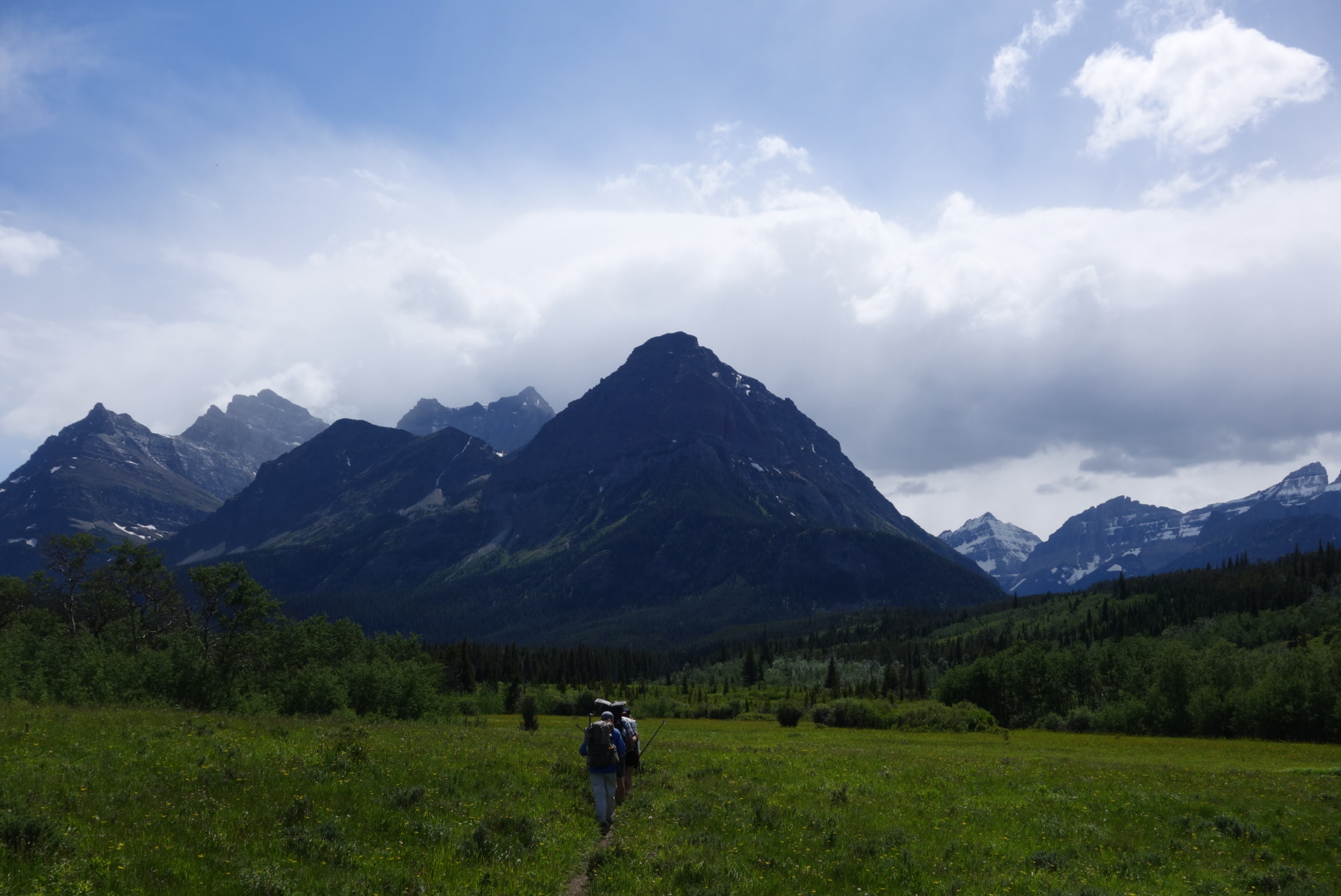
One other note about arriving at Glacier National Park by train is the intimidating size of the mountains as you approach. You go from rolling grasslands to huge mountains jutting straight up, making you wonder what you have signed up for….
I am now in final throes of packing for my 5 month backpacking trip. As a natural born procrastinator, I am in my element.
Food: Introducing Speltmeal
I am making and sending almost all of my trail meals. There are roughly 120 of them. Although I’ll rotate through about 7 different dinners for variety, breakfast is pretty tough. I basically have two breakfasts that are quick, easy, and nutritious. (note the absence of the word delicious…)
First up is good old granola. I found some ancient grains brand that I like at Costco. I package this with a small zip bag of powdered whole milk. In the morning, I’ll add water to the small bag, mix, and then add to the granola. I’ll let that soak while I pack up and then eat the granola while walking (due to my ungraceful nature, I will proceed slowly since doing anything in addition to walking pushes the limits of my abilities). I keep the whole milk powder separate for two reasons. First, I want to make sure I can get the powder and water to mix well enough to resemble the texture of real milk. Second, let’s face it, powdered milk is not the greatest tasting thing in the world and I may get sick of it.
My second breakfast choice is a combination of spelt and rolled oats. I add in cinnamon, a little sugar, a pinch of both salt and powdered butter. Unlike the Granola, I do add powdered milk to the mix. I bag portions up and throw in small bags with various treats to break up the monotony. Examples are freeze dried fruits, chia seeds, or nuts. At night I open the pouch, take out the treat, add water, and let the “Speltmeal” rehydrate overnight. In the morning, I’ll add the treats.
Spray versus Spray
I have been testing all my equipment. It is important to make sure things work and that I know how to use them. This seems obvious, but my usual instincts are to just go ahead with something and figure it out on the fly. There can be unfortunate consequences. Everybody knows what bug spray is, right? I have this small pump-spray container. It works better on my thinning hair than a lotion. Well, on this trip, I am also bringing bear spray in the National Parks as a safety precaution. However, I need to to emphasize that bug spray and bear spray are quite different. It turns out bear spray is not applied topically. (Well, it can be, but it is ineffective against bears and very effective at repelling humans.)
Store Runs
Finally, I have a few last store runs to complete. I need to get a few small items at REI. On top of that I need to visit Trader Joe’s for some dried fruit to ship out. The likelihood that I will enter these two stores with a short, fixed list and emerge with only the items on the list is close to the odds of winning the lottery.






 backpacking over the hill