Tough Miles

July 24, 2018. From Thirteen Mile Mountain to stealth camp on Forest Road before Ogle Creek.

In spite of the strong moonlight, I woke up rested. I broke camp relatively quickly.

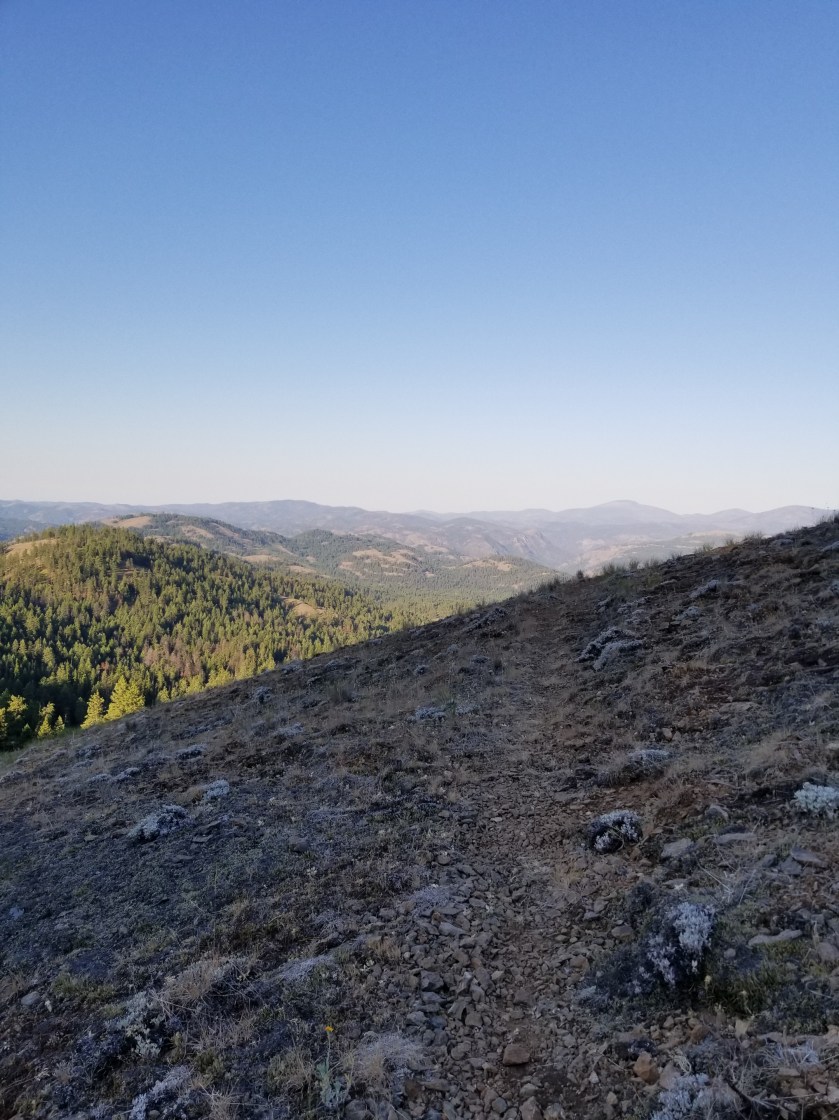
It was a brilliant, beautiful morning going slightly up and down on trail through grassy ponderosa forests. Great views.
Later in the morning I was cruising downhill, I went from sunny slope to a sharp shaded corner. That was where the accident happened. For my part, it took me two full steps before I recognized the sound of a rattlesnake. For his part, he waited until I was next to him before rattling as he wound himself up underneath a Bush. We both screwed up. I went back to see him and he had beautiful green markings. The video does not do it justice, but you can understand I did not want to stress the creature or, more to the point, get bit and die all for the sake of a more clear video. This isn’t Mutual of Omaha, people.

Later, I crossed a road with a trailhead. I loved it. There was a description of Thirteen Mile Trail. Best part? The length of the trail. All of my avid blog followers know I love goofy signs. So, both of them can understand my glee over the Thirteen Mile Trail being 16 miles. What do you think happened?

I was too tired to consider how a difficulty rating of difficult worked.

I dropped down an amazing canyon of Thirteen Mile Creek. It had huge 500 foot sheer walls and a churning stream. Suddenly, the stream disappeared. Just as suddenly, it reappeared, apparently choosing to run undergroundfor a quarter mile.
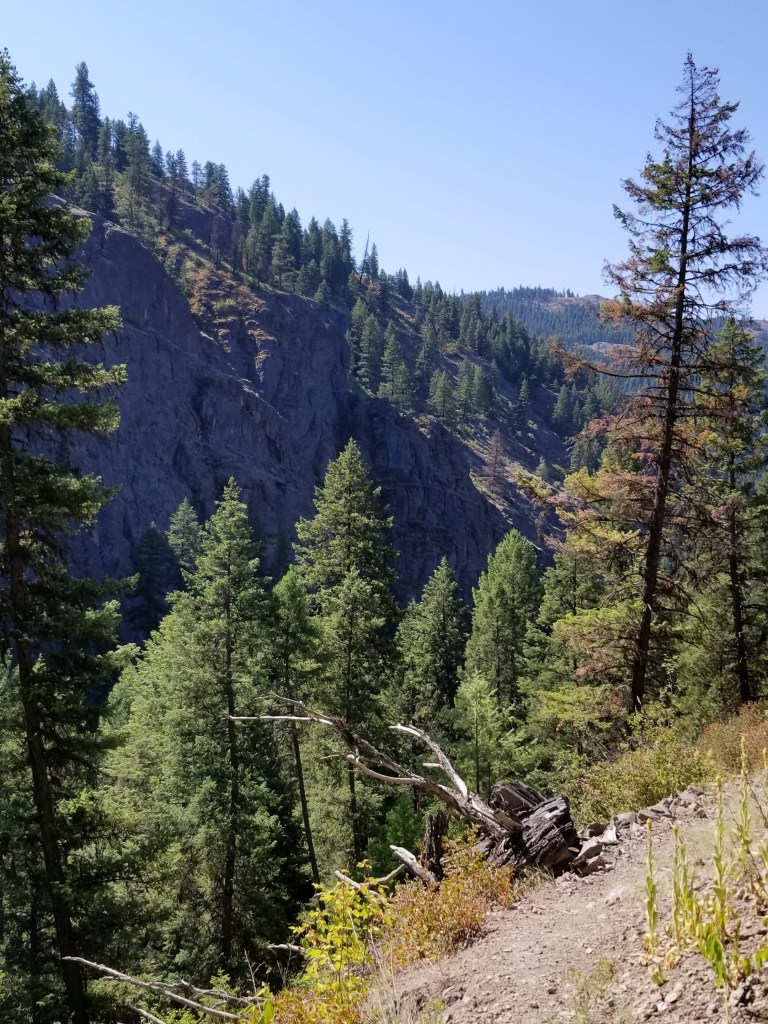
The photo fails to capture how high and sheer the cliffs were.

I next had a 2 mile walk on a highway with no shoulder. The Guidebook said this was the Grand Canyon of Washington. I was not impressed. Plus, there were a couple jerk drivers who clearly could’ve moved over, but chose to hug the lane and almost clip me.

Off the road, I had a dry trail uphill for several miles. It was tough. I had one of my oddest wildlife experiences. Given the amount of time until my next resupply and chance to charge batteries, I have been turning off my phone which is my camera. At a road junction, I was looking at my printed map. A spotted fawn trotted out of the woods. I reached for my phone and turned it on. On a whim, I told the fawn to “calm down.” Unexpectedly, it turned and came right to me. It was panting. It was obviously stressed, but I knew taking my pack off to give it water would spook it. By the time my phone turned on, the fawn was trotting away through the woods. So bizarre.

Late in the day, after passing cattle and timber harvesting, I came to a “V” in the road. A sudden crashing in the bushes uphill made me reach for my phone. I spied some black ears and a scalp. I wasn’t sure if it was a wolf or a black bear. As I was getting my camera ready to video, the bear cub came into the open. “Oh shit”. I hightailed it out of there not waiting a nanosecond to see where momma was.

An eventful day drew to a close when I found a beautiful grassy plateau for my camp. I hung my food far away and went to sleep. Or tried. It turns out I was on a bit of a lump, plus the zipper on my tent failed. So I spent a lot of the night fidgeting to find a comfortable position and waking to a mosquito buzzing my ear.
Not the Finest Day

July 2, 2018. Blue Sky Creek junction with Forest Road 114

I woke up feeling pretty good. I packed quickly and noted the weather was slightly more sunny than cloudy. Today would be up along the ridgetops. These kind of hiking days are love / hate. If the weather is clear, they are lovely with views to the horizon. Stormy and you hate almost every minute.

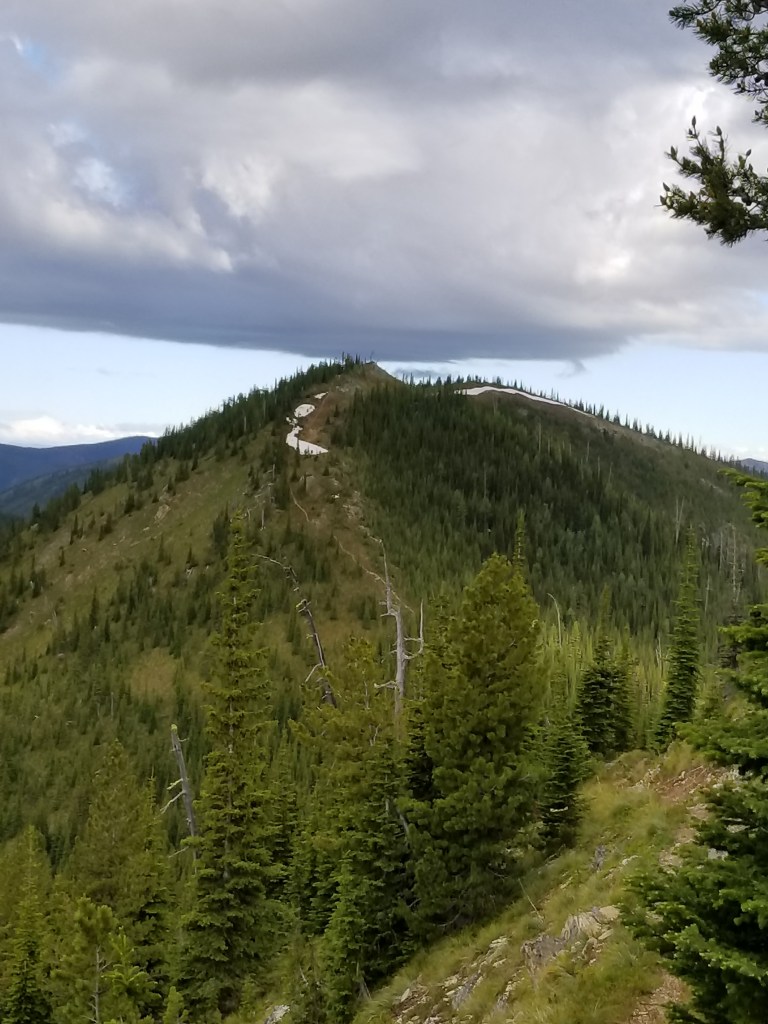
The snow mounds were limited at first. Limited to trees and northern areas. Indeed, the views were pretty good. Once I came to my first ridge, I could see the trail going up the next ridge in the distance.

I could see the trail climbing the mountain ahead.

On a whim, I turned on my phone and got reception. It is very random how connectivity appears on one mountain and not another. I did the only reasonable thing I could and that was check social media.

I started cruising along the ridges. From the footprints, it looked like two people were about three or four days ahead. That was a relief from a route-finding perspective. The snow became almost continuous on the ridge.

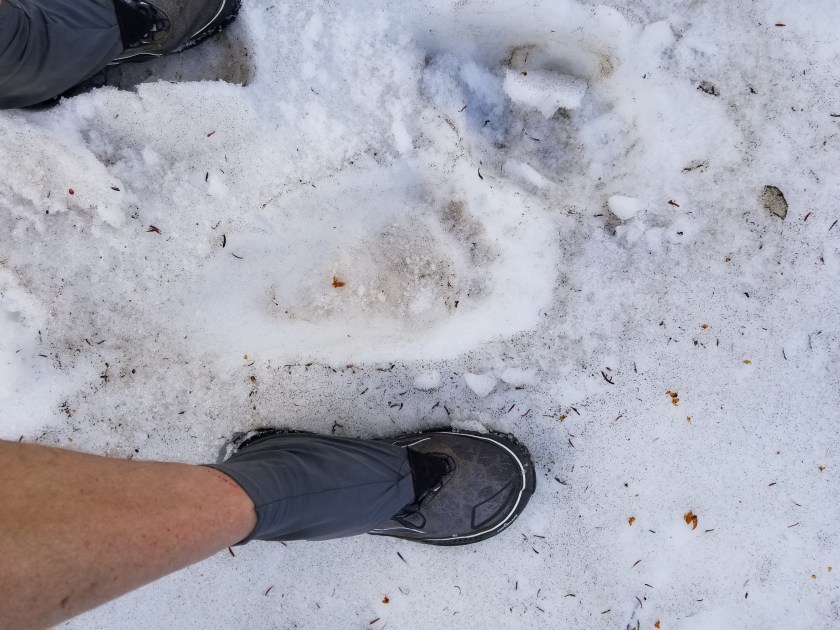
After about 30 minutes, the footprints were overlapped by a more recent traveler: a bear. It was cool to see how the bear used the trail, even following on switchbacks. I presumed it was not stalking the others and it did not seem fresh, so I was not worried.

Another traveler joins the trail.
Although the snow melt made it bigger, here is a comparison to my size 13 shoes.

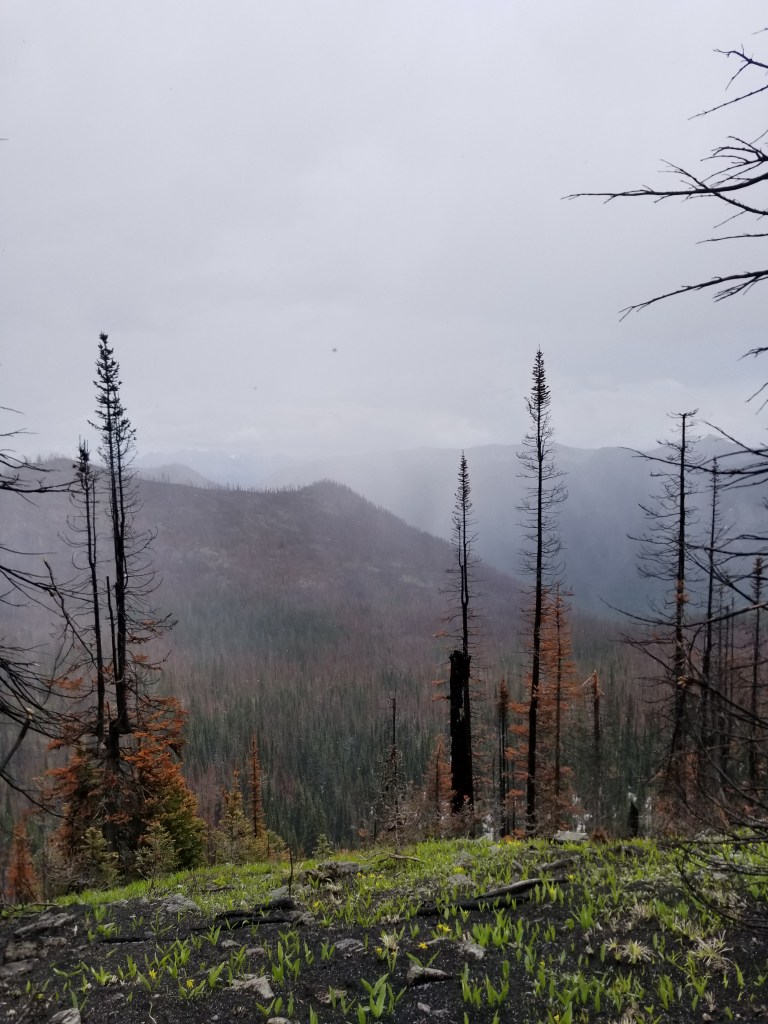
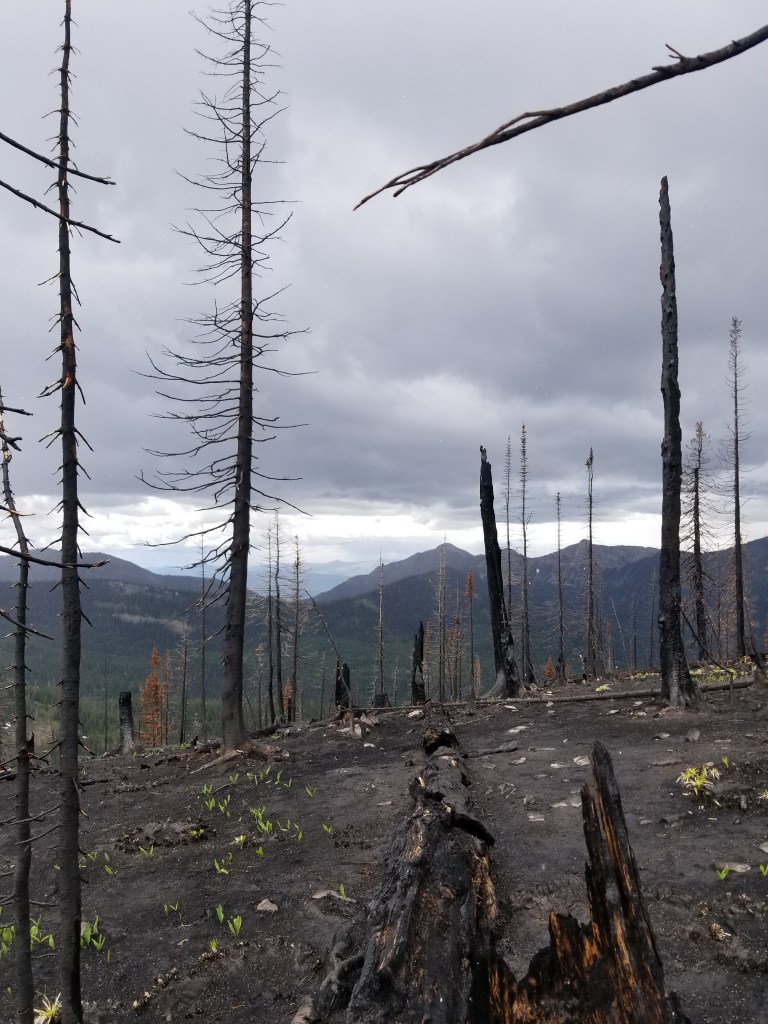
It started drizzling. The views disappeared. I stopped for a snack and had a hail storm roll over. The hail turned to graupel then snow. I entered an area that had burned the prior year. It felt eerie. The ground was charrred and skeletons stood, half burned, large charcoal logs. The white snow contrasting with the black reminder of what must’ve been a hellacious fire

The weather gets bad over the burned out forest.
It was eerie, almost like walking through a graveyard.

I stopped just short of the top of Mt. Locke, 7,200′. The wind really picked up, driving the snow almost horizontally. I made a sarcastic video about the elements and wondering why more people don’t go backpacking. Within 20 seconds of finishing, a massive lightning strike hit nearby. “Holy Mary Mother of Jesus” ( I’m paraphrasing). I knew this was very bad and I had to get down.

I sprinted the 50 feet to the summit, following a clear trail. However, the trail stopped at a sheer dropoff. There were the obvious remains of a former lookout tower, two sheer sides, and the slope I came up. I was stumped and a little panicky. “Where the f*** is the trail?” Please understand that at that moment I am the tallest living thing around and I am carrying two carbon fiber hiking poles in a backpack with small aluminum stays.

I whipped out my map, but it didn’t help. I ran down the trail, resolving to take my chances in the charred landscape I had just come through. However, out of the corner of my left eye, I caught a small flat spot on the blackened ground. I looked and sure enough it was the trail leading away from the top.

My mind kept up the refrain “This isn’t good. I’ve got to get lower.” For my age, I did a pretty good job running down the foot-wide path. However, the trail was only about 30 feet below the descending ridgeline. In short, while I was losing elevation, I was still relatively exposed to the high point. Soon, I saw a sequence of trees along side the trail. I set my sights on the shortest one. First, I stashed my hiking poles. Next, I dumped my backpack. Then, at last, I assumed the position near the short tree. Supposedly, you should squat down as this creates the least amount of body for a lightning bolt to transit. (Not to be cynical, but I did try to imagine how much chipper I might be if lightning only traversed a three foot squatted me versus a six foot standing me.)

Unfortunately, another bolt struck. It was close. Deafening. It made the air smell weird. You know that thing where you are supposed to count “One Mississippi ” to gauge how far away the bolt struck? Well, this was at “O”.

Considering my age, the fact I was squatting, and the proximity of the strike, I was proud that the only thing to come out of me involuntarily were some swear words.

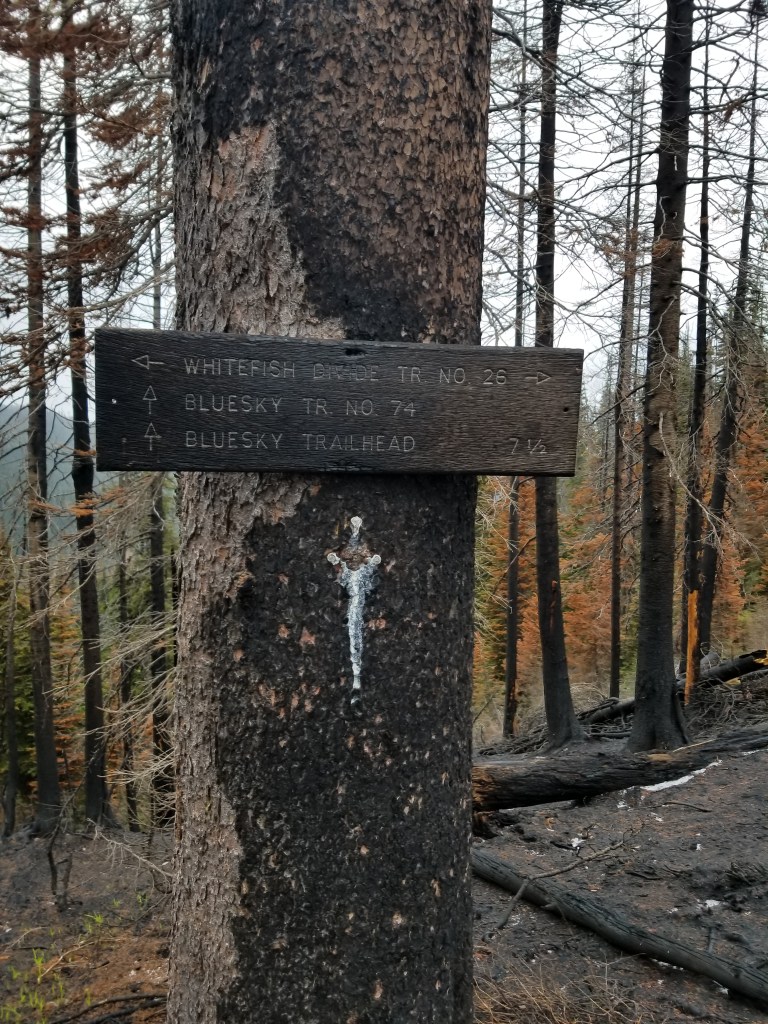
Hoping that the electrical component would move on, I decided to wait 20 minutes. No more lightening occurred and the storm’s fury eased noticeably. I grabbed my poles, backpack, and pep-stepped down the trail, eventually reaching a junction that would pull me off the ridgeline. Ironically, I was now on the Bluesky Trail.

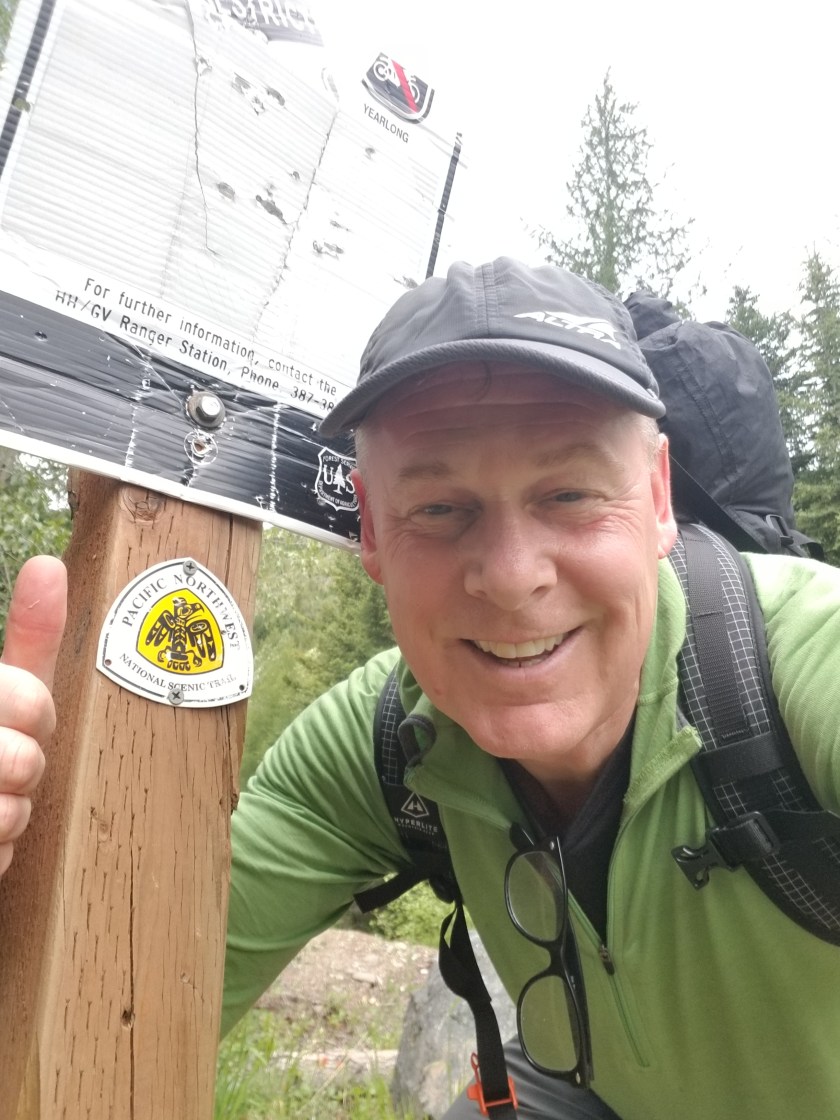
Leaving the stormy ridgeline to join the Bluesky Trail. Note the Pacific Northwest Trail marker below the trail sign melted in the heat of last year’s fire.

The next two hours were spent descending a steep trail in a slow persistent drizzle. I stopped to put on my rain pants and noticed how scarred and blackened my legs were from climbing over charcoaled trees in the burn area. I also realized I had lost my glasses in my panicked run.

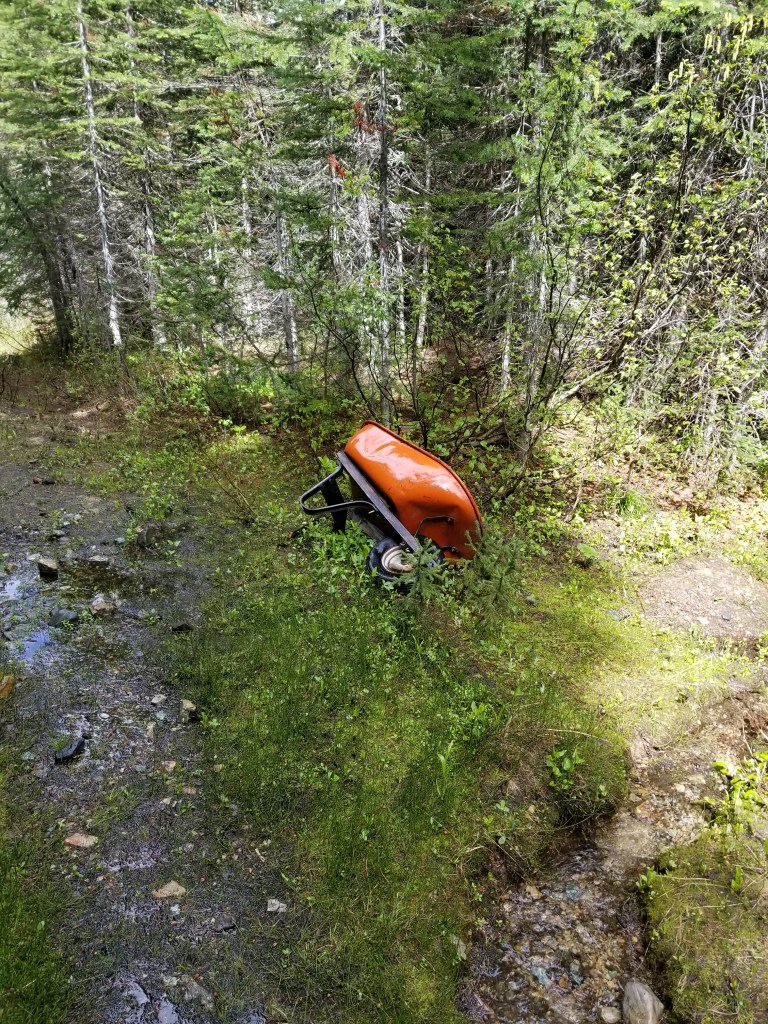
After the steep trail and clambering over blow downs, I came to an abandoned road that was now the trail. Oddly, about 5 miles from the parking lot at the start of this trail, I came across an abandoned wheelbarrow.

Pushing a wheelbarrow five miles uphill was a feat of strength and futility for some soul.

Those last miles were wet and slow, but around 6:00 I reached the parking lot, came back up the trail a bit, and set up a soggy campsite in a meadow. Almost 11 hours to cover a lousy 19 miles, but I was glad to be alive.

Going Solo

July 1, 2018. West Glacier, MT.

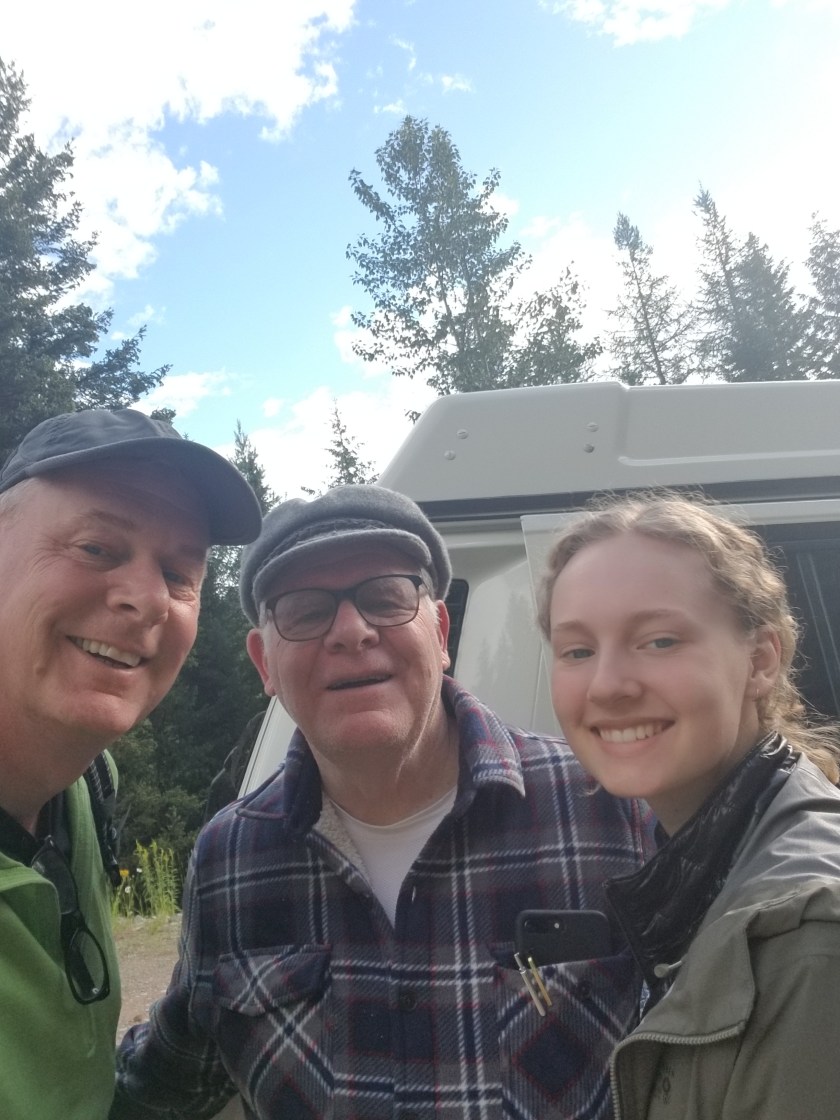
We were to meet for breakfast. Ing would get on Amtrak back to the twin cities and my Dad would drop me off at the trail. Amtrak notified us of a massive delay (four hours). So we ate breakfast, then Dad & Ingrid took me to the trail.

We said goodbye on a Forest Service road. I was glad Grandpa and Ing got some bonus time together, but a little sad to be on my own.

Again, the clouds hung low as I walked for a few hours on a gravel road. The mosquitoes were fast. Usually I can out-walk them, but these guys ingeniously drafted me and got the back of my legs pretty good. Eventually, it started drizzling so the little buggers disappeared and I popped open my umbrella.

Amazingly, I saw another backpacker. I caught up to her. Originally from Israel, she has lived several places and hiked some long trails, like the Colorado Trail, which overlaps part of the CDT.

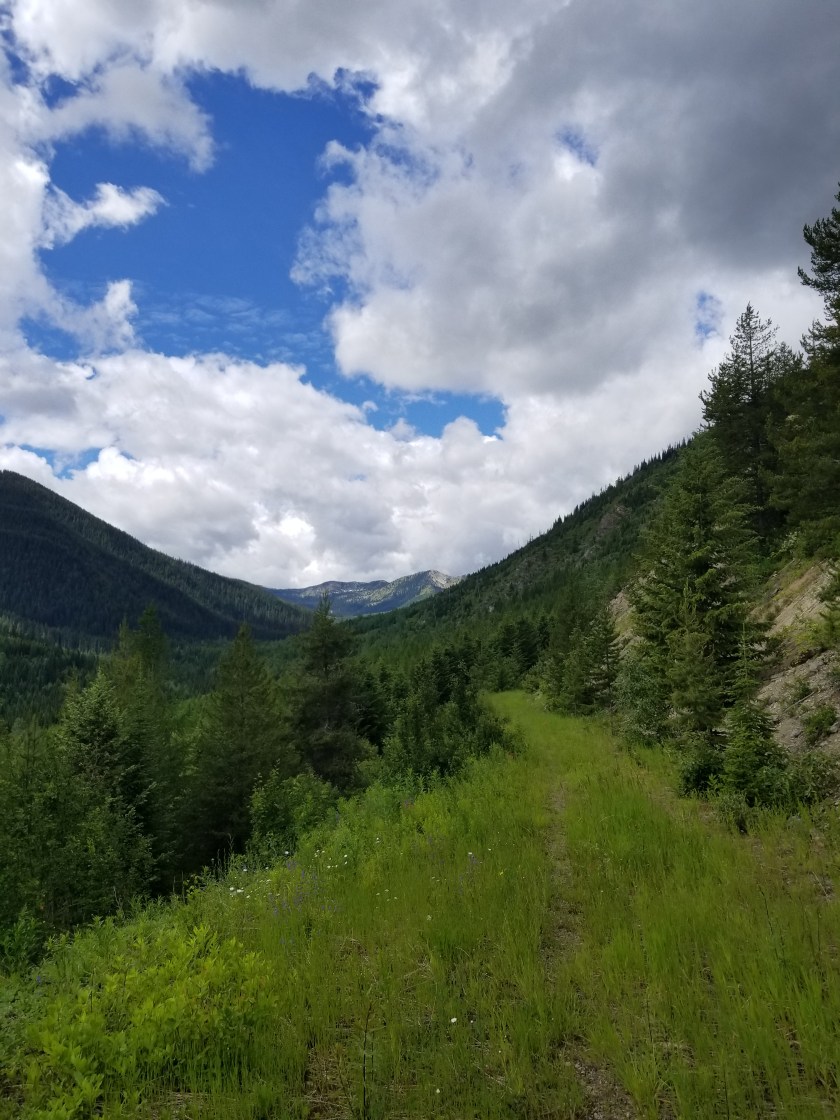
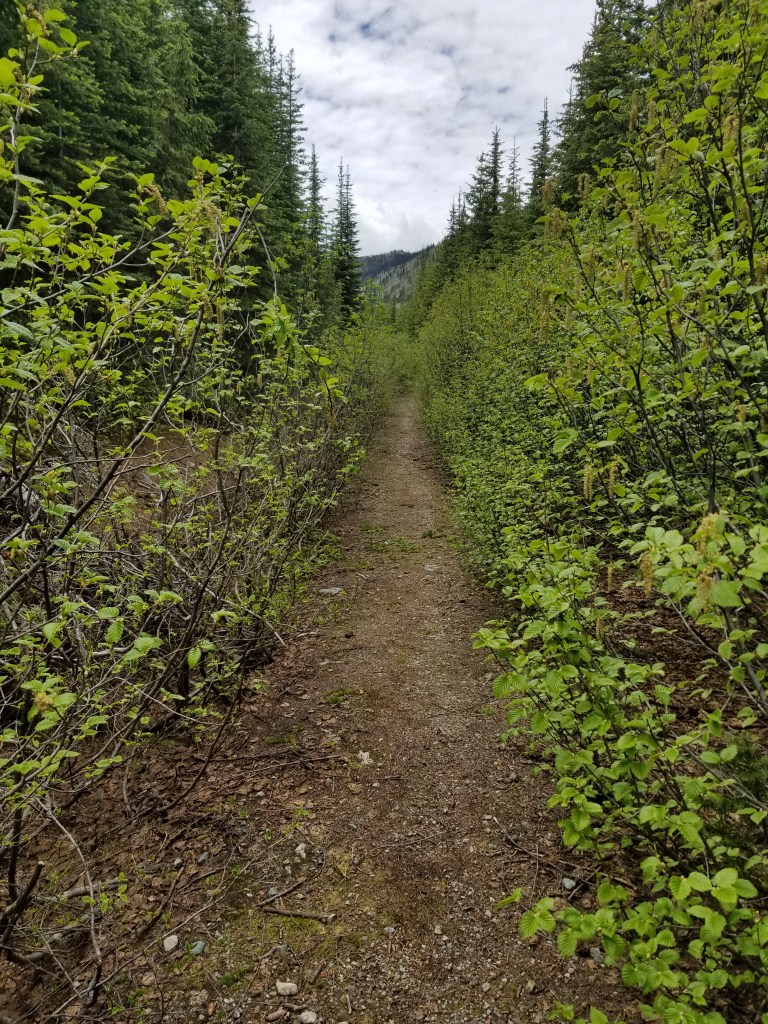
The road eventually turned into an abandoned forest service road. I saw my first official PNT trail marker. Alders and huckleberries grew in from the sides. It was a great way to use an old road. The Forest Service cant afford to maintain all their roads. I read somewhere they were the equivalent of the largest construction in the world.

While this trail was good for me, it was also a highway for bears. Indeed, on one section it seemed like a rest area. Needless to say, there was a lot of “Hey bears” from me along the narrow parts.

It switched to a real trail as I got higher. I stopped at the transition point. Two guys and a pack mule came by, said Hi and went on another trail. A real good cowboy chat that was.

Alders pushed in from the sides as the abandoned road turned to trail.

I descended the narrow trail across and down a steep slope. At the road at the bottom, I still felt strong so I went past the Red Meadow camp and pushed on.

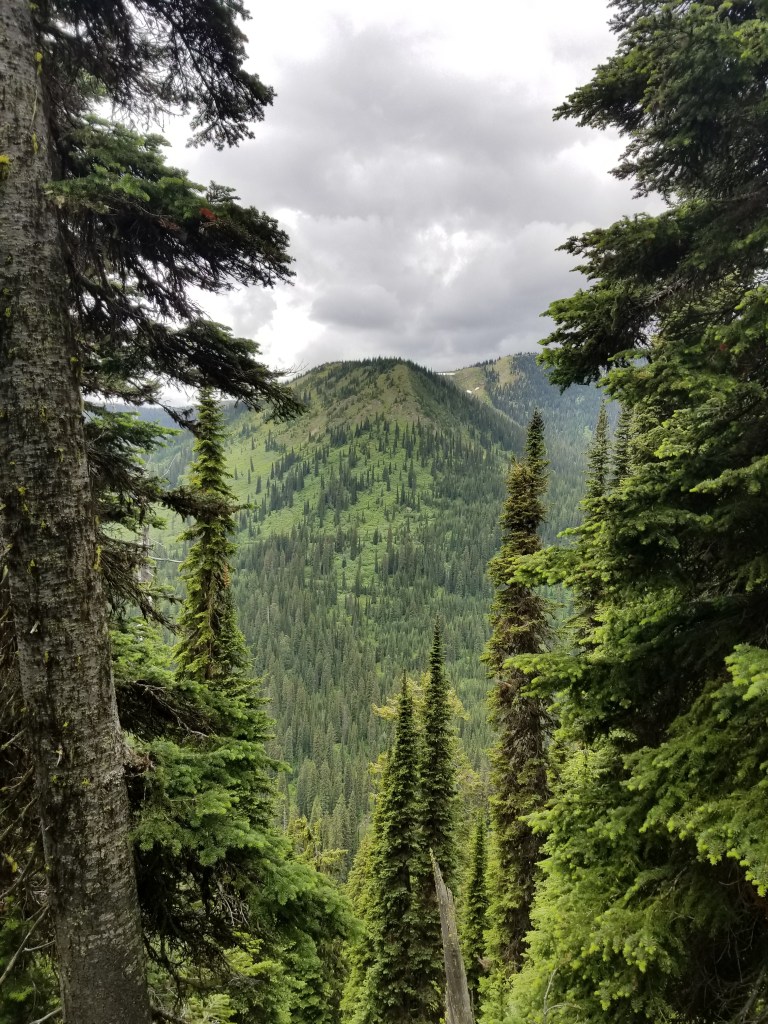
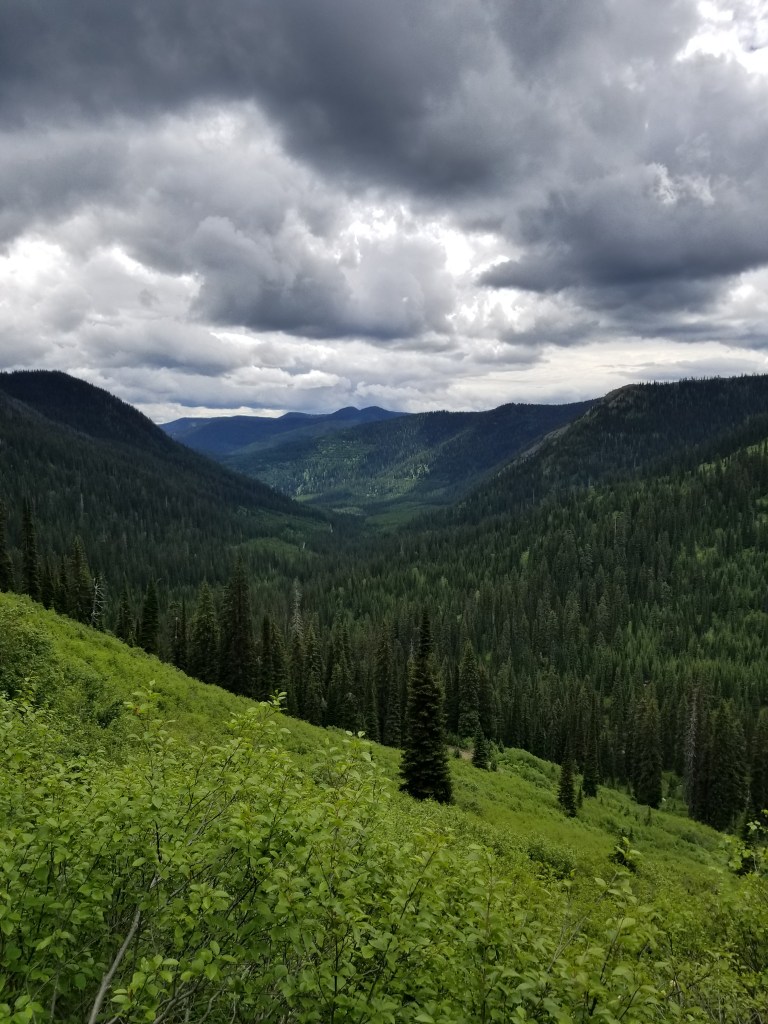
Looking across the valley before Red Meadow
Looking down the valley before Red Meadow Camp

I missed my last creek water supply and settled for a snow melt pond just before I went on a trail again. I immediately encountered snow patches on the trail. Snow patches are a big hassle. You step up on them and, depending on the temperature and consistency, walk across, slide, or sink in to a deep hole. In short, it is slow.

Knowing the trail would soon climb a ridgeline and stay there, I found a flat, snowfree place to camp. I built a little fire to take the damp off the 20 mile day and went to sleep early.

Wilderness Paperwork

Completing final steps before taking the first step.

After some hurry-up-and-wait, I received my official backcountry permit for Glacier National Park. I am officially permitted to hike in the woods.  I even had to take a test on bear safety. 

If you’ve been to the Boundary Waters and sat through the bear video, you’ll appreciate the order of magnitude here.  For example, I recall the Boundary Waters instructions were to yell, bang pots, and throw stuff at any bear in camp.  Here, you are supposed to stop, speak firmly, walk backwards, and not look the bear in the eye.  And whatever you do, don’t run.

However, if this fails to avoid an encounter, you are supposed to use bear spray and/or play dead while laying on your stomach with your hands clasped behind your head, presumably to protect vital organs.   Of course, the video says if the bear is deliberately attacking, not just startled, you should fight with sticks and rocks or climb a tree.     

I wanted that permit very much, so I kept my mouth shut.  Still, I was left a bit confused.  For example, who penned the scientific study on the importance of avoiding eye contact to prevent  mauling? Were volunteers divided into two groups of Direct Stare and Averted Eyes and then put in the pathway of a grizzly?  What was the sample size?  Another question I had was discerning between whether I was being attacked or just encountering a startled bear.  I’m sure there are some people adept at quickly discerning the difference, but personally, I still need a few seconds to decide between paper or plastic bags and indoor or outdoor seating.  Lastly, regarding the old playing dead thing; have these people not watched Revenant?

Please don’t think I am disrespectful of the National Park Service.  They are trying to preserve and administer access to some of the world’s treasures.  Permit systems control volumes, track hikers, and increase safety for people and animals. 

image
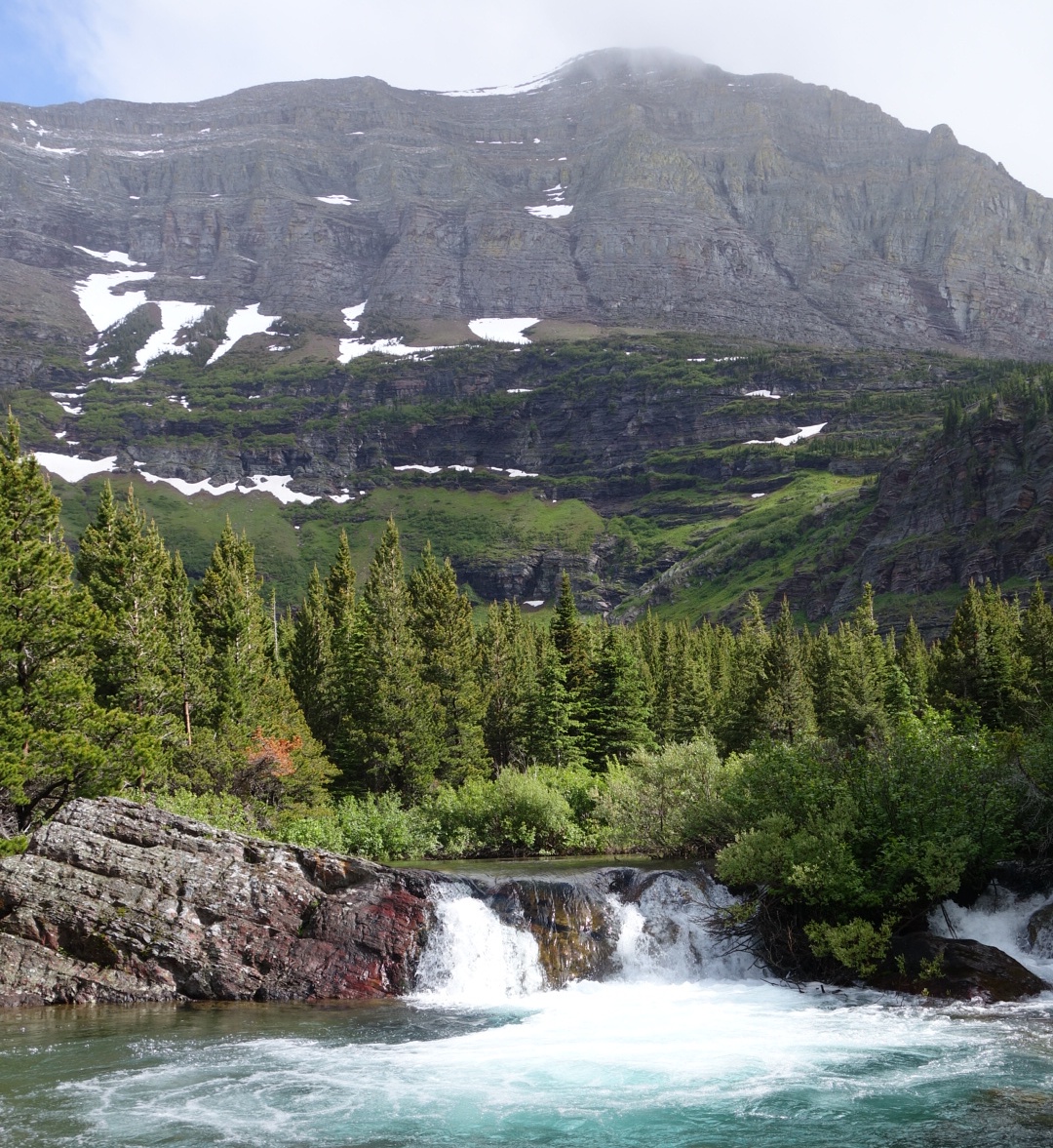
Swiftcurrent River

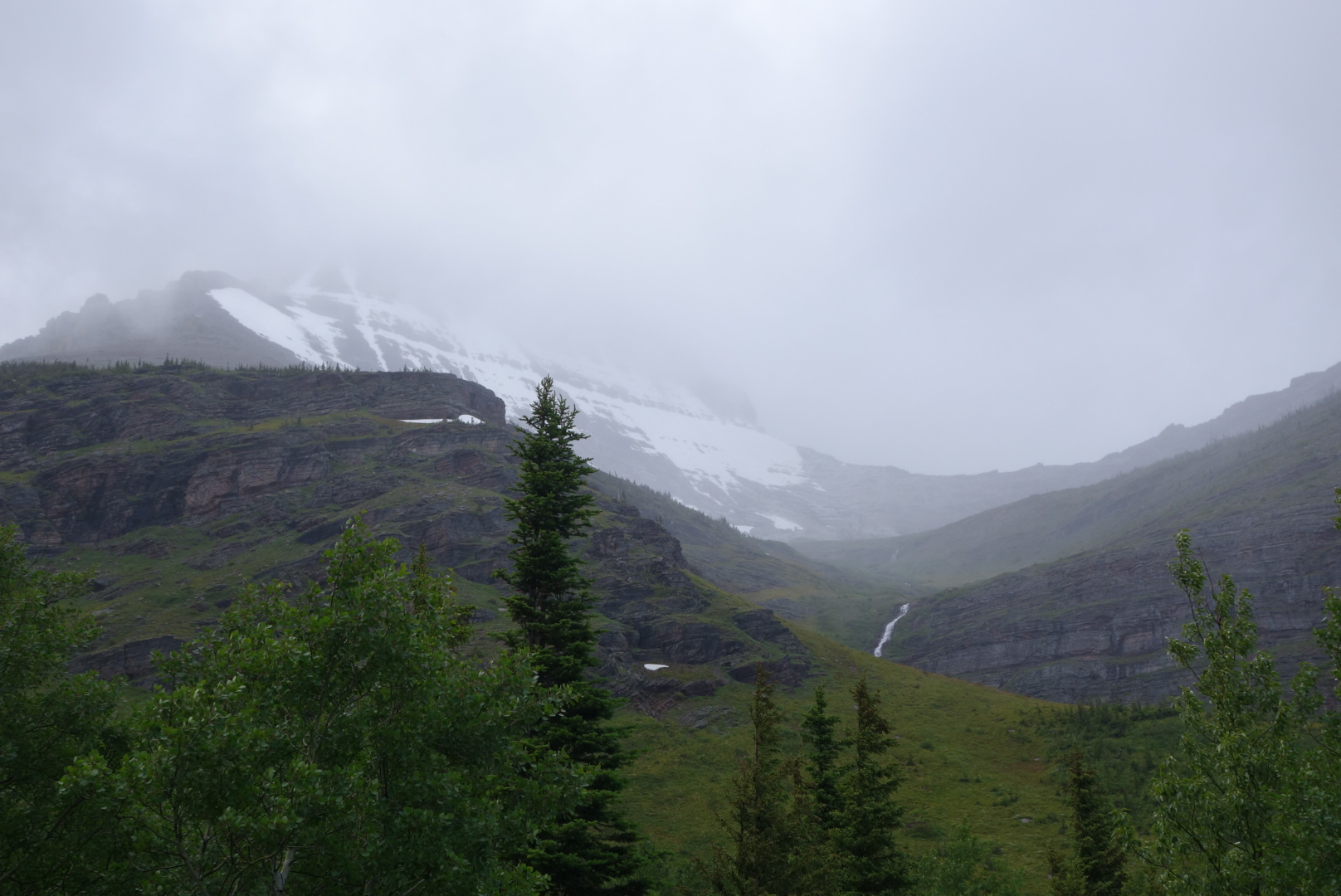
Glacier National Park is stunning.   I still have not seen the tops of most peaks due to storm clouds.  But what I have seen is amazing.  Just this afternoon I enjoyed a five mile walk in sun, rain, and snow.

I take a shuttle van to the Canadian border tomorrow and start walking south in the afternoon.  Fitting my current physical condition, I am going to hike the Belly River.  Most likely I will not be able to post for two days until I approach another park lodge. 

Until then, I hope you stay safe and either avert your eyes or attack.

image

image

image

image