Humbling Start

May 1st through 5th.

Driving down a lonely, gravel road in Nevada, I was excited, nervous, optimistic. Helen, my wife, was dropping me off at a “faint Jeep track” where I would start my Great Basin Trail (GBT) hike. She needed to get down to Las Vegas, return the rental car and fly home. We kissed, hugged and said goodbye for the next two months and she headed to the freeway. I headed into the sagebrush.

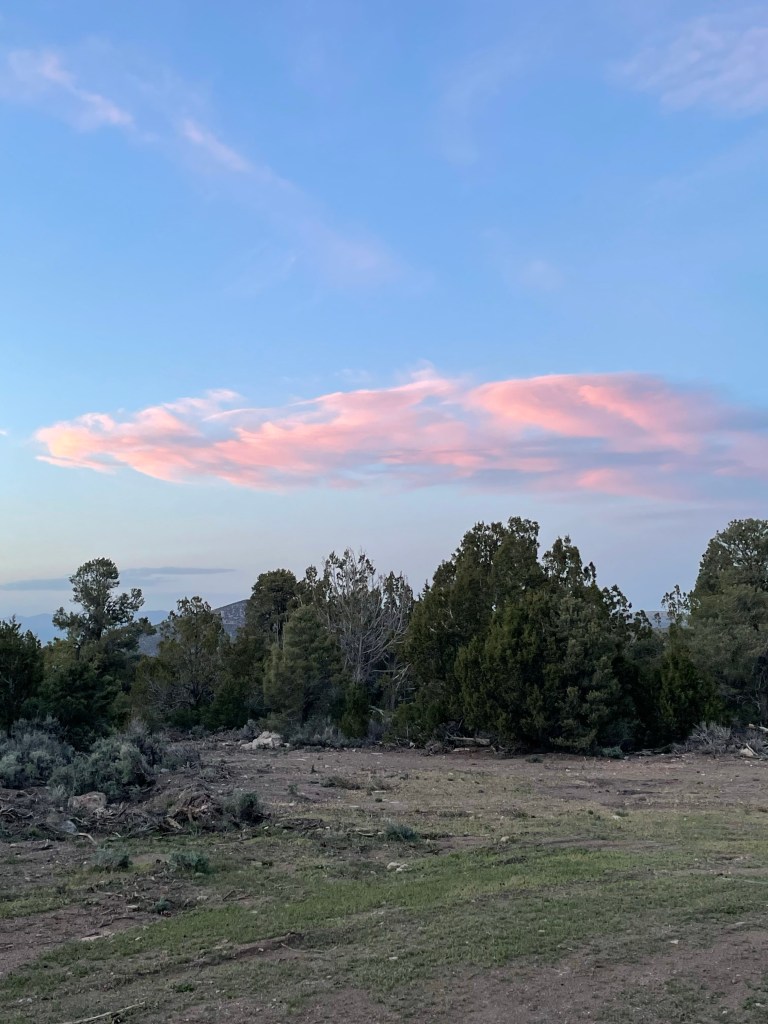
Storm clouds loomed in from the west, but they looked mild and I hoped they would miss me. Eastern Nevada seems like a mighty creature reached down and pulled a rake through from south to north. Mountain ranges go along in neat rows and hot dry valleys separate them. I was happy for this valley to receive rain, but I wanted no part of it.

Storm in the valley

As I gained elevation, I left the comfort of just following an old jeep track. As I started to follow geographic features, the flora changed from sagebrush to sparse juniper and pine. The storm briefly caught up to me and gifted me with some light rain and even a few snowflakes.

I arrived at my first water source and it was glorious. Indian Spring is a developed spring flowing with cold clear water. It was the last reliable source for several miles.

Leaving the spring, the route became very difficult. Scrambling up a rock formation, I tripped and extended my hands to cushion the fall. My phone, with detailed GPS information, bore the brunt and part of the glass cracked.
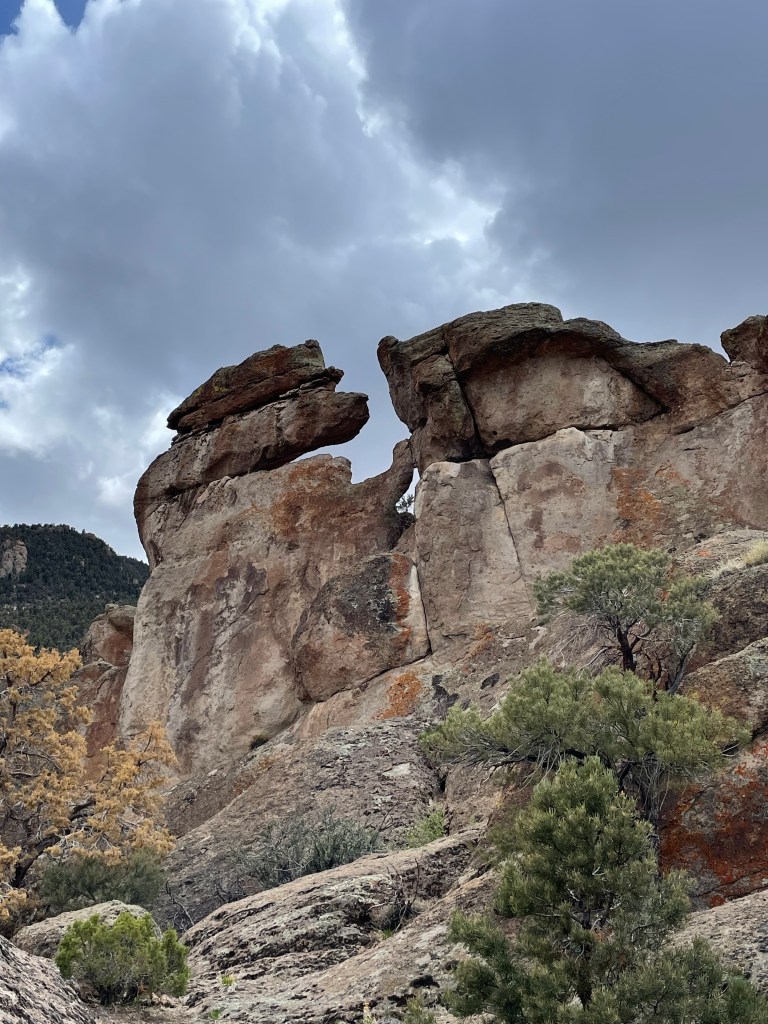
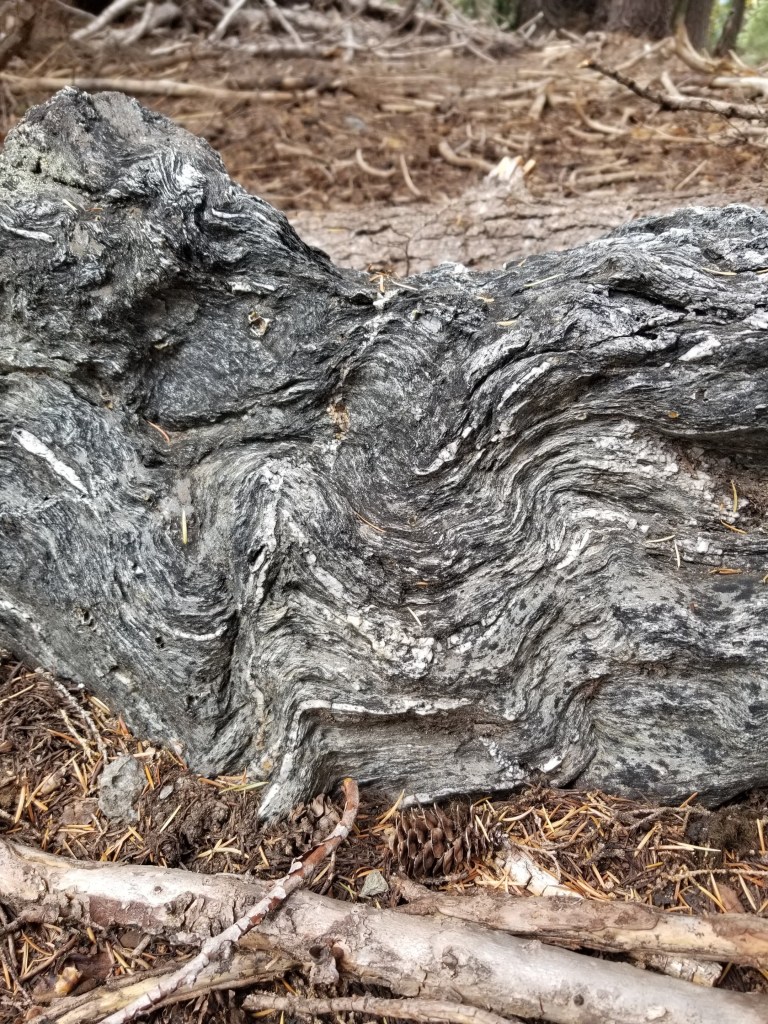
Strange rock formations
Do you see something in this photo?

Next I entered a very steep area where I was to follow game or elk or horse trails. There are three problems with this. First, animals are great pathfinders, but will vary their routes based on changes (tree falls, presence of predators, etc.). Second, in the early season the animals are lower enjoying the spring grass and giving birth. Third, I am 6’4” while deer are three feet from the ground at the shoulder. Thus, even if I get on a horse trail, my shoulders and face are pushing through branches that they miss.

I was making less than one mile per hour. The terrain was getting rougher with rocky cliffs. I fell again. This time slamming down on one of my carbon fiber trekking poles, snapping it. Towards dark, I did an assessment: almost all my water was gone, I was not going to reach my planned campsite, and somewhere along the way, my umbrella had been removed by a branch. Oh, and because I had been using my phone’s GPS mapping all day, my battery was nearing the single digits.
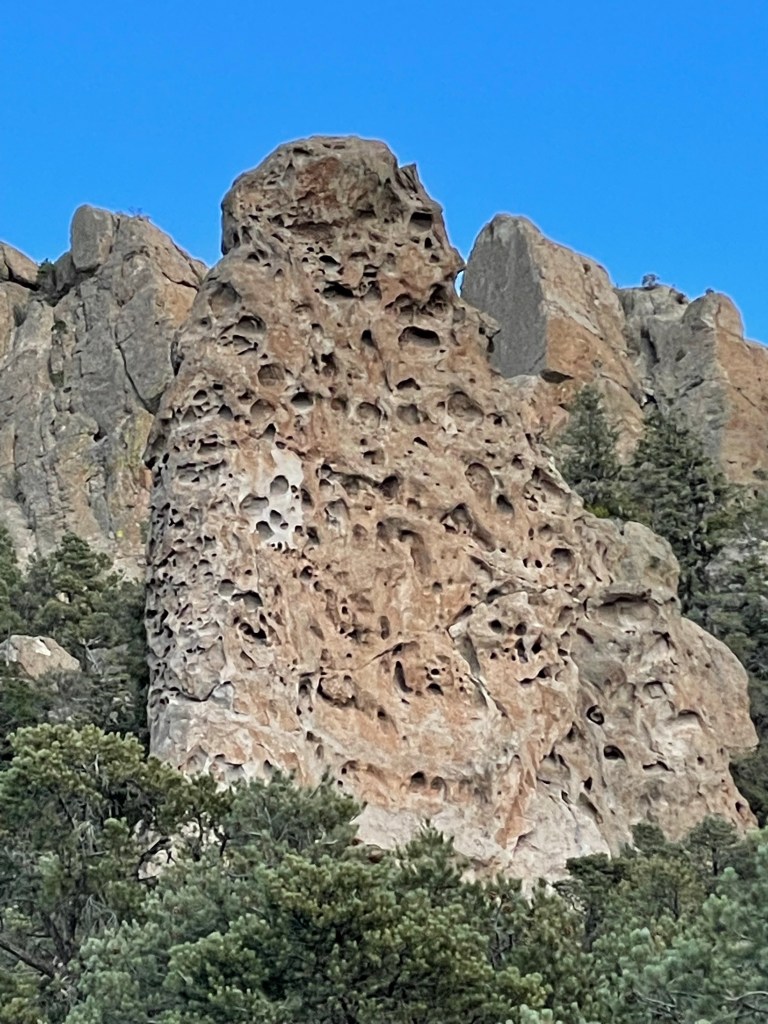
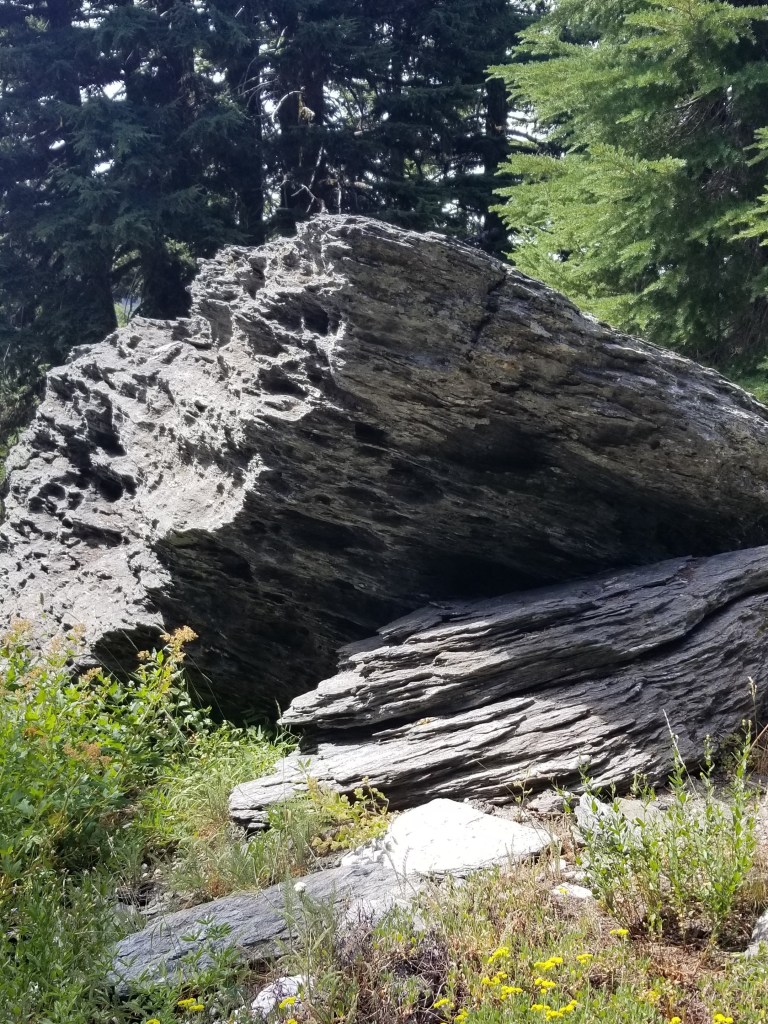
Geologists call this type of rock Swiss Cheese

So I pushed toward the nearest possible water source. As it got darker, I made my way up a dried stream bed. By the markings in the stream bed, other creatures had done this already. As the canyon narrowed, I finally found a slit in a rock containing a deep pool. Pushing aside the top layer of green growth i filled my filtering water bottle. I was glad that green is one of my favorite colors because in the fading light I could see a green hue even after filtering. “Wilderness wheatgrass”

The next day was more route finding among trees and shrubs, ending with a nice dirt road walk. I started to appreciate the silence and the smells. Smells from the plants, to be clear. Juniper, sagebrush, mountain mahogany, pine. If there was no wind, it was vast, pure silence occasionally pierced by a jet far overhead.

More rock
Abandoned

The third day was brutal. Mostly pushing through mountain mahogany and then, later, weaving through manzanita. I’m not a botanist, so excuse my oversimplified descriptions. Mountain mahogany is a tall shrub with a unique smell, interesting bark, and branches designed to shred clothing, slash arms, and remove hats from passers by. Manzanita is a low growing shrub with waxy green leaves, charming little pink flowers, and numerous thick sharp branches designed to cut shins, grab feet, and hide the ground. I ended up on a high windy ridge dotted with manzanita as night fell. I tucked in next to a burly manzanita that blocked the wind. I cowboy camped under a vibrant starry sky watching satellites ceaselessly perform their orbits.
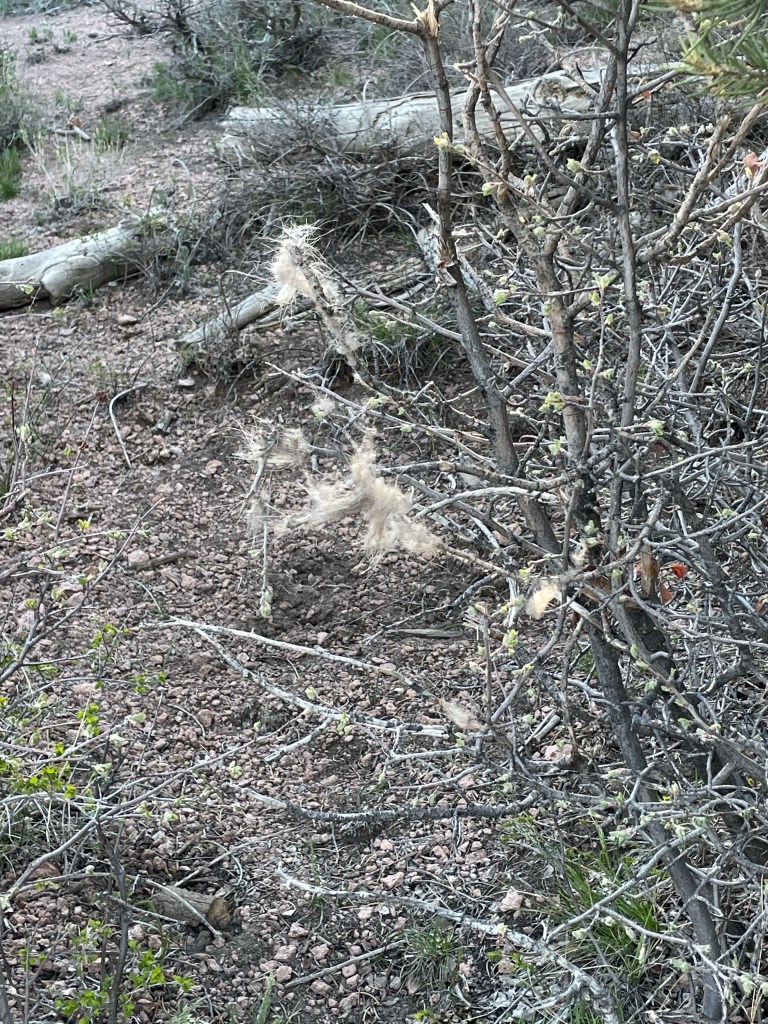
Elk fur snagged by mountain mahogany
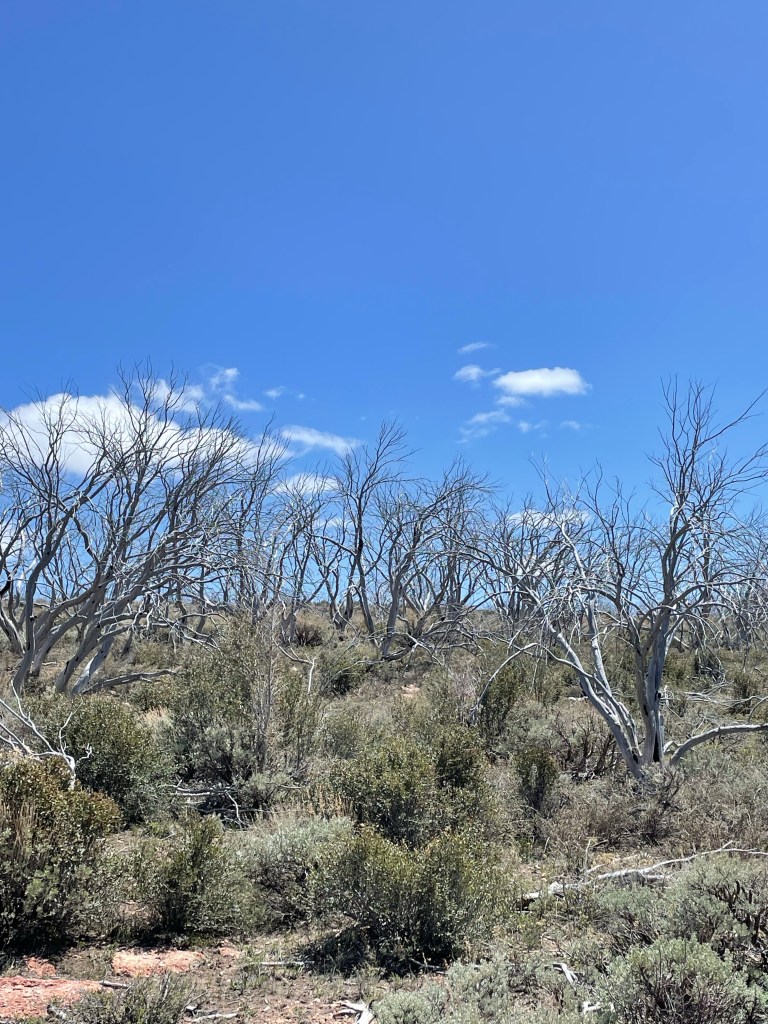
Remnants of a “forest” fire.
Huge views

My fourth day witnessed huge elevation gains. It began with an unexpected surprise. Someone had cleared a six foot wide swath through the thick shrubbery and marked it with cairns. Was it a hunter? And old sheep herders route? A misguided, overzealous Scout troop earning their shrubbery badge? Regardless, I was happy and smiling.

The smile wore off as I looked up and ahead. In the distance, on a barren mountain at 9,200’, stood the radio towers I would climb to pass. The path was dirt road and it was sunny and in the 50s. I knew I had to continue working on my uphill and downhill muscles for the mountains later in my trip.

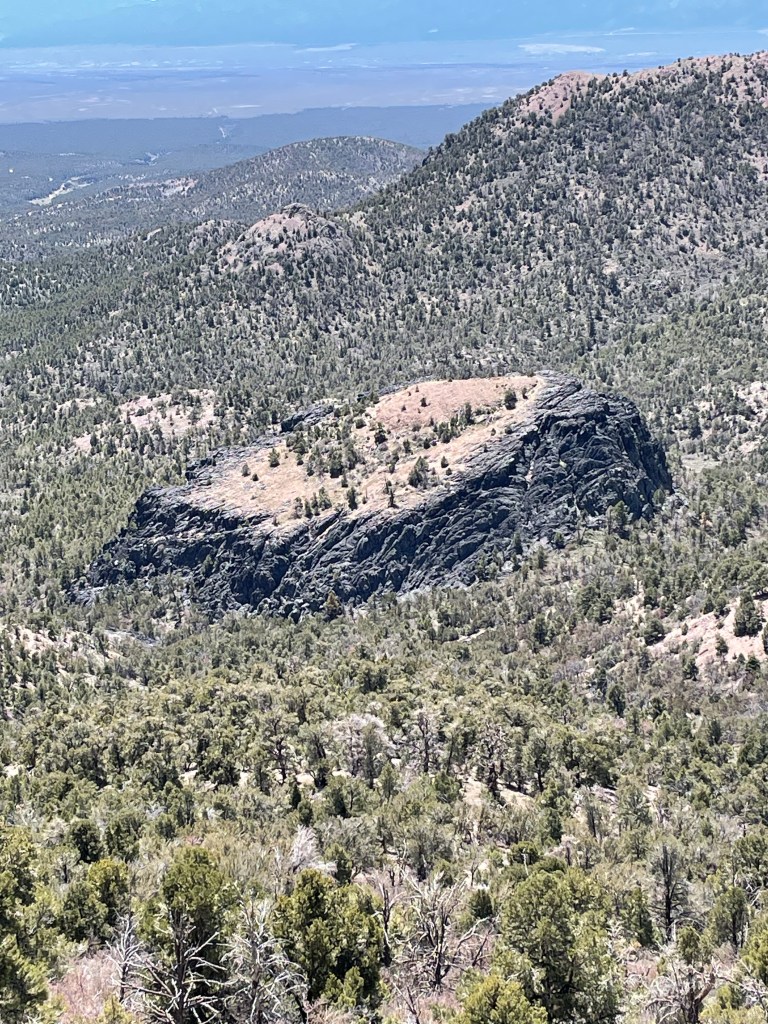
The views from the top were vast and great. I could look back and see where I started. The other direction I could see the tiny reflections of Pioche, my next resupply town. I sipped some of my dwindling water and began a knee-crunching descent. It was sunny, not windy and bereft of interesting things to look at, so I changed into shorts, fired up an audiobook, and set my own personal cruise control. There was, however, an intriguing geological feature. It was a large black, square lava tube that jutted sharply out of the forest floor. The top was almost flat with a miniature forest growing on top.
Having never seen a car all day, I walked in to my last water source, Page Creek Spring, where I would spend my last night before town. It was warm water with many green plant forms. Fortunately as I made my way up one side to find the source, I found a tiny spring releasing clear cold water. It was perfect.

There was an abandoned structure on site. An amalgam of stone, wood, and corrugated steel, I tried to figure out it’s former role. Home, loafing shed, who knows. I again cowboy camped on public land. However this night it was not windy. Very quiet and still except for the one round of coyote howls to each other across the valley .

My final day was a warm 20 mile road walk in to town. Desolate country. Besides one band of wild horses, it was just me, horned toads and lizards and an occasional antelope in the distance. I saw my first car and person since Sunday as I neared Pioche. It is pronounced pee oh shh. Grabbed a sandwich and water, checked into my motel and started my “town” routine.

Wild horses

In summary, it took me one day longer to travel 85 miles. This trail is tough. I have to get better at not using my phone GPS map every five minutes. This trip is going to be far less following a trail and much more forging a route. It is big, windy, lonely and I like it.
Hello California

Day 41. August 6

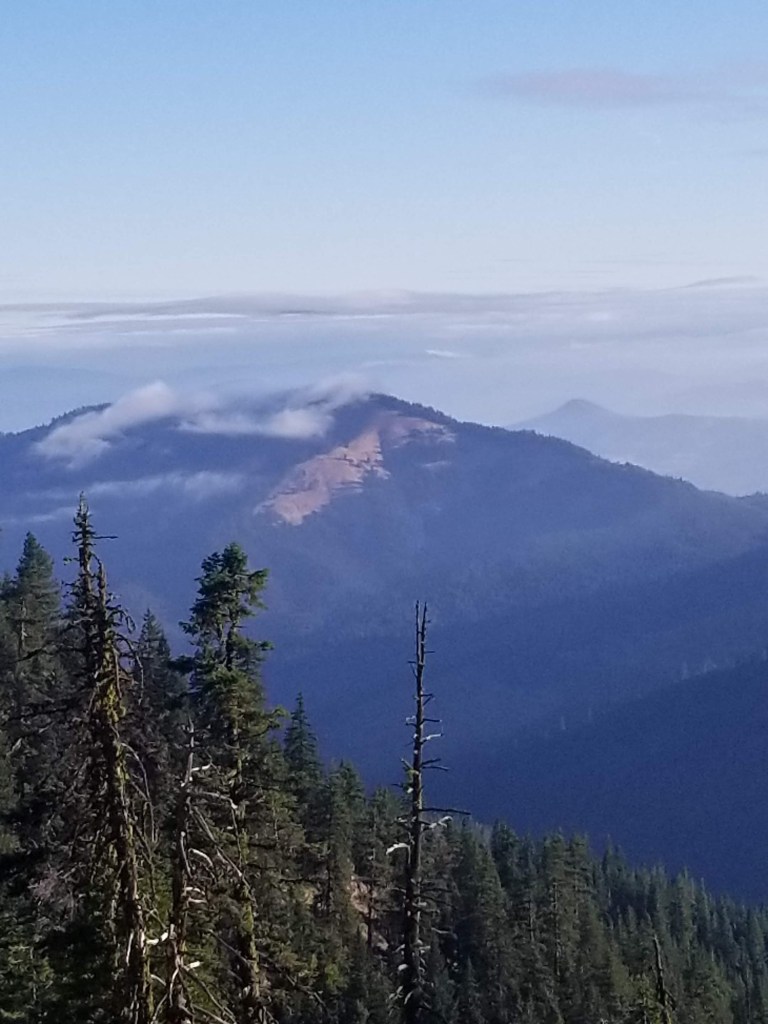
It was a pretty view in the morning. I was up high. There was a ceiling of clouds just above me. Low clouds skittered around the hills below.

Remaining clouds burning off in the morning sun.
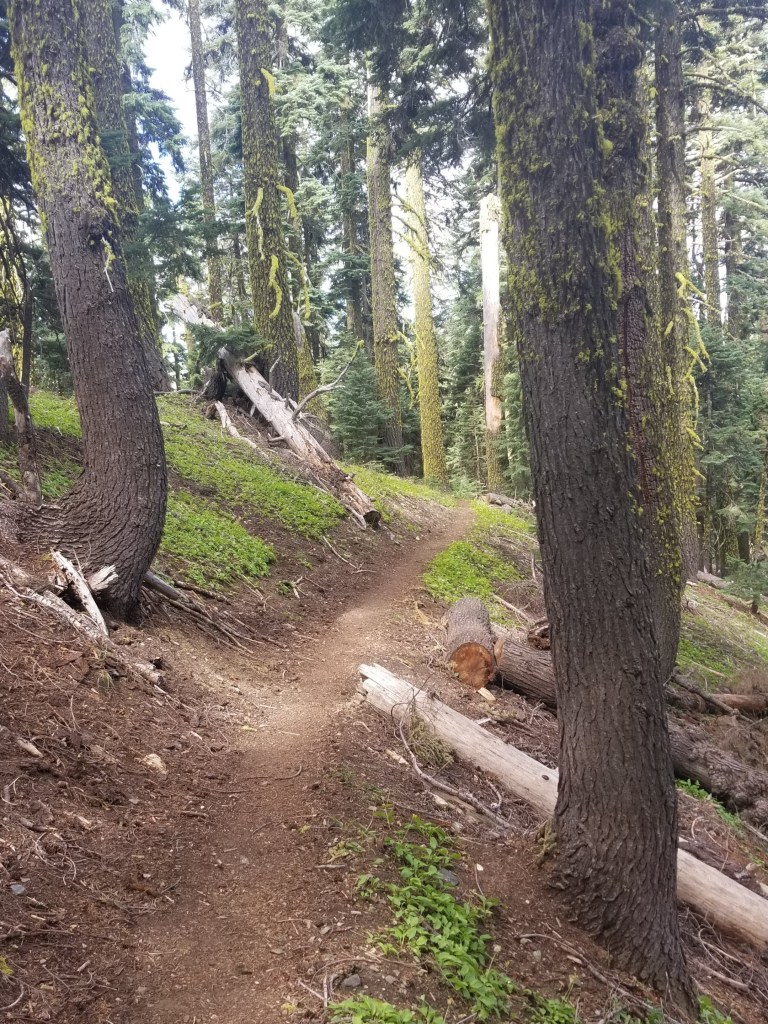
Perfect trail

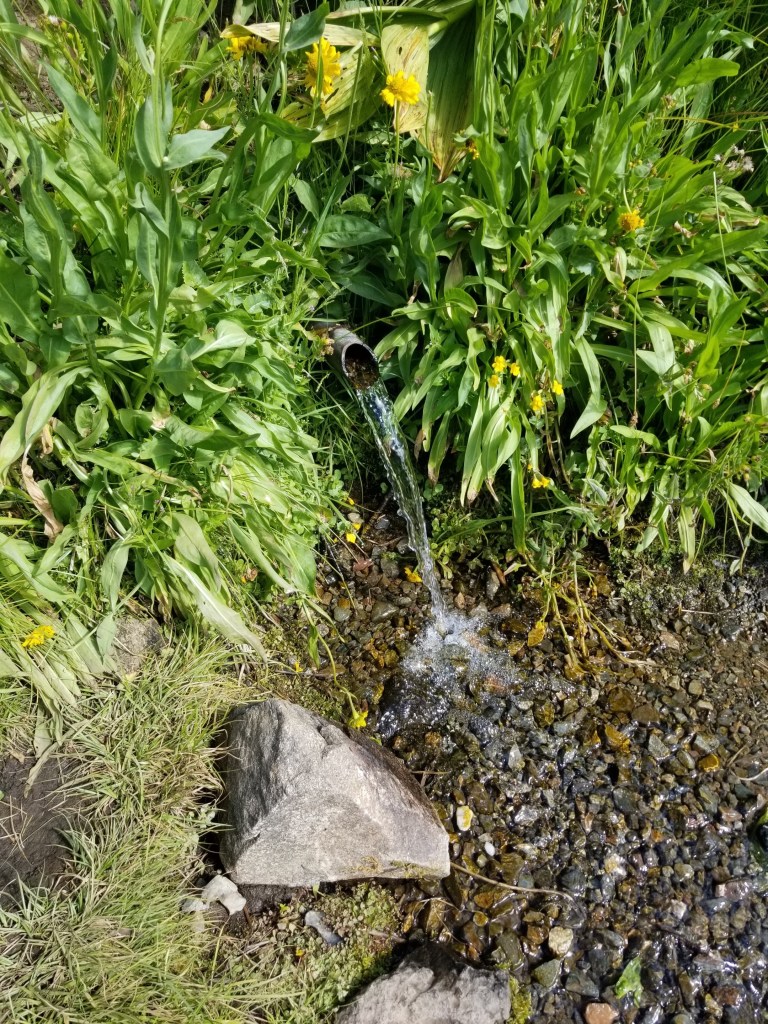
It was a great day of hiking, mostly slight ups and downs along ridges. In the late morning I came up to a wonderful water source: a spring that had been tapped with a pipe.

Spring Water.

A trio of ladies came to the spring as I was filling up. They were retired and had been doing PCT section hikes for years. All at least in their 60s, they were boisterous and energetic and brightened my day.

I was just walking along later in the day when I heard some people getting out of cars and preparing to go on a day hike. I said “Hi” and kept walking. Their energetic Labrador kept running to me and then back to them. I was surprised to stumble on the trail marker noting the state line between Oregon and California. I tried taking some selfies and the day hikers were nice enough to snap a photo. Dutifully I wrote my name in the trail register and continued on, feeling a lot better knowing I had walked from the northern border of Oregon to its southern border.

Water was just a little scarce. I filled at a creek where cattle grazed (not the best) and late in the day settled for a stagnant pond. However, there were some very interesting rocks. They had multiple thin layers. Some of them reminded me of how croissants are made…with layer upon layer of thin dough.

Layered like croissants but much tougher to chew….

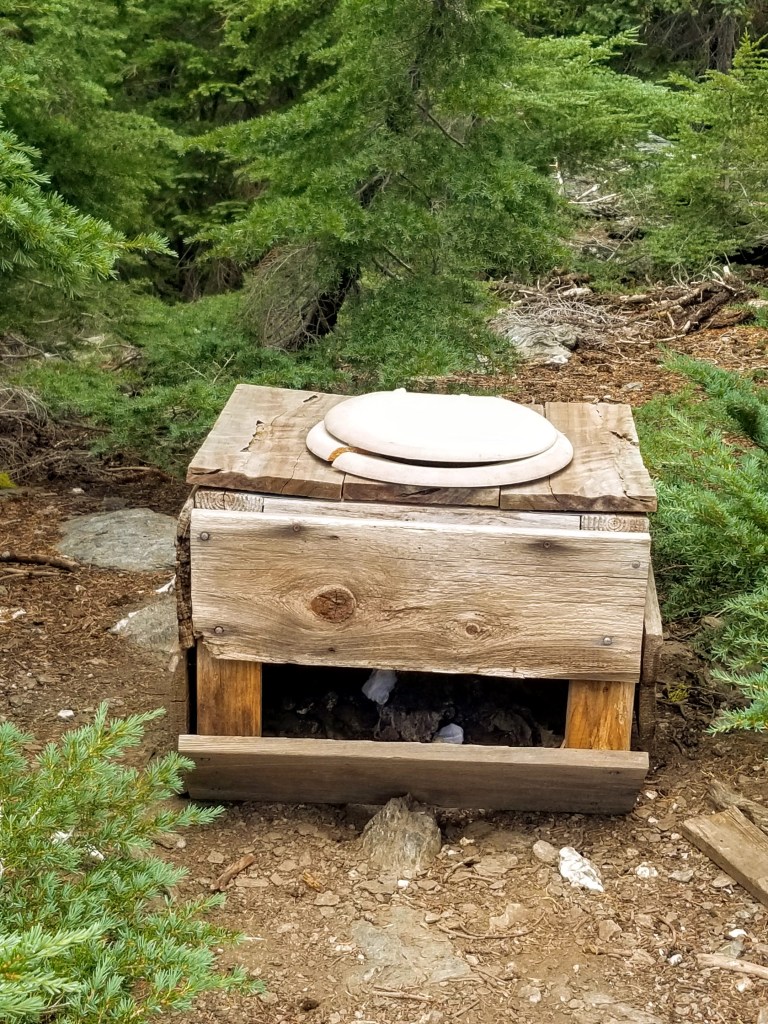
More puzzling was a strange toilet fixture. I had encountered variations of these a few times before on backpacking trips and puzzled on their purpose. They are usually a toilet seat on a wood frame about 12 to 18 inches high. Being a man who cannot rest unless I am able to unravel the mysteries of the universe, I had found that hunters make these and keep them near their hunting camps. In season, they dig a good size hole, place the fixture on top, and then have a functional, open air toilet for several days. At first, I wondered why they left them in the woods. However, when I considered the alternative of explaining to your spouse why you brought it home and your plan to keep it in the garage, the wisdom of just leaving it in the woods made tremendous sense. Sadly, I was dumb enough to go lift the lid. Even more sadly, some people had actually used the fixture and left their product just sitting there.

Leave no trace….

As the sun set, I had some sub-optimal tent-site choices. I ended up setting my tent within five feet of the trail. I always think this looks like a rookie move and didn’t like doing it. However, it was getting late and I knew I wanted to get up early and get going so I could drop down to my next resupply town, the Seiad Valley. My tent barely fit into the spot. I was surprised the temperature was falling so quickly and put on my down puffy and hat. I ended up sleeping in them, too, after setting my alarm for 4:00 am. With no wind, I was certain that if any animal walked along the trail at night that close to my tent, I would have some form of a coronary event.

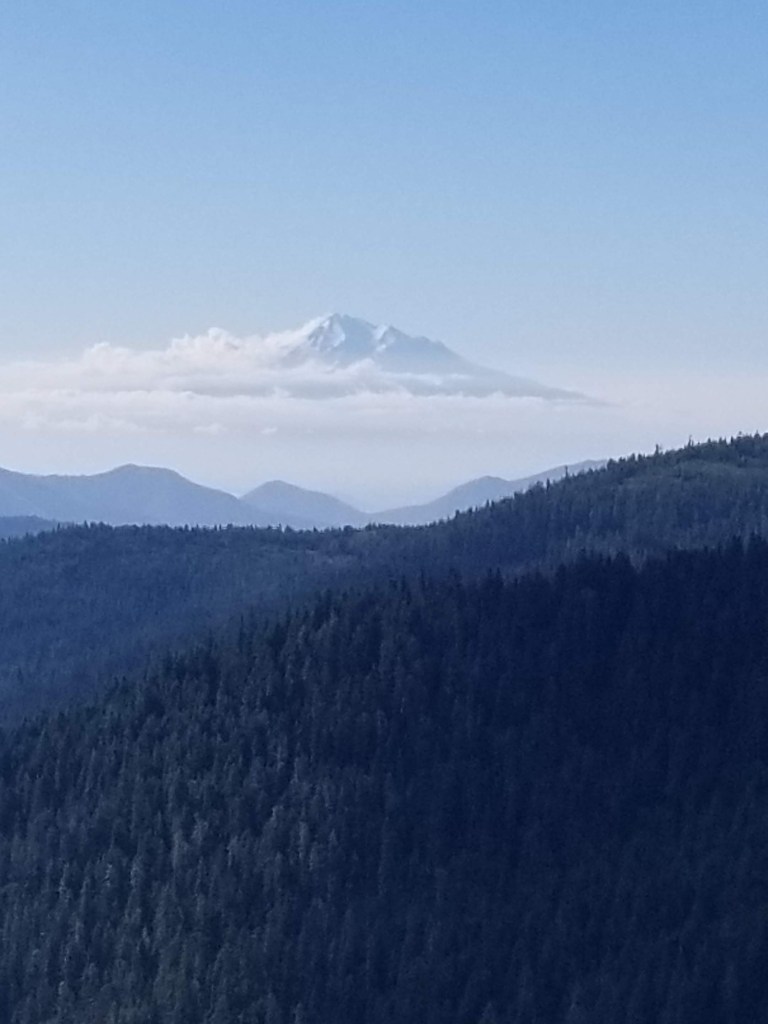
Shasta sometimes seemed to just float in the distance.

Shasta Sighting

Day 40. August 5.

It was going to be a hot day. I had some elevation gain. And, I was once again leaving town with too much food in my backpack.

The day started off with a good climb, heading up to Mount Ashland. I passed a young couple that planned to hike from Ashland to Lake Tahoe. It sounded like a pretty good hike.

I came across a strange snake. It looked like a worm and disappeared into the ground.

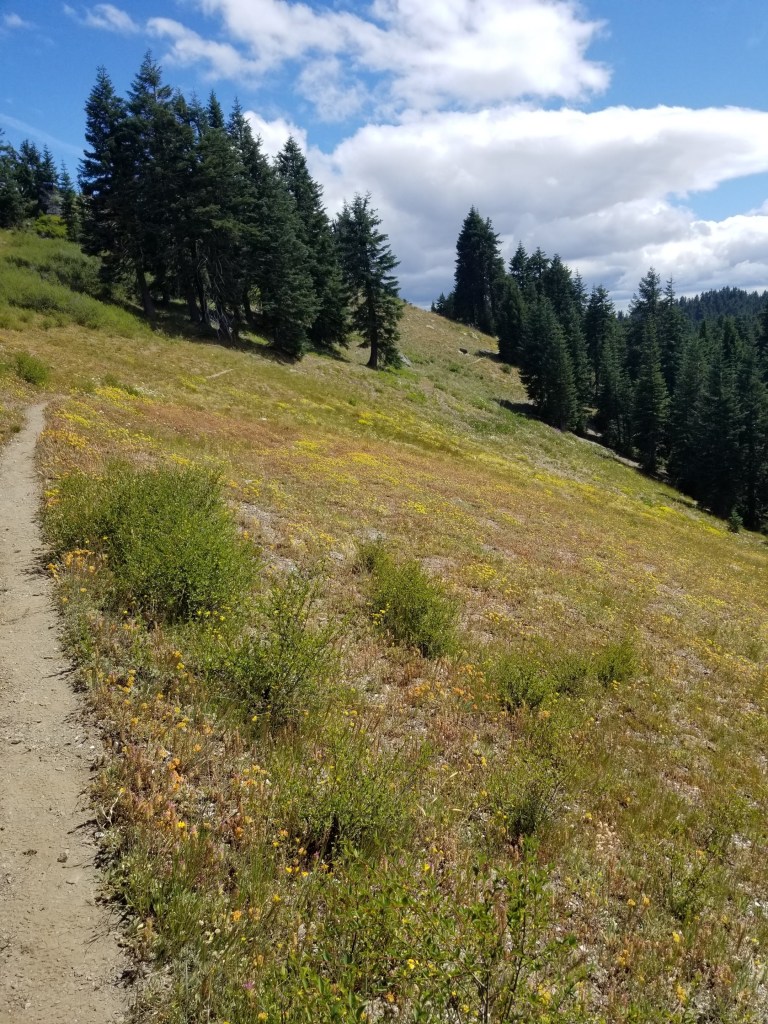
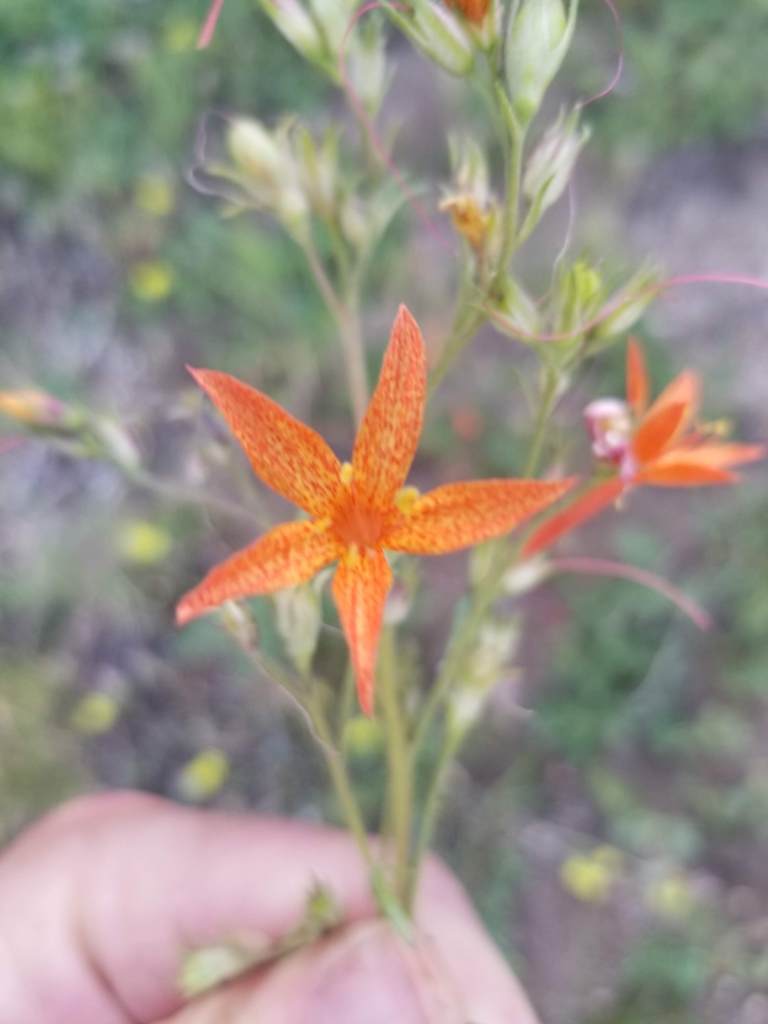
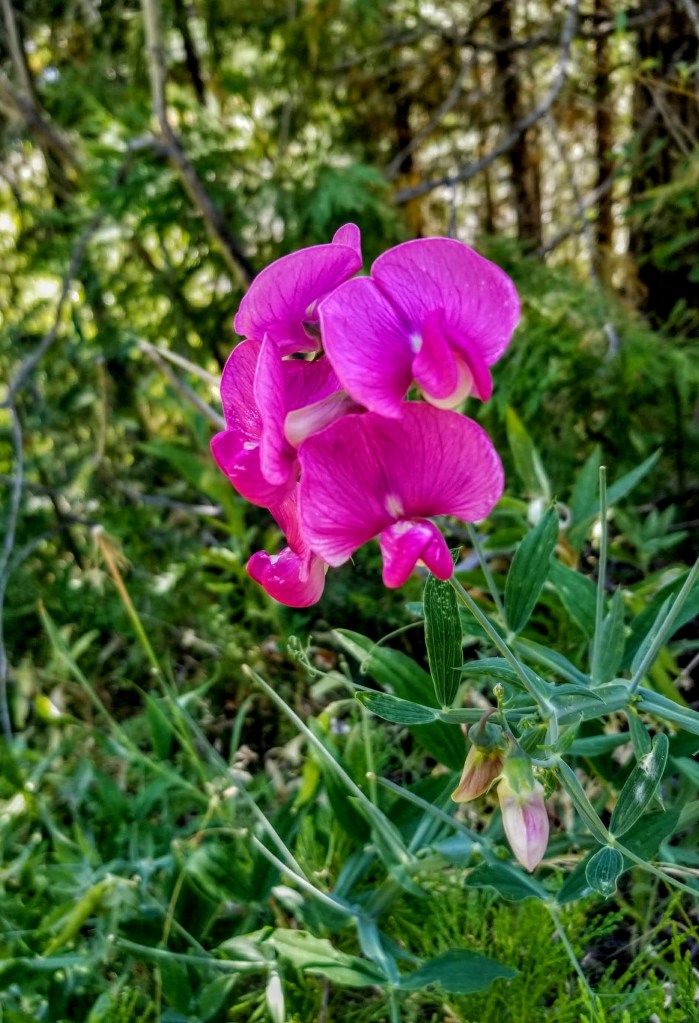
Later, I caught a glimpse of Mount Shasta, a huge mountain in California. The trail was pretty. It went through a few meadows near Mount Ashland with some cold spring-fed streams and plenty of flowers, including an orange variety that was new to me.

First time seeing this flower

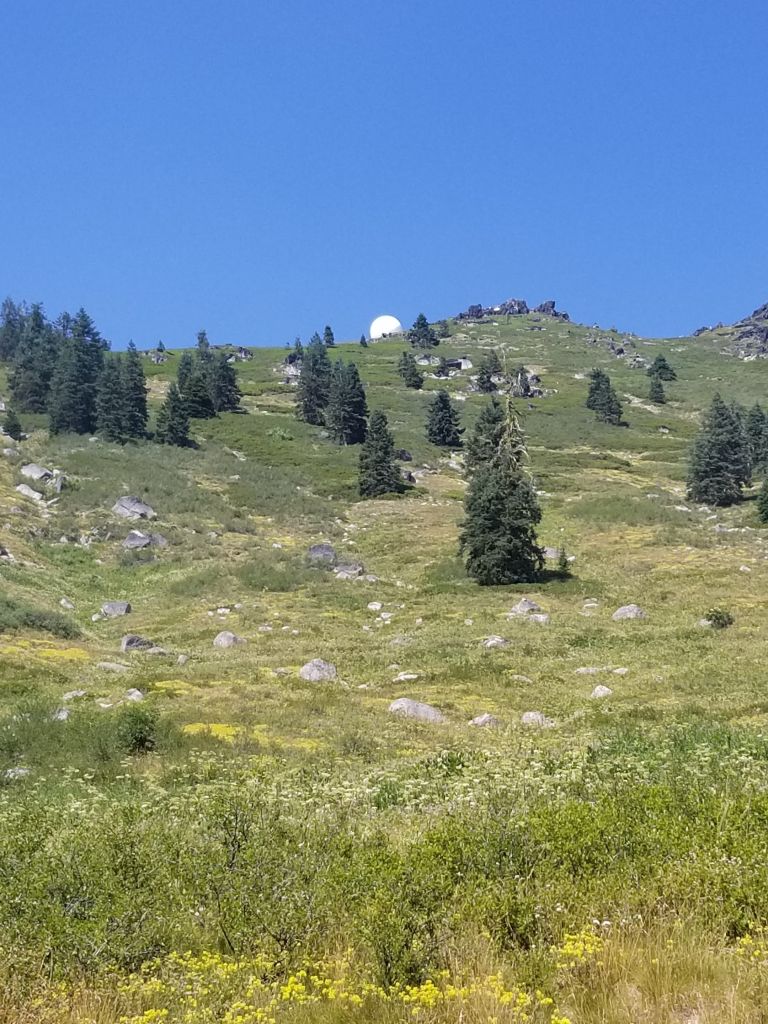
It was nice to see honey bees in large numbers; back home, I live in a suburb and rarely see honey bees. Also, there was a large white structure that looked like a golf ball on top of the mountain. This made it easy to identify the mountain to gauge distance traveled as the day wore on.

Odd white structure on top of Mt. Ashland

Approaching sunset, as thunderheads slowly built up, I put in my ear buds and listened to an audio book. I was a little startled when a black, furry VW Beetle ran down the hill 50 feet in front of me. I quickly realized it was actually a large black bear I had scared. It was amazing how fast it could run. There are often warnings to not run from a bear. I can see why.

Understandably, I stopped the audio book and became much more focused on my surroundings. Sure enough, about 15 minutes later I heard some wood crunching up hill from the trail. I looked up to see a furry black head. I tried to get a video of the bear as it methodically tore apart a downed log, eating the grubs or ants inside.

Before finding a campsite, I gathered some water. I met a north bounder, warned him about the bear, and shared the usual trail gossip (when did you start? favorite section? best town stop?) I sent a satellite text to Helen asking about forecast lightning activity in my area. I could hear the thunder from what seemed like cloud-to-cloud lightning. She replied that it looked like I would just miss it.

I camped at a sharp bend in the trail. Having seen the two bears, I was very diligent about hanging my food high and 200 feet away. Also, I hung my backpack high and away as well.

There were a few ominous wind gusts, but they only brought cool temperatures. The storms missed me and the night was quiet and uneventful. Just what I needed.

Preparations: logistics

A long distance hike requires planning. At a minimum, there’s the path and mileage and opportunities to get food and water. For the most popular trails, there has evolved a basic set of GPS locations, topographical maps, and descriptions of communities along the way that might provide food, shelter, resupply packages, or other services.

You first need to decide on a direction. The Triple Crown of U.S. trails (Appalachian, Continental, and Pacific Trails) have historically been followed from south to north. The arguments for this approach include following warmer weather (snow melt) north, starting and finishing earlier, and tradition. Going in a northbound direction is called a “NoBo.” The problem with this approach is that in the case of western trails (PCT and CDT) you are likely to experience two snow challenges in mountains. The first is early on when entering the Sierras or San Juan’s. Remaining winter snow can be a challenge. And if you are not careful towards the northern end, early fall snow in the Cascades or Rockies can be a risk.

A southbound (“SoBo”) trip has some advantages. Satellite imagery and snow sensors tell exactly what starting conditions will be like relative to snowpack. Additionally it is less crowded. The biggest negative is the challenge of getting through the southern end of mountain ranges before winter snows begin.

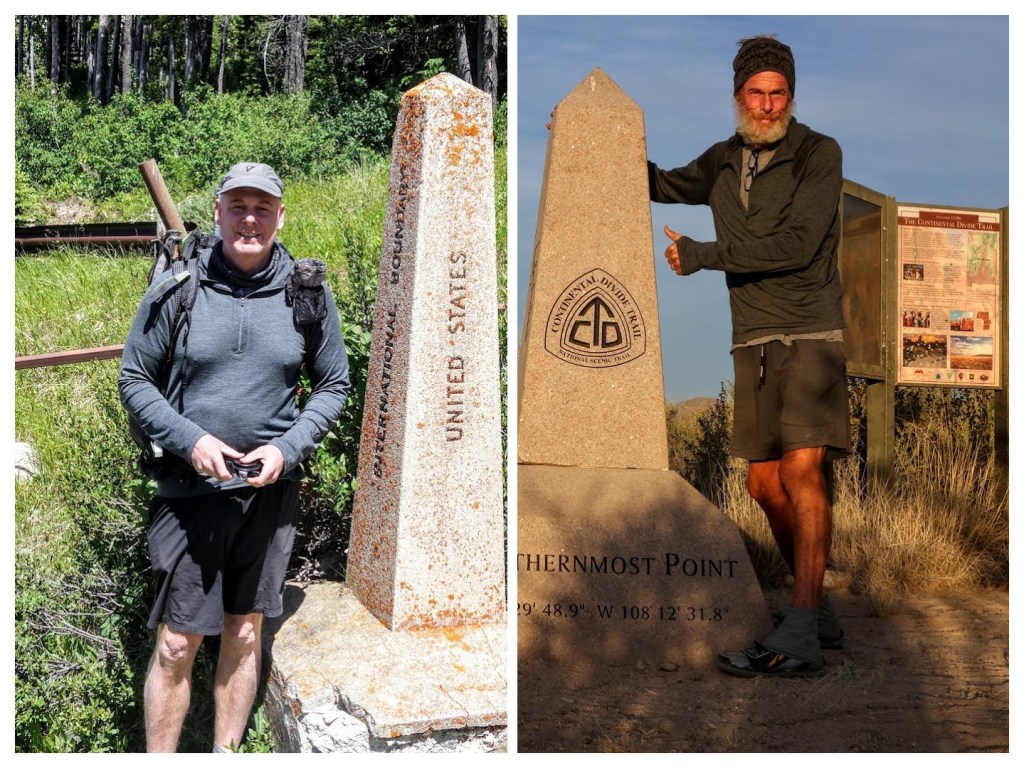
I’m going SoBo on this trip. I have estimated hiking speeds and developed a resupply plan. One goal will be to eat more. On my CDT SoBo, I lost about 50 pounds.

In 2016 I was able to convert my body fat to facial hair.

Next, I’ll write about food.