My Last Full Day on the CDT

October 30th

No critters visited me in the night.  The javelinas use the arroyos as a highway system.  I was afraid they might smell my camp and come up and visit, but they left me lone.  The landscape is gradually getting harsher and I think animals must have a very challenging time here.  However, I remember reading about a group of big horn sheep that still survive in the Big Hatchet Mountains.  I can’t imagine the in-breeding that must occur in these isolated animal communities.
dsc06539

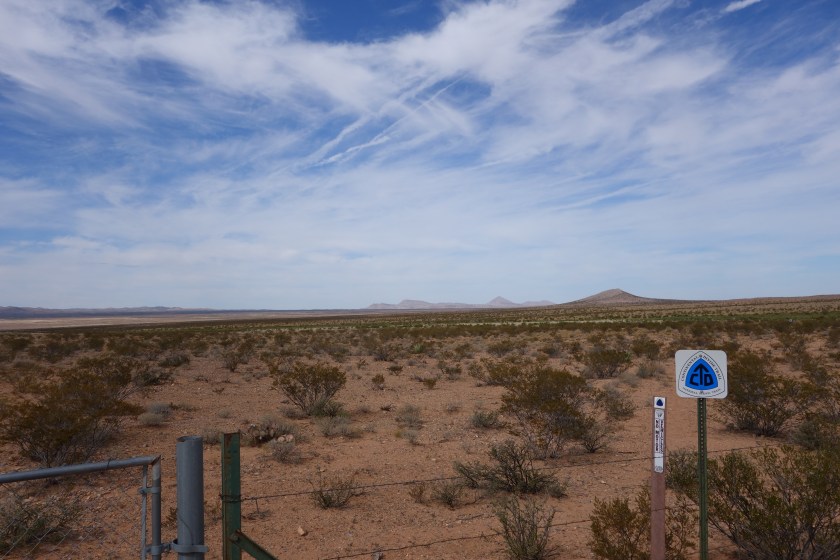
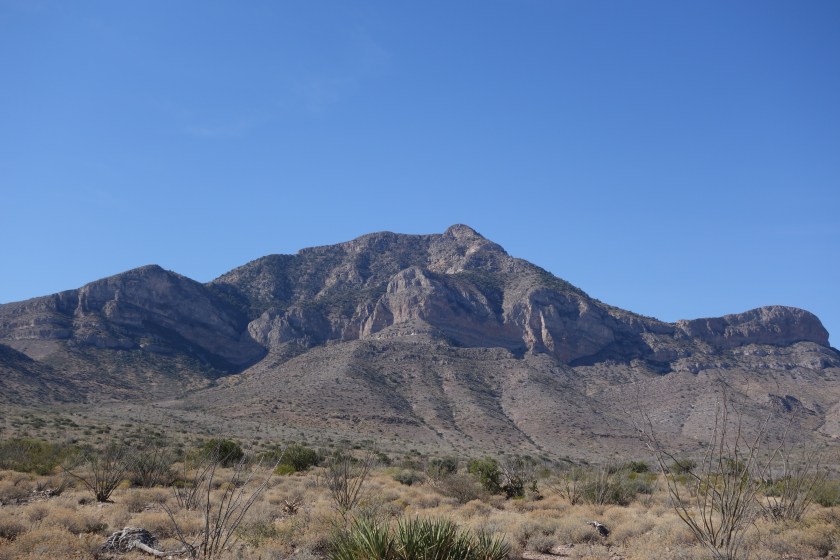
To help the sheep, the BLM has designated much of the area as a Wilderness Study Area (WSA).  At face value, that is good.  However, the implication for the trail is that no improvements can be made which disturb the surface so metal posts with white signs are not allowed.  Instead, the trail markers change to short wooden posts held upright with rock cairns. Incredibly, cattle grazing is an allowed use in a WSA and cattle love to scratch their itches on these posts.  As a result, the posts are often toppled and invisible.    Thus the trail is more challenging in this section.

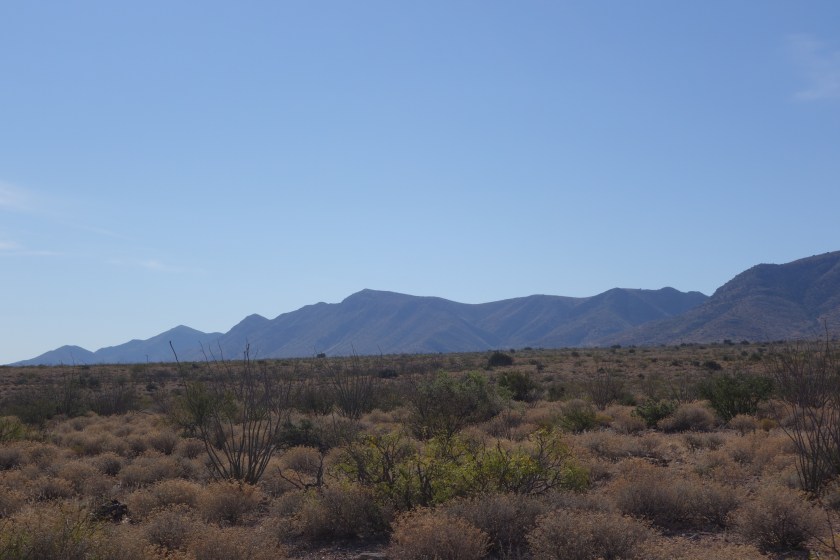
Early on I found the highway 81 water cache and stocked up.  It felt like it was going to be a hot day. The Big Hatchet Mountains are, not surprisingly bigger than the little Hatchet Mountains.  They project a stark image.  There are a few canyons that cut through and allegedly Geronimo knew this area and would use the mountains to dodge pursuers.
dsc06541

I got tired of trying to follow the trail.   I could see the canyon I needed to reach and had had enough of the close calls with the cactus, ocotillo, and other sharp items.  I moved east to flatter ground and just navigated towards Sheridan Canyon.
dsc06542
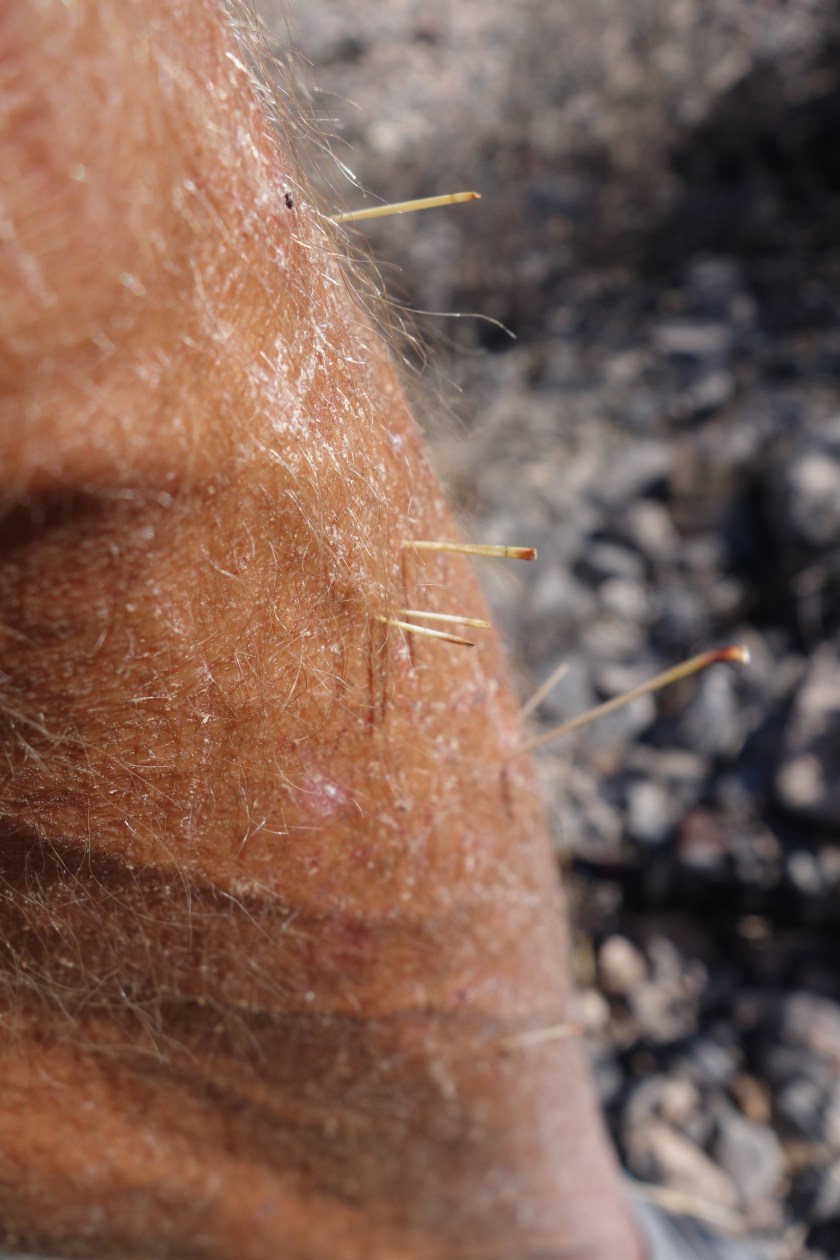
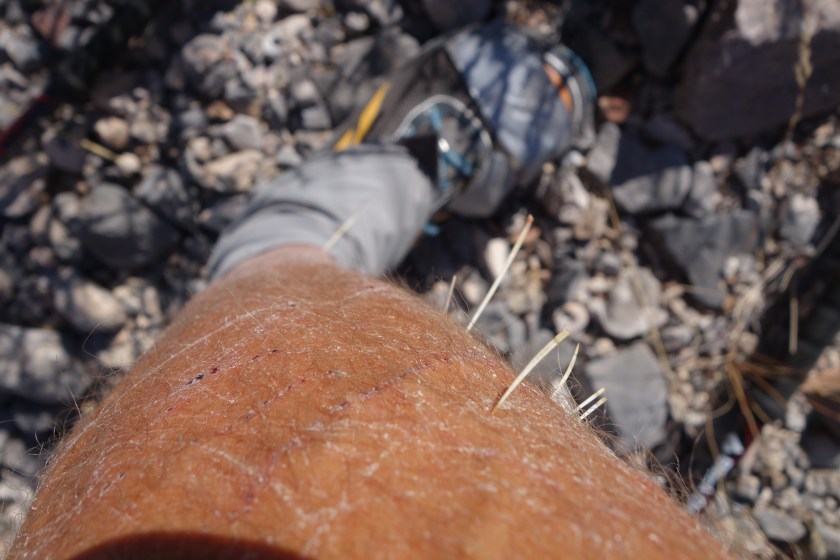
I made a quick stop at the CDT acupuncture clinic.  (Its okay if you admire the very attractive footwear that I stylized myself using duct tape.)
dsc06543
They look worse than they are.  You can just pluck them out.
dsc06544
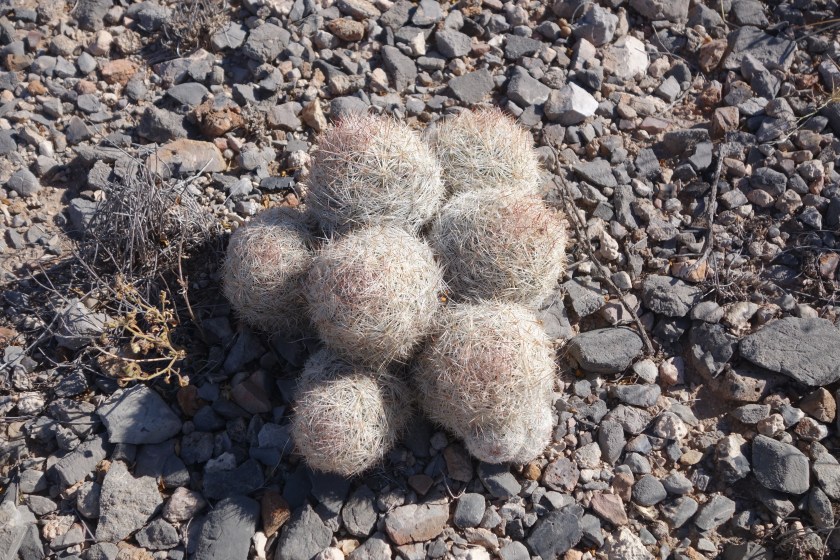
This little cactus looks like a puff ball, but is nothing of the sort.

Around 3:30, I reached Sheridan Canyon. this is a gap  where the trail cuts through and goes around the last of the mountain range before reaching the border between the USA and Mexico.  Also, it is the last water cache.  I took some time to hydrate at the cache.  The water was a little warm as the brown metal cache was pretty exposed to the sun all day.  I didn’t care, it was wet.  While reading the register (geez, north bounders write a lot) I heard an ATV approach.  I sat perfectly still as it rode by.  No idea what the rider was doing, but he didn’t see me and I was fine with that.

I walked up through the canyon in a westerly direction.  At its peak it switches south again.  The trail drops down into an arroyo.  Given the force of the flash floods, any signage gets washed out, so one is always wondering when to climb up out of the arroyo.  At this point, the novelty of the CDT is expected but still not appreciated.

There were a last set of small hills I had selected as a goal. After eventually switching from arroyo walking to gravel road, I made pretty good time.  Just as I reached the hills, I found a clear patch and made camp.  A stray steer called out to me from the hill, I suppose hoping I was the rest of the herd.  Hearing no response, he quieted down quickly.

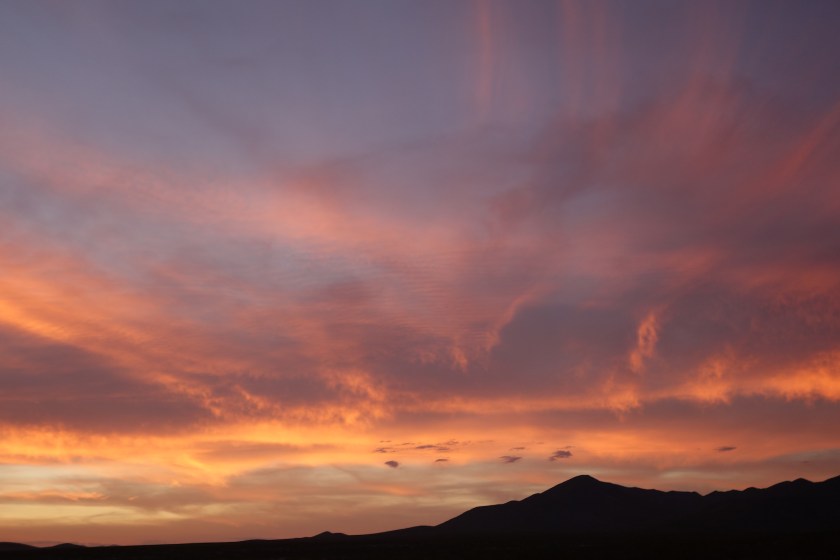
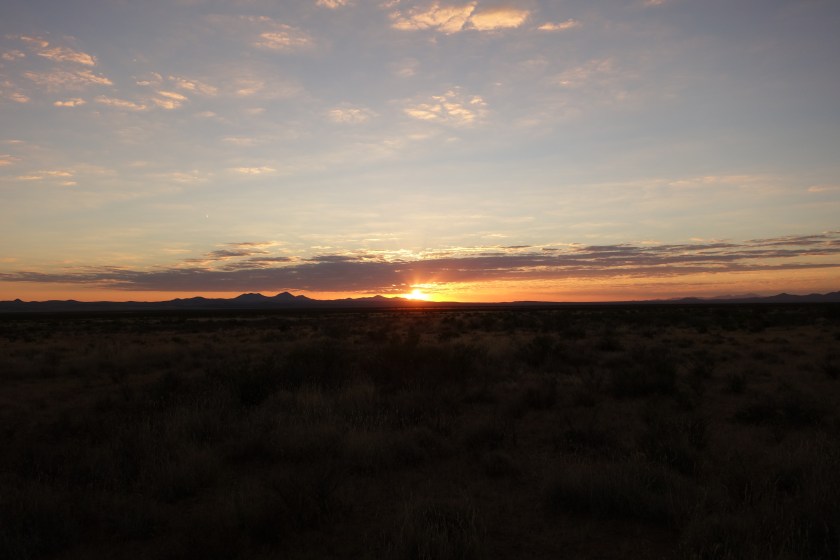
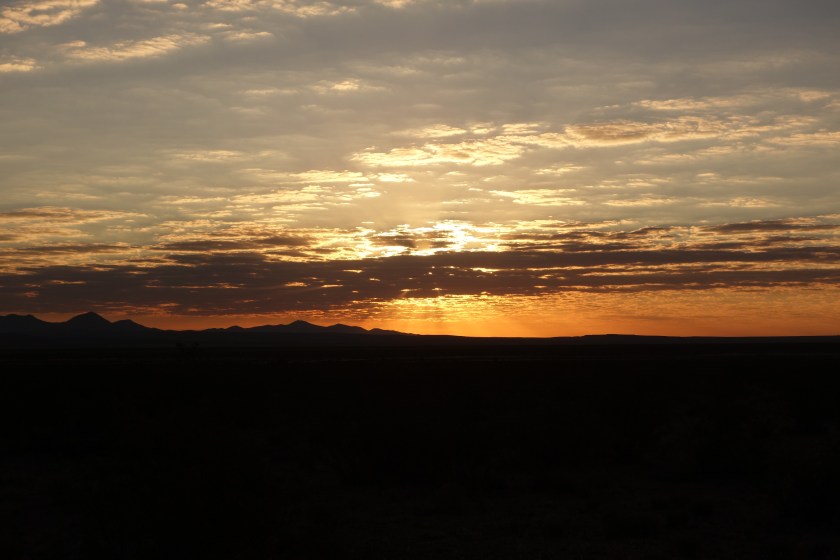
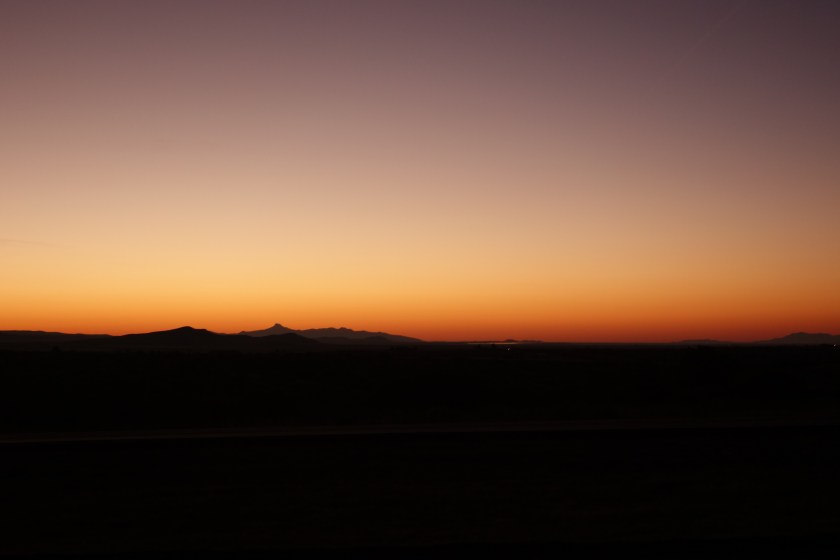
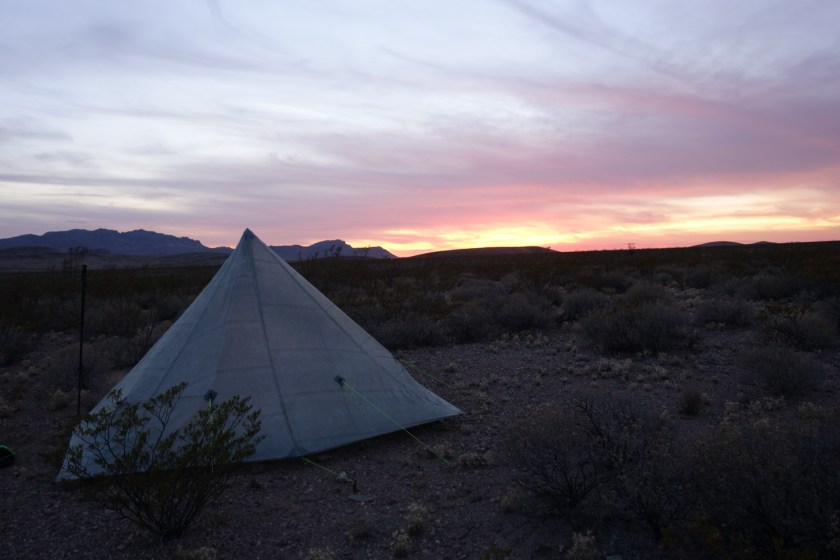
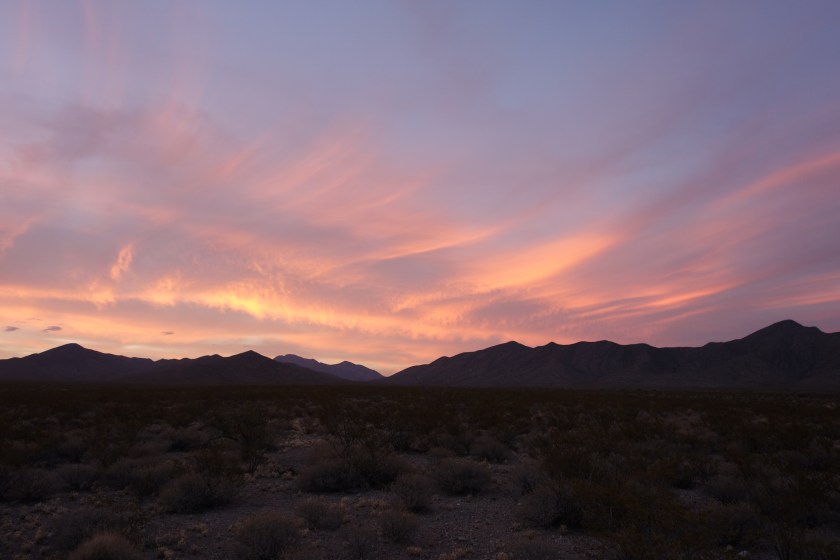
As a good-bye gift, the CDT gave me a nice sunset show.  I will miss always being able to watch sunsets.  I think  a society that forced everybody to stop what they were doing to watch the sunrise and sunset every day might be a pretty good place to live.
dsc06547
Last sunset on the trail
dsc06551
In person, it was impressive to see the whole horizon change color
dsc06554
Good Night CDT

Hatchet Mountains

October 29th

The hunters and I were out and about around the same time.  One group was in a truck and another group was on ATVs.  I don’t hunt, but I would imagine the sound and dust from a vehicle approaching on a gravel road must spook game for at least an hour.  On the trail, I don’t have to worry about that.

At daybreak, I did have to worry about finding the white signs.  The morning section of trail went east.  Finding a white sign was impossible for a brief period because I was having to look directly at the sun.  However, by this point in the journey, you just head to where you think the sign ought to be and just keep your eyes open.    It works for the white signs.

dsc06514
That moment just before the rays hit you directly.
dsc06515
The sun looked cool shining through the eastern clouds

At one point the trail walks along a sandy stream bed.  All of the large black beetles I have been seeing are suddenly flying.  It must be part of a mating ritual / getting ready for winter.  Whatever the cause, it is a little creepy to walk into the areas where they congregate and take flight.  They are loud, clumsy fliers and they do mass together a bit. I had not seen this behavior before (and I would not see it the rest of the trail).

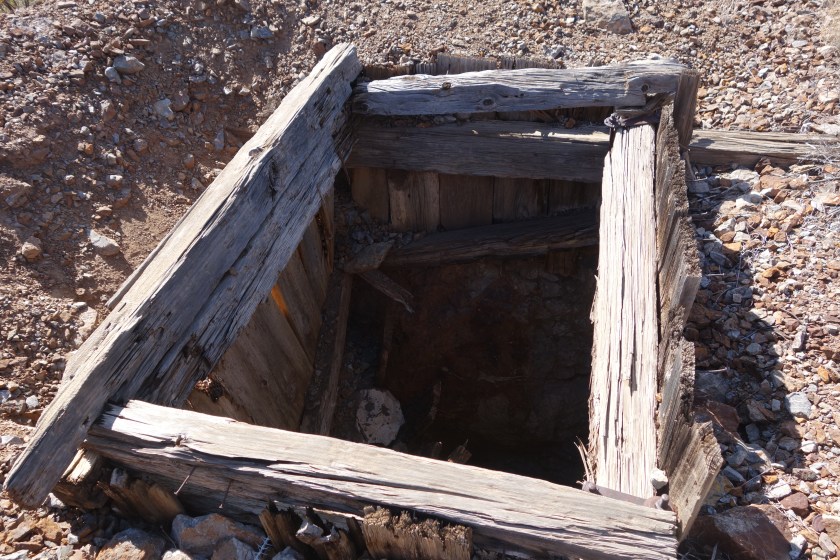
The rest of this day’s hike went south along the eastern side of the Little Hatchet Mountains. There was some mining activity.  In fact, one spot had an open old shaft and nearby signs of recent digging.  Due to cave ins near the opening, I was too chicken to peer over the edge.  I did drop a rock down and it took a second or two to hit bottom.

dsc06527
This old shaft went straight down.  I wanted to look down, but the rotten wood and signs of mini cave-ins brought out the chicken in me.

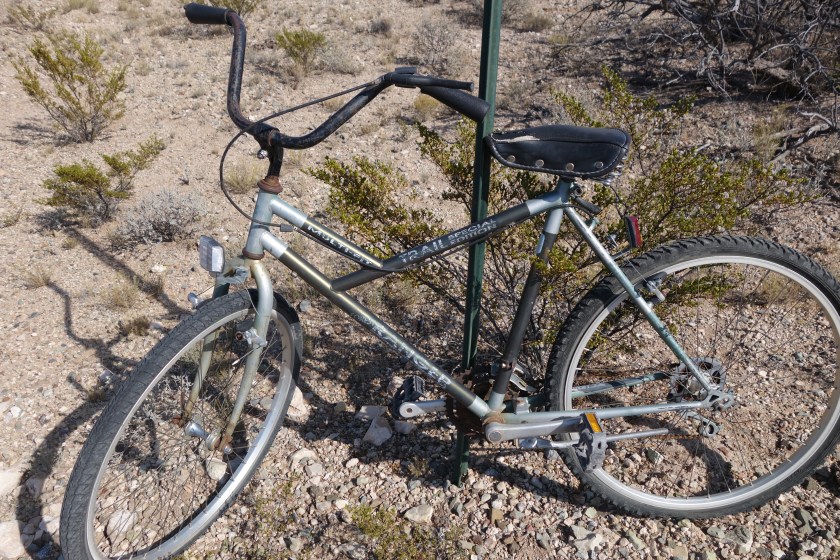
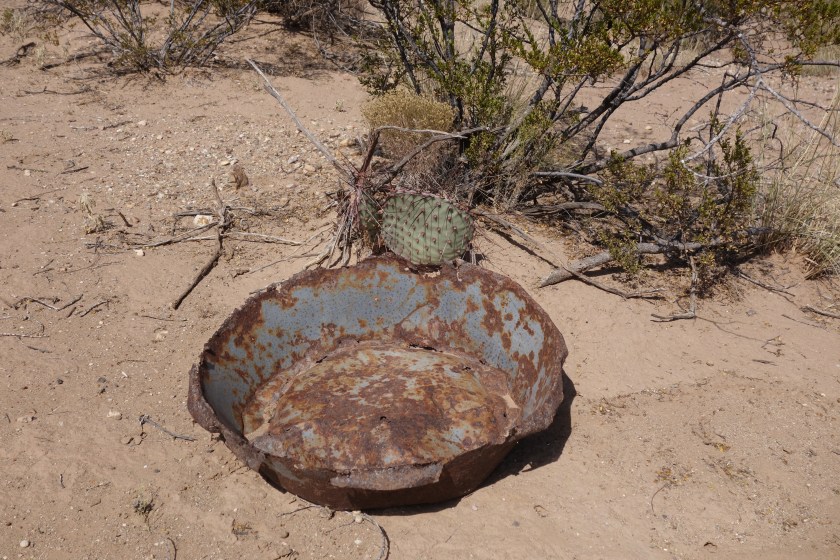
Later, I came across a rusted old pan and then a CDT icon: the bike.  There is a ten speed bike that has been on the trail for awhile.  Some parts are rusted, the tires have no air but they look relatively new.  Some hikers ride it for a bit and I imagine it is evver so slowly moving northbound.   Perhaps one class of north bounders will deliberately start moving the bike to the border with Canada.

dsc06531
The famous CDT bike.
dsc06524
I’m not sure of the reason why somebody brought this into the middle of the desert, but it obviously didn’t pan out.

I stocked up at a cattle pond.  A large metal tank was being supplied by a well.  From the top of the tank, a hose was draining the excess into the cattle pond.  I grabbed the hose and retrieved a couple liters of water.  I knew I would hit a stocked water cache in the morning, so I didn’t need too much.

I ended up camping about 300 yards from the trail near an arroyo.  I had a great view of the Big Hatchet Mountains.  They would be my last mountains on the trail and I would pass beside and through them tomorrow. Also, there was a road off to the east where a rare car would speed along.  I built my drug-smuggler “I’m here” fire and enjoyed an unhurried dinner.

dsc06537
The north end of the Big Hatchet Mountains catching the last of the sunset.


Nobody in Sight

October 28th

For the past week, temperatures in the boot heel have been about 10 degrees Fahrenheit above normal.  It is close to warm when I start hiking each morning.  During the afternoon it gets a bit toasty.  I can imagine average weather must be perfect for hiking.

The sunrise was pretty nice.  Most of the day would be spent walking to a white sign. pausing to find the next, and walking there.  There is little visible wildlife in the daylight.  I have sometimes heard and seen cranes.  Once they were resting on the ground somewhere.  However, a couple other times I have seen them circling higher and making their croaking sound to each other.  They sound like sand hill cranes, but this seems too far south and west.

dsc06487

dsc06502

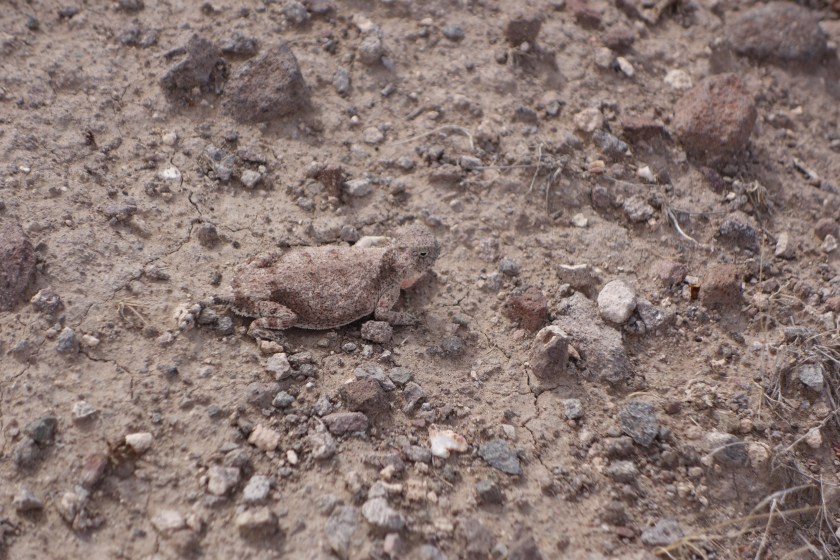
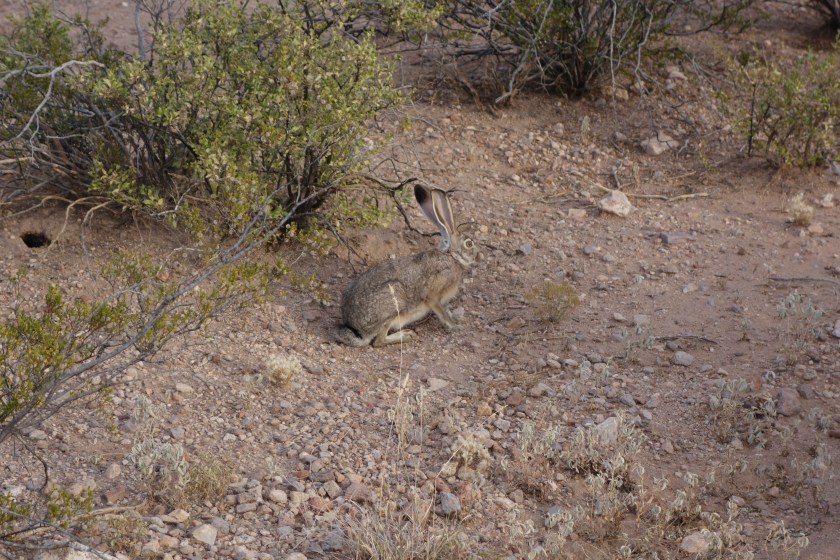
I also saw a few horned lizards and jack rabbits.  I was finally able to get pictures of both.  Desert animals have to be quick and they are hard to photograph.

dsc06497

DSC06509.JPG


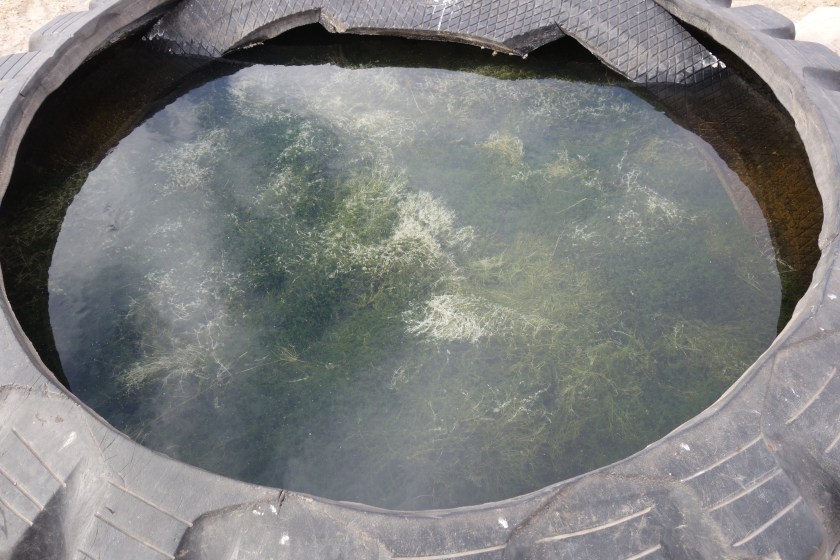
Fortunately, I came across my first stocked water cache around 8:00 in the morning.  The water was still a bit cool from the night.   Although there were stocked water caches, I still always looked at potential water sources.  Most were empty, some had stagnant water, while a few were drinkable.  With the exception of pumping wells, the water is usually warm.  Adding Gatorade or propel or other flavors to warm water still just results in warm flavored water.

dsc06505

I didn’t see anybody this day.  I was following a few set of hiker’s footprints, but there seemed to be very little activity.  Later in the day I entered some small hills called the Coyote Hills.  There seemed to be some fresh signs of cattle.  Nearing a water tank at the top of a hill, I found a small herd.  They were pretty smart because this water tank was overflowing, creating a small desert stream that ran for about 50 feet before drying up.   They all huddled together and watched me as I rinsed off some of the desert dust and cooled off.

dsc06508

I spotted a hunter’s game camera near the tank.  Maybe the hunter had figured out how to keep the pump open creating the mini stream and attracting animals.  Anyhow, I tried to trigger it with goofy pictures of me, but couldn’t get it to fire.


Walking down a rough dirt road, I came across the hunter’s camp.    Nobody was home.   I admired all the “luxuries” while I walked past:  a propane grill, huge cooler, clear plastic storage bins for organizing different items.  In just a few days, I would be returning to the world where luxuries abounded.


I pushed on for a couple more miles, passing an earthen tank that must’ve existed for years since the surrounding vegetation was lush for the desert.  I didn’t want to camp near that place since it attracted animals and hunters.  Fortunately, the trail soon split off the road, so I followed the white signs and found a spot not too far from the trail.

The head and tail lights of trucks were vaguely discernible on the horizon.  Like last night, I made a small fire.  Somehow,  I feel better with a fire as a signal to others out in the desert that I am here.  The creosote bush  and occasional mesquite are not the best sources of firewood, but they put off a nice smoke.

^        ^        ^       ^     ^

As the trip winds down, I have been getting reflective.  On this day I came up with a list of things I have lost or will leave behind.
  • Sunglasses:  I usually don’t wear them, but every time I go on a backpacking trip I buy a pair.  Every trip I lose them within a week.  Somewhere in Glacier National Park is a nice pair of polarized sunglasses.
  • A grey Ibex hoodie. Lost near Lewis and Clark Pass in Montana.  If you found tis, and want to return it, let me know.  If you want to keep it, rest assured that my leprosy has been responding well to treatments and yours will likely be manageable.
  • A desire to see bears in the wild.
  • A Point Six wool sock.  Wyoming has the distinct honor of holding a sock that went several miles.  You’ll know its mine when you smell it before you see it.  Despite attempts at washing, most of my socks would develop a unique odor with balanced hints of sweat, cow dung, and road kill.   This loss confirmed that missing socks is not a phenomena limited to sock drawers.
  • A fear of asking strangers for help.  Whether it was Janie in Montana, a driver in Colorado, or the Thomases in New Mexico,  I learned that asking for help when I really needed it is okay.  In spite of what we see on the news, most Americans have a reflex to help a person in need.  Conversely, if you genuinely need help, asking for it is not shameful.
  • A lot of fat, a little muscle.  When I started, I was a lot bigger.  Now I look like a thin, vagrant Santa.   I had worked out daily prior to this trip, so being lean now means I have lost fat and muscle.  While it might be reasonable to assume that long distance backpackers might end up looking like a kangaroo or T-rex with scrawny arms and strong legs, my observation is that they just get lean all over.


Beginning of the End

October 27th

While I might’ve been able to push and finish in 3 days, the rental car agency was not open until Monday so I felt I had the opportunity to travel with no time pressure hanging over me.

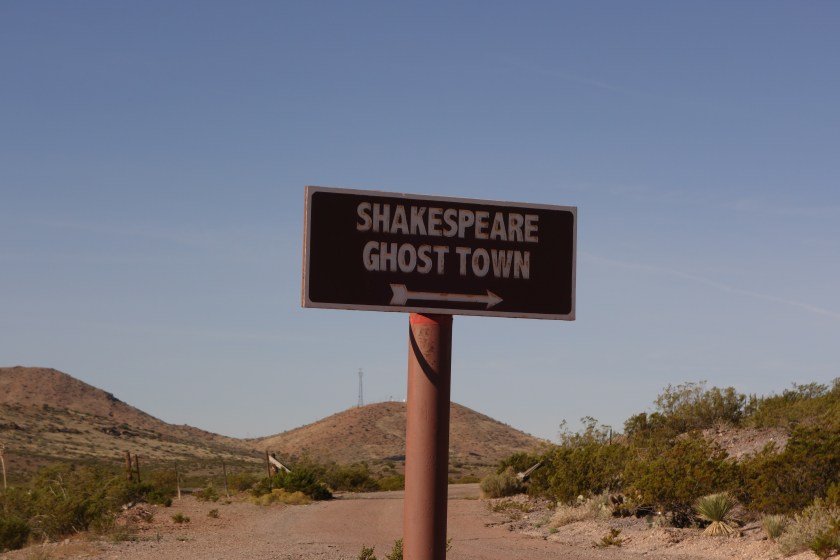
I grabbed a breakfast at Kranberry’s restaurant.  This was a middle of the road diner with a few southwest accents.  After leaving the restaurant, the town disappears quickly. There is a side road that leads to an abandoned mining town called Shakespeare.   Just before reaching the town cemetery, the trail appears off the road and a CDT hiker immediately starts following white signs atop metal posts.  For some reason, this first section of trail seemed to be through the broken glass capital of New Mexico.

dsc06476
Just out of Lordsburg, there is a road to an abandoned town.  To go or not to go, that is the question.

The terrain was rolling desert hills.  Oddly, there were fenced off areas about 100 feet square.  The only thing I could guess was old mining operations where they did not want hikers or, more importantly, cattle falling though on this BLM land.  The only other interesting thing heading out of town was a lone individual standing on a hill.  I assumed he was border patrol because he kept looking around.

dsc06483
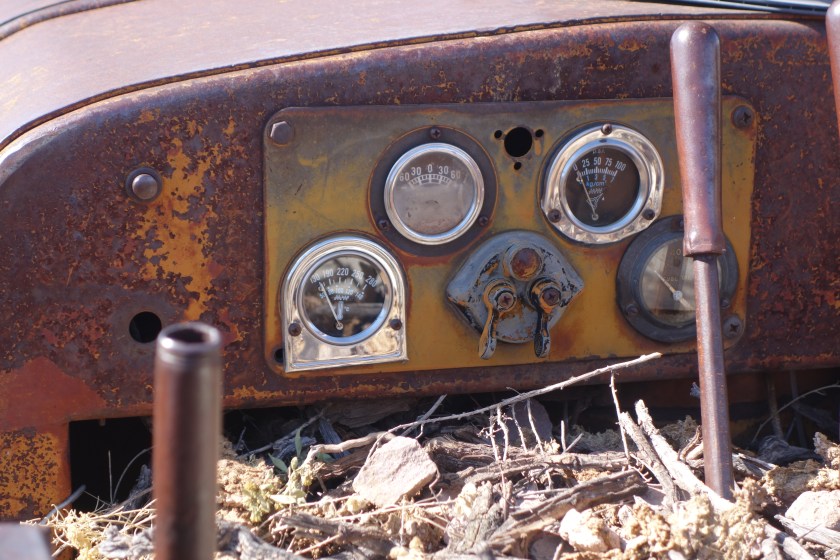
Abandoned old bulldozer.
dsc06482
A pack rat had made a home in the drivers seat.  The age of the various dials almost act like tree rings dating this machine.

Six liters of water is 12 pounds.  After a couple hours I began to purposefully drink water to lighten my load.   When I reached the first water cache, I downed a liter of carried water and replaced half of it.  The water caches in this area are stocked fairly regularly, but I always play it safe with water and carry enough for at least 18 hours.  There was a register/log book.  It was interesting to see the northbound entries.  Many were eager to get to town and there were some lengthy entries.  In contrast, the more current entries were from southbounders that were very brief.  I have a rough theory that journal entry length is inverse to miles traveled.

DSC06484.JPG
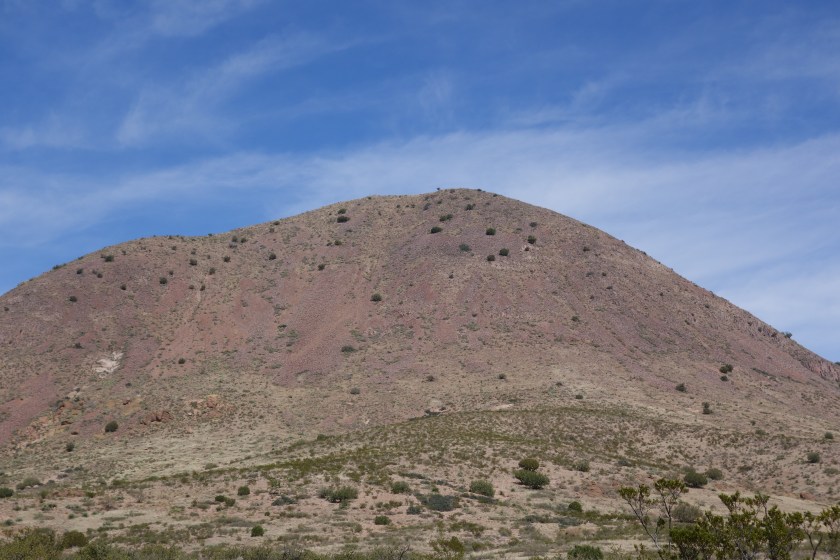
Pyramid Peak.  It had one lone tree growing on top, barely visible in this fine photograph which lacks both perspective and detail.

Towards dusk started looking for campsites.  In the desert, it takes a surprisingly long time to find places to camp.  One pictures sparse vegetation and sand, but the reality is many prickly plants and sharp rocks.  I ended up finding a clear, sandy area in a field of dried grass.  It was at the base of a small hill and overlooked I-10 on the horizon.  I ended up collecting enough sticks to have a small fire before calling it a night. It was an interesting contrast between the fire’s yellow light, the moonless sky above with innumerable stars, and the steady, silent movement of truck lights out on the interstate.


Around 11:30, I thought I heard something in the grass near my tent. I yelled “Go!” and about 30 or 40 hooves scampered off.  It was javelinas.  I got out to make sure they hadn’t gnawed on my backpack.  While out there, I heard a set of heavier hoofs and some sharp exhaling coming from the hill.  Although my headlamp was not strong enough to spot it on the hill, I knew it was an antelope.  I breathed out loudly through my mouth.  This was met with a loud breath from the dark.  I breathed loudly again and was met with a breath from the dark.  I am sure this could’ve gone on for hours, but I crawled back in my tent (mostly) confident that nobody has ever been trampled inside their tent by an antelope.


My Last Zero

October 26th

My plan had always included a zero day in Lordsburg.  My thinking was that I would need to coordinate travel for the trip home.

Another example of how the CDT is a muddled trail is the three possible  ending points on the US border with Mexico. People can finish with a choice of two road walks or the official end which is a hike to a monument on the border and then arranging for transportation over a very rough dirt road via a designated shuttle service (or a friend with a car they are willing to trash).  Neither of the road walks had appealed to me, so I planned on backpacking to the monument.

I made arrangements to be picked up the morning of October 31st.  That would give me a little over four solid days of hiking.  The shuttle driver lived in Silver City, so I arranged to go there because I could rent a car in that town, then drive to Arizona to see my mother, and then fly home. Flights were booked.  Rental cars were arranged.  Border Patrol was contacted to let them know I would be walking to the border.

Other than travel, I  did usual town stuff.  Lordsburg is another town in hard times.  They have a street called Motel Drive.  Until I-10 was built, traffic ran along this route and there were motels and restaurants and other businesses.  However, now it is pretty desolate.  Locals recommended a cafe called Ramona’s which was about one and a half miles down Motel Drive.  It was a depressing walk, but the food was very good.
While in the small local grocer, I ran into another CDT hiker.  His name was Simplesole and he had just finished the day before.  It was reassuring to hear that the water sources along the way had a good supply.

I really hoped to get a good night’s sleep on my last town day on the trail, but it didn’t happen.  I guess I was just anxious to get going.

On Top of Ol’ Burro

October 24th

Walked out of Silver City early in the morning.  13 mile highway walk carrying a lot of water.  This was becoming an unpleasant refrain.  A few miles out of town there is a famous CDT sight:  The driveway lined with old toilets.  Not sure what point the resident is trying to make, but it is a unique idea.

dsc06440
Sunrise as I was walking out of Silver City
dsc06442
Very unique driveway decorations on the road walk south of Silver City.

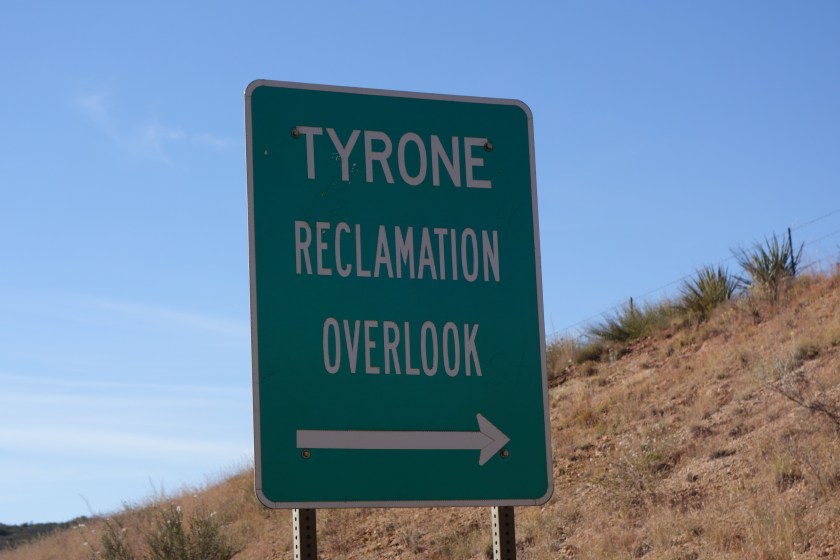
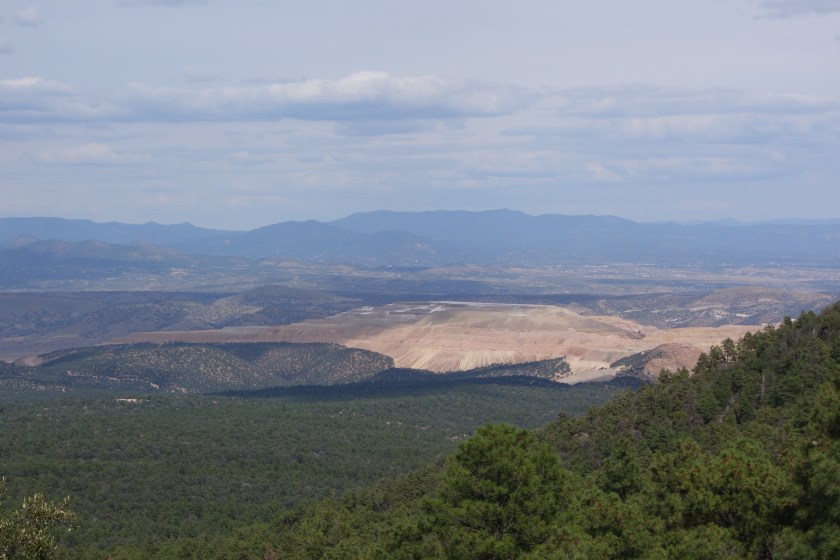
I passed an old copper mine.  There was an explanatory visitor site explaining how the mine was being reclaimed.  There were lots of words and pictures, but to my untrained eye, it looked like they just smoothed the sides, put on some topsoil, and threw down some seeds to see what might grow.  Surely, it will all work out.

dsc06444
Can you resist taking a look at a reclamation site?  I have a soft part in my heart for them.
dsc06446
The reclamation site was even more beautiful from up high.

Americans have a hard time with mining.  Almost universally, we dislike the environmental and visual impacts.  Nobody finds a copper strip mine appealing.  However, none of us seem to  be willing to give up electrical devices.  Heck, we can’t even agree to get rid of the penny (although I know modern ones are mostly zinc).

Later, around midday, I left roads and entered forest.  A couple times, I encountered two or three isolated cattle.  I am never sure if they escaped the round up and are going to try to survive over winter or if the rancher leasing the land will come back and get these stragglers.

I reached the top of Burro Peak in the early afternoon.  There were some nice views and a few great old trees.  I believe I even saw the Hatchet Mountains which are right near the end of the CDT.  It was a good moment. I thought back to June when I was in Montana and could look back and still see the mountains of Glacier National Park.  Maybe I would finish this thing.

dsc06447
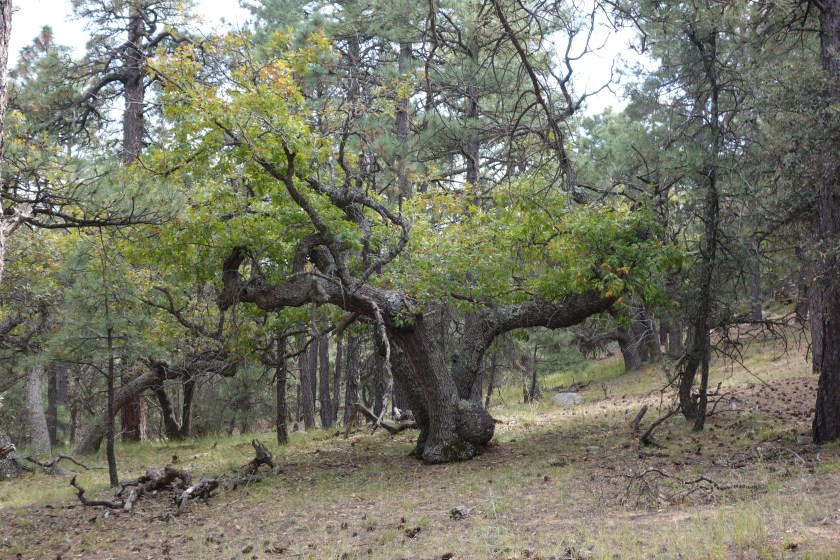
This gnarled old oak tree near the top of Burro Mountain was very cool.  I am sure wood workers would love to get their hands on that burl.
dsc06448
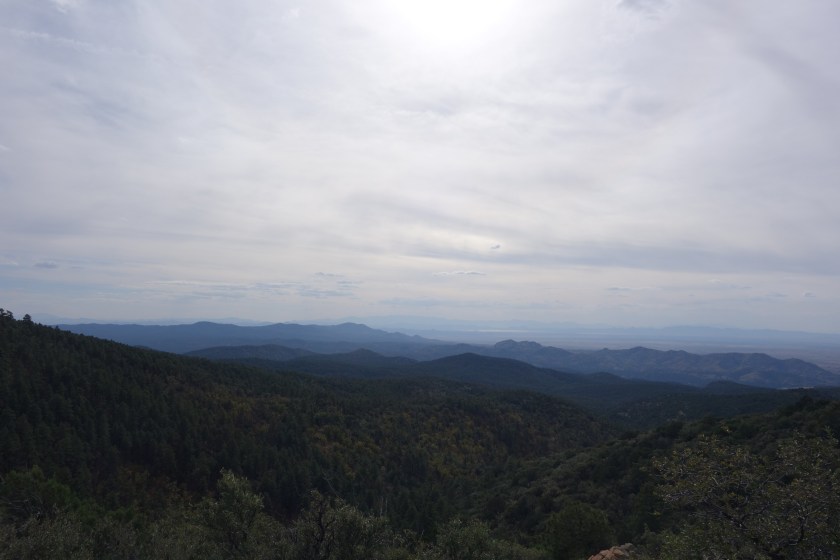
Looking south from Old Burro.  It was getting cloudy……

There was one natural spring, Mud Spring, that had good, plentiful water despite the fact the protective coverings and fencing had been destroyed.  Later still, when the trail approached a road, a trail angel had left some water for CDT hikers.

I noticed a large bank of clouds to the west and concluded the night would come a little quicker than normal and the sunset would not be too pretty.  So, I found a hill top, pitched the tent, and ate dinner by a small fire.

Sure enough, the large cloud bank turned out to be a storm.  Desert storms are powerful.  My tent was flapping oddly.  Eventually I went out to find some of the stakes had wriggled loose from the rocky, sandy soil.  To my surprise, there was even a half hour of fairly heavy rain around 2:00 and some lightning.  Thank  goodness I wasn’t cowboy camping.

dsc06452
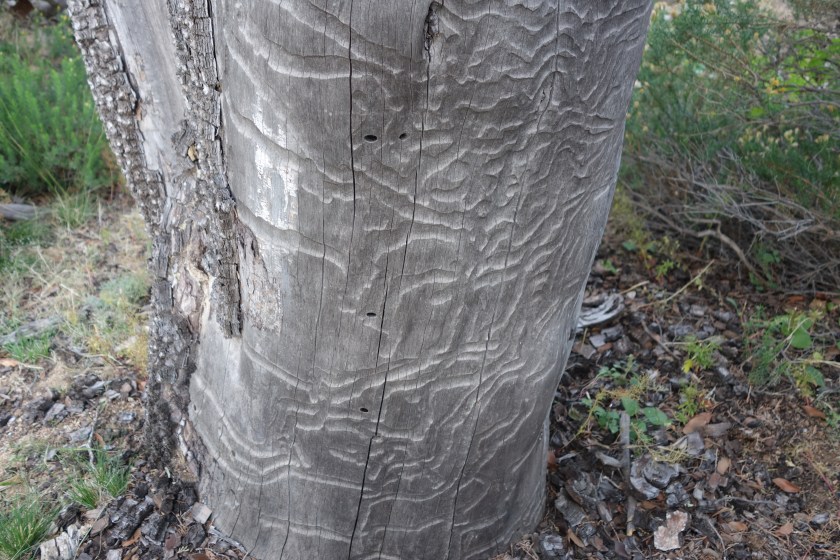
This tree was still alive (barely) despite having lost bark after being eaten by beetles.

Silver City; The Bipolar State

October 23rd

I resumed my road walk along state highway 15. The lack of traffic was nice and the road actually went through some nice forests.  Of course, being New Mexico, nice forests also includes beer cans and bottles every ten feet along the road.

dsc06426
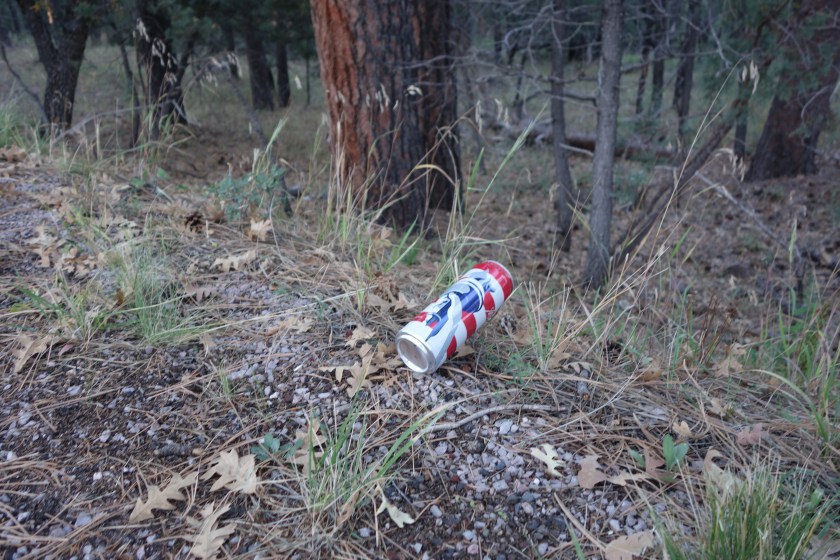
‘Merica.  Budweiser’s attempt to position their brand as America’s beer can backfire horribly.  I don’t think littering this great country with cans and bottles is what America is all about. 


I was able to walk through Pinos Altos,  an old town where a Hearst family church  was located.  I believe they first made their money in mining before media.  Otherwise, it was a long hot road walk down into Silver City.

DSC06433.JPG
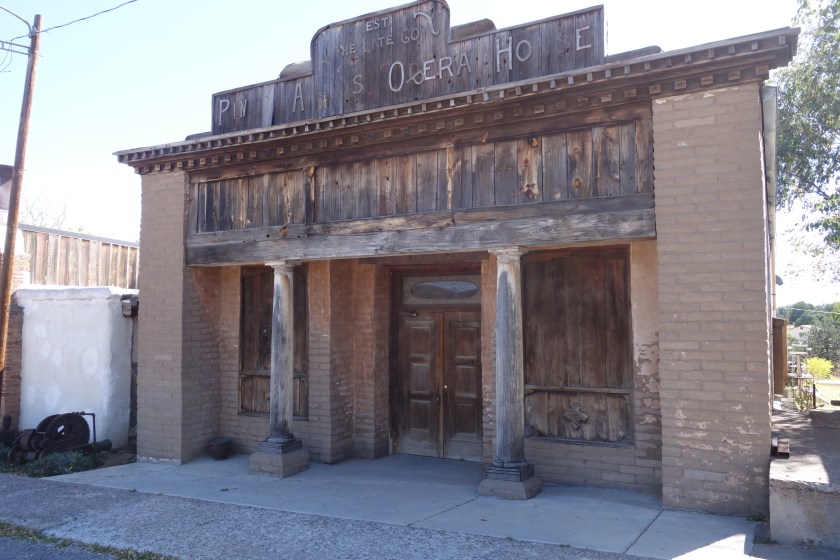
The front of the opera house.  No phantoms found.
DSC06435.JPG
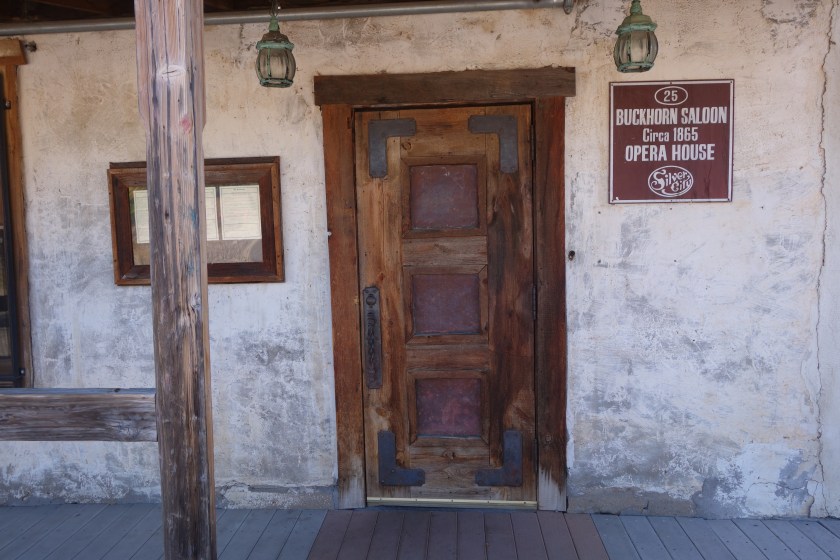
The saloon was next door to the opera house, of course.  I loved the door and it may have been the original.

Like other towns, it was facing some economic struggles.  You could see the town was fighting back, trying to find uses for old abandoned buildings and touting their history.  I liked the spirit of the town, but would not buy real estate there.

The Palace Hotel was where I stayed.  It is an historic hotel the owners have resuscitated.  They are giving it a good try, but some of the stuff was just not working  out (like the shower) and they could not afford to retrofit air conditioning, so it must be a tough place to stay in the summer.  Still it was cool to see how old hotels were laid out.

  •         *            *          *

The long road walk gave me time to think about New Mexico.  I realize I am not yet done.  Also, I have only  been through certain sections of the state on this trip and the one last  year.  Still, I felt comfortable drawing some conclusions.  The overarching theme is bipolar.

I don’t mean the clinical sense of rapid mood swings.  But just a real different polarity in their actions or sentiments.


For example, the people are generally the friendliest.  They almost always wave, are willing to stop and visit, and are quite welcoming.  But they just can’t help but string barbed wire around their property and post No Trespassing signs.

It is such a beautiful state, too.  Many roads providing easy access to gorgeous forests.  But the response seems to be to enhance the natural beauty with the sparkle and flash of beer cans and bottles.  There are places where there is a beer can or bottle every ten feet.  Maybe that is why they wave when you see them… to keep their throwing arm in shape.

I have had a few conversations where the New Mexican tried to guide the conversation to how “those boys up in Oregon have a point” regarding a distrust of the government and fear it will take from the private residents.  The Oregon boys are the Arizona guys who took over a wildlife refuge for a while.  Nobody has been specific about what they fear the federal government will take.  To me, an admittedly poor student of history, it strikes me as ironic that they are sitting on land the federal government took from Navajos and Mexicans and gave to US citizens a couple hundred years ago.  So, on the one hand, the federal government has clearly seized land in the past.  But on the other hand, today’s residents are benefiting from that taking.

Lastly, the volume of Trump supporters is loud in the sections I have toured.  Without access to data, I am nevertheless pretty sure New Mexico must be one of those states where the federal government pumps in way more money than it extracts.  There is the forest service, BLM, Border Patrol, military bases, Los Alamos Laboratory and then all the state institutions.  I would imagine a traditional republican platform about less federal government might be bad news for these folks, but they sure seem to be in favor of Trump.  To me, especially with the cattle ranchers, they might want to think more about Hillary.  After all, early in her legal career she showed some remarkable skill trading cattle futures.

In summary, while I love New Mexico and almost all of the people I have met, it does have a few rough edges that make me want to be more likely a visitor than a resident.

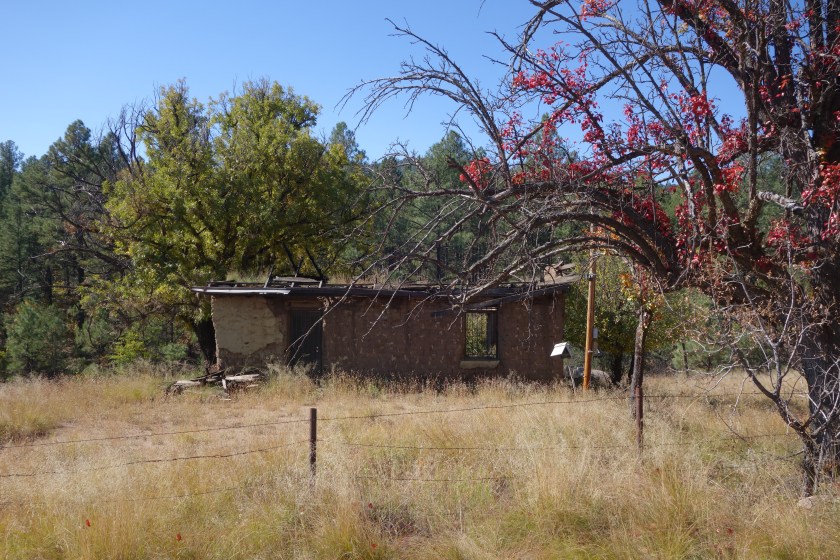
dsc06431
Home on the way to Silver City.  It was an adobe home that had burned and was stuck in the ambivalent state of being uninhabitable but not torn down.

Visiting the Doc

October 22nd

Eager to get past this section and resupply, I cruised early.  For a while I must’ve been following a skunk.  His odor was there on the trail for several hundred feet.  I was thankful I have not had a skunk visit me at night.

Eventually, the trail joined a more commonly used route that took visitors from the popular Gila Cliff Dwelling National Monument over to the Middle Fork of the Gila.  I encountered some day hikers.  One was a group of ladies ranging from their 50s to 70s and they were making good time.  Very inspiring, especially since this section of trail  trail is quite rocky.

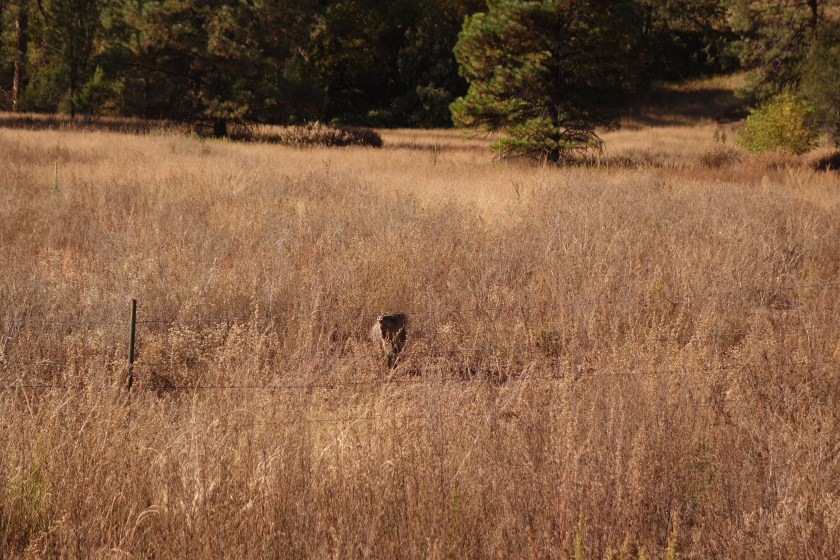
Once down to the paved road, I made great time.  I saw some animals crossing the road up ahead.  As I drew near, it was clear they were javelinas.  Most just bolted, barely visible in the high grass.  However, a few stopped to watch me and I took some pictures.  I could see they were gorging on some type of wild watermelon or gourd that grew alongside the road.

dsc06416
Javelinas are not photogenic to begin with, but this guy would not strike a better pose.
DSC06418.JPG
He had his snout up in the air here.  He was lucky to not catch a whiff of me.


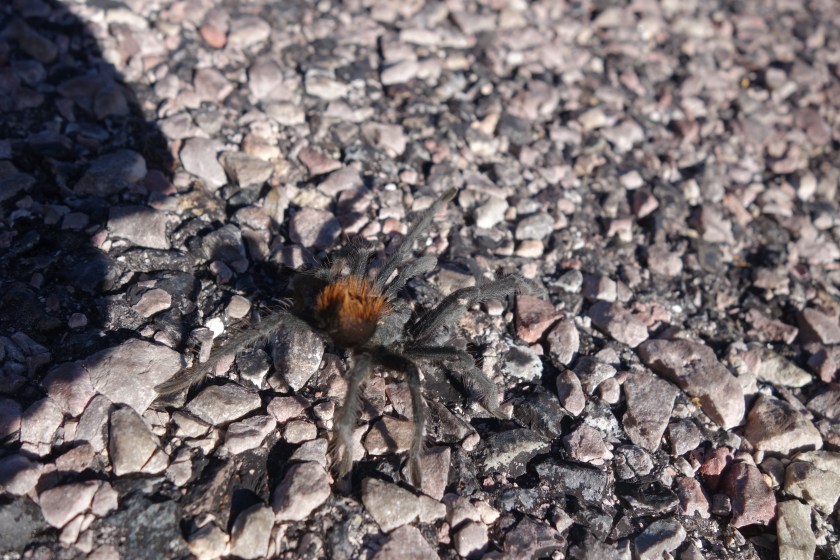
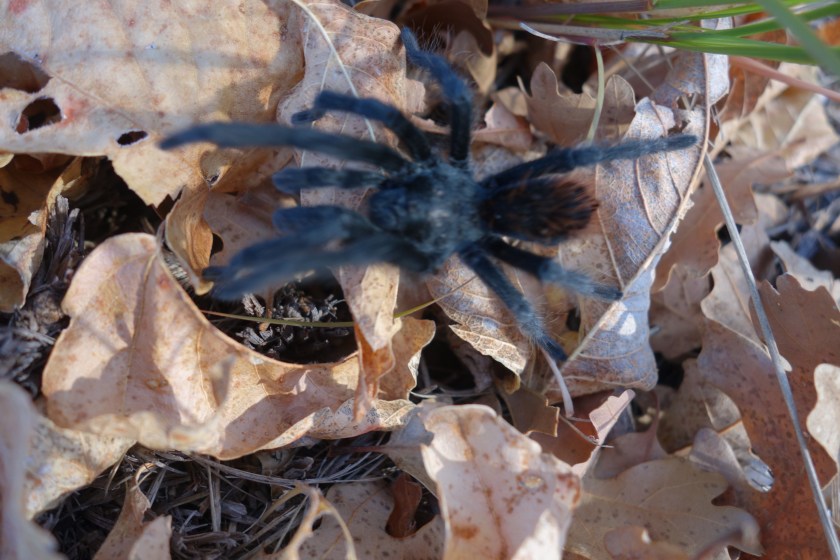
Later, I found a couple different tarantulas.  It was interesting to see how they reacted once they sensed my presence.  Apparently they do not like their picture taken.  They raise up their front legs and make themselves look much bigger.  The ones in this area had a section of their body which was a soft brown color.

dsc06420
This one was crossing the road. 
dsc06423
It got annoyed with me taking pictures and raised its furry rear end and front legs up in the air.
DSC06425.JPG
Later on, I found this one on some leaves.

I eventually reached Doc Campbell’s trading post.  It is an eclectic collection of foods, books, “local” artwork and sundries.  The guy who runs it wore a denim shirt and camo pants.  He was fairly grumpy and not particularly glad to see me, a customer.  I retrieved my box and got some junk food.  He charges hikers $3.00 per box to hold them.  However, he wanted me to pay cash so neither of us would pay sales tax as this was a service as opposed to the sale of goods.  He was tight with a nickel.  Also, very strict about other matters such as what to do with my empty resupply box and the correct way to microwave a burrito (70 seconds on high with the wrapper torn just so).  He had a huge Trump for President banner proudly displayed in his store.  For a guy whose business was so dependent on a federally subsidized park and visitor center as the sole point of the traffic on his road, it struck me as a little odd he was so pro-Trump.  But, I have not followed the presidential race too much and perhaps Trump is different.

I resupplied, charged my electronics, and got some water.  On the spot, I decided to road walk to Silver City rather than go back to to hike the Gila (combined Middle and West Forks now) for another 20 miles.  I don’t know if it is the fact I am 4 months into the trip, but the charm of more river crossings failed to work on me.  I’d rather walk along a state highway.


In fact, it was not that bad from a traffic perspective.  The only thing on the first section was the Gila Cliff Dwellings and visitation was probably down this time of year.  Aside from traffic, the first five miles were tough because I started around 1:00 on a hot day and it was all uphill.  I complain about backpacking hills being steep sometimes, but at least they get it over with quickly.  This road rose steadily for five miles.

I came across an interesting contrast.  There was one roadside informational display.  The Forest Service had spent some money to create informational signs explaining that forest fires were a good thing, critical to maintaining the health of the ponderosa forest.  Suppressing fires let the under story plants grow, choking out native species.  Moreover, animals, I was assured, could escape fires and were thus not likely to be harmed.  In short, the various kiosks convinced me fires were a necessary thing.

However, there are many many Forest Service signs, some just a mile down the road, admonishing against fires, warning that fires kill, and to be extra diligent.  So, I was a little confused.  If fires are so good, why all the warning signs?  I guess that lightning creates healthy organic fires and people create unhealthy fires.

I found in the Handbook there was a tavern / inn down the road where I might purchase a meal and get a room.  I picked up my pace hoping to reach it before dark.  On the lightly traveled road, I was averaging about four miles per hour.  When I got there, it was closed for the season.


Disappointed, I made my way uphill.  I was also disappointed to see that I was once again in private property.  However, one of my maps indicated there was public land once I reached the top of the hill.  As the sun set, I did reach the top of the hill, the barbed wire stopped, and I saw forest service signage.  I pulled in to a short forest service road that appeared to have been camped in before.  I was breaking one of my cardinal rules: never camp by a road or campground on a Friday or Saturday night.  But it was dark and there had been little traffic on highway 15.


After I pitched my tent, I was surprised to see I was getting attacked by mosquitoes.  They were the first I had seen since Wyoming.   I just shooed them away.

As I started to fall asleep, somewhere in the distance a dog started barking.  And kept barking.  Continuously.  It was one of those annoying sounds that I should’ve been able to ignore, but once I heard it I could not unhear it.  Eventually I dozed off, but every time I woke up it was still barking.  Neighbors must have the patience of Job.

To prove my rule, about 3:00 in the morning, I heard some young women cackling about 20 feet from my tent.  They were from a car that had pulled over so they could pee.  Given their speech and the time, I suspect they shut whatever bar down and were driving home and decided to relieve themselves.  Upon finishing their task, they sat in their car and idled for another 15 minutes.  I was tempted to walk up to the side and stick my big furry homeless man face in their window on this deserted road, but I figured New Mexico is a gun friendly state and they were ripped.

Finally, they drove off. The dog stopped barking. I slept really well from 3:30 to 4:30.

Instead of Waterboarding

October 21st

What a brutal morning.  I could not bring myself to get up and get going.  It did in fact freeze along the river.  I was glad I brought my water filter into the tent to prevent it from freezing and cracking.  But that was the only thing to be glad about.

I got dressed slowly.  I put my wet sock underneath me to try to at least warm them up a bit.  I breathed warm air into my frozen shoes to create some flexibility before wedging my foot in them.   In short, I stalled.  However, eventually, I did the deed and slid on my wet, nearly frozen socks.  I then wiggled and stomped them into my mostly thawed shoes.  Finally, the shoelaces were wrangled into position, and I was up and going.

The thought of that first river crossing was almost too much to bear.  I decided that terrorist suspects would fear putting on wet, frozen socks and shoes every morning until they revealed their secrets.  I think we’d get some fast answers.

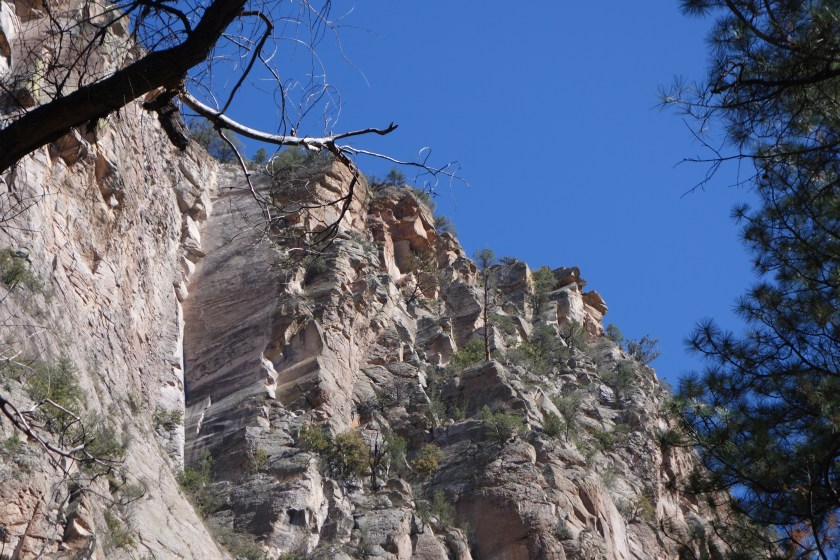
Walking along the Middle Fork of the Gila River was ok.  Many backpackers consider it a highlight.  The steep walls are interesting.  There are often caves formed on the cliff and other times the sheer walls go straight up.  Down below, along the river, there are sometime wide areas with intereting plants.

dsc06376
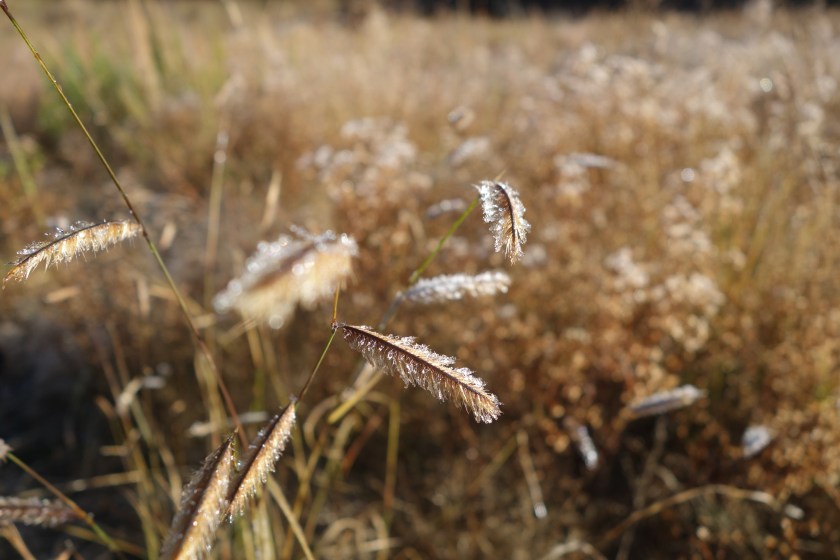
The dew had frozen on the grass in the valley. 
dsc06400
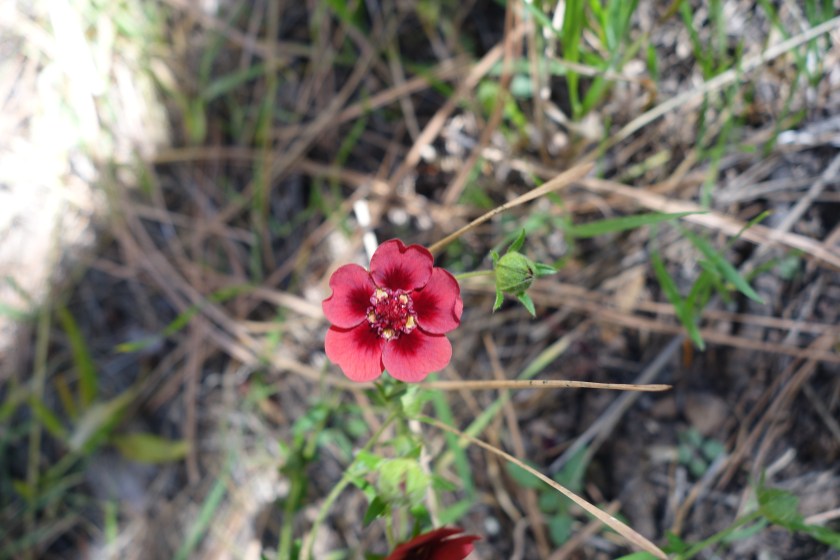
There were few flowers, but this one jumped out with its red color.
dsc06379
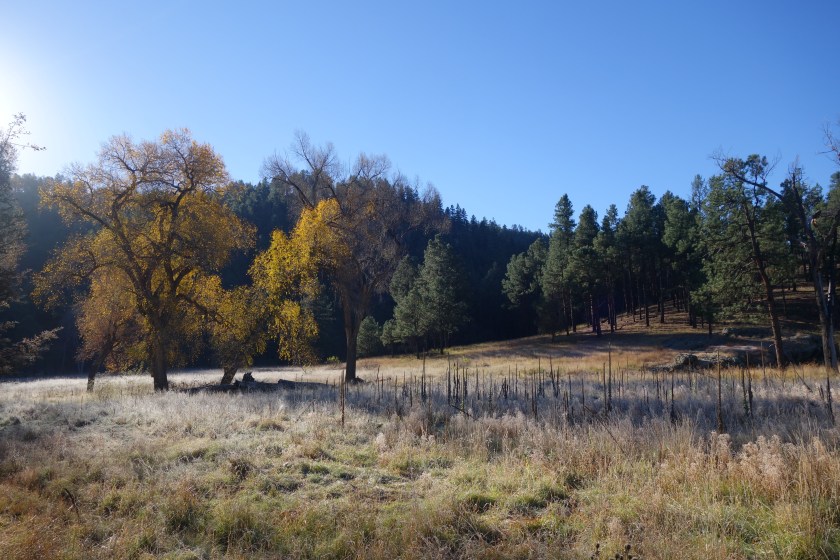
There were some meadows.  In the still morning air, the yellow leaves of this tree drifted down onto the frozen grass.  

There are piles of debris 10 feet high 30 feet from the current stream bed, silent testimony to the power of the river when it rages.  When you see those news stories about flash floods in the southwest, imagine all the water being forced through a narrow canyon.  Just the sound must be intimidating. There is wildlife here as well.  I surprised 4 mule deer that were wading in the river.

But the river can be tough.  Due to its flooding, there is no trail.  crossing a river can be tricky with the slippery rocks below the surface.  Plus, sand gets in your shoes, silently creating friction within your wet shoes.  There are some backpackers who report crossing the river 200 times in their hike.  Me?  I was ready to bail by noon.  It just seemed unnecessarily tedious for the repetition of canyon walls.  In fact, almost 18 months ago to the day I bailed out of the West Fork of the Gila River when I hiked the Grand Enchantment Trail and grew tired of the tedium.

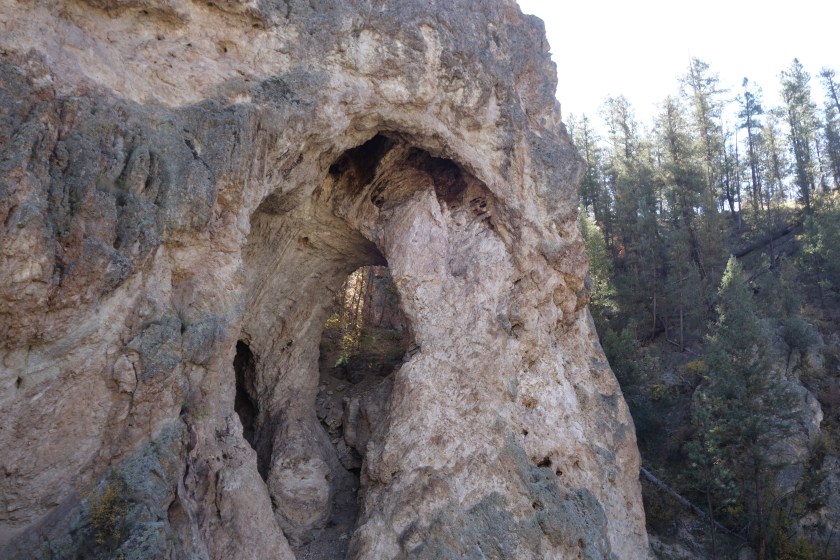
dsc06380
The canyon walls had interesting caves.  Here, the water had bored through the wall creating a portal to the trees growing behind it.
dsc06396
Trees grow on the sheer cliff face.  It is hard to see, but there is a 50 or 60 foot ponderosa growing out of a rock just to the right of the center.

The climb out of the river canyon was on a seldom used trail that seemed to evaporate at times.  Still, I was able to follow it to reach the mesa between the West and Middle Forks.  From there, I knew where I was.  And it was beautiful.  I was surprised to find some small creeks flowing.  I also came across the footprints of SBJ and MLL.  Apparently they grew sick of the canyon even sooner than me.  Near sunset, I lost their trail.  I think they either tried to bushwhack or cut out to camp for the night.  As I neared a small lake called the Woodland, I saw a beautiful bull elk.  I scared it off as there were hunters in the area.

dsc06403
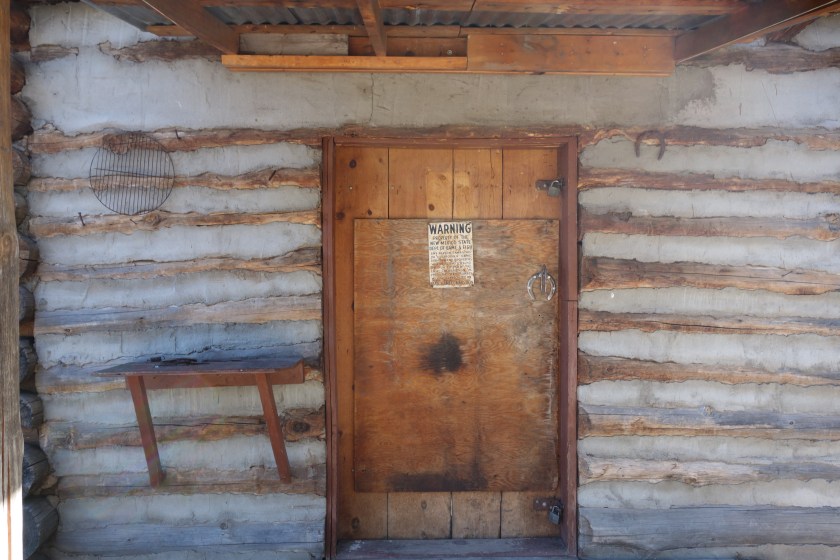
The door to Prior Cabin, a backwoods cabin for the forest rangers.

Eventually, I settled on a ridge top and had a nice little fire with a view of total darkness in all directions.  I know it seems silly, but in this day and age, I find a lot of joy being able to look for miles in all directions and not see a single man-made light.

dsc06408
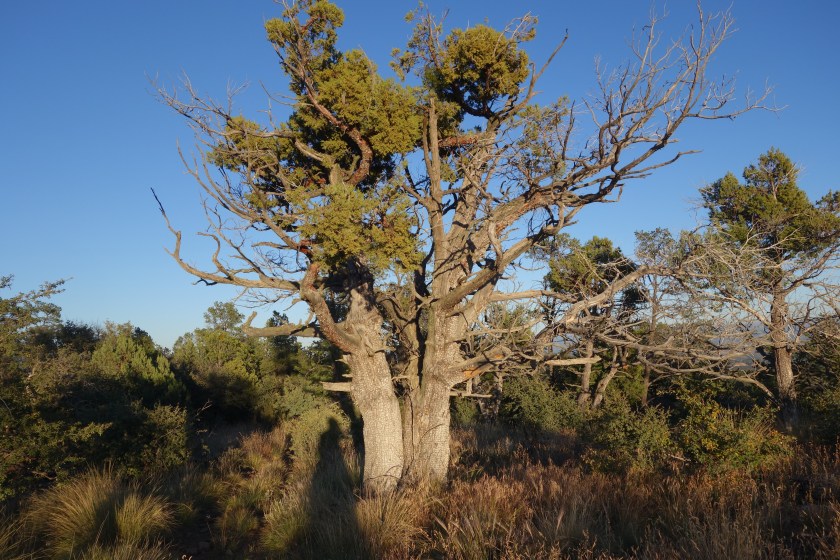
On top of the mesa, there are ancient pines and junipers. Many have dead portions, but they still manage to live somehow.  This one had a trunk that must’ve been ten feet in circumference.

An Unwanted Cattle Drive

October 20th

Another morning where I subconsciously do not want to get up and somehow push my watch deep into my sleeping quilt so I cannot hear the alarm.  I must be killing the battery doing this.  Still, I am up and going in the dark with the moon almost straight overhead.  Within the first 200 feet on the road, I startle a small group of cattle.  I think I came up on them so fast and the headlamp blinded them because they just stood and stared.

The grassy area was vast.  Probably 2 miles wide and 1 1/2 miles long.  I was following a road that went almost the full length.  I turned off the headlamp and enjoyed the moonlight walk in the brisk air.  On my right, I woke up a small herd of cattle, perhaps 30 total.  The fastest ones got up at the sound of my approach.  They chose their bravests and smartest leader and formed a herd to escape the terrible danger I presented.  She was a good choice for a leader.  Vocal, to give directions and encouragement.  Strong, to sustain a stampede as long as necessary.  Observant, able to keep an eye on the threat.  Unfortunately, she was still just a cow.  So she led a stampeded in the dark of about 15 cows and calfs.  They ran parallel to me for at lest 15 minutes.   Not perpendicular and away.  Not diagonally and away.  And, no, not the opposite direction and away.  Instead, she led them on a half mile run right next to the danger source.  This domesticated stupidity was only topped by the second half of the herd, about 100 feet behind the first half, which had  a clear view of me and the folly of the lead group, but instead chose to follow the herd rather than simply stop and be free from danger.  I just stopped and waited for 15 minutes while the herd wandered away.

I climbed steadily after that and again entered high ponderosa forest.  It was all road walking.  I pulled my standard road walk stunt and missed a turn adding an unnecessary 1 1/2 miles each way detour.

dsc06367

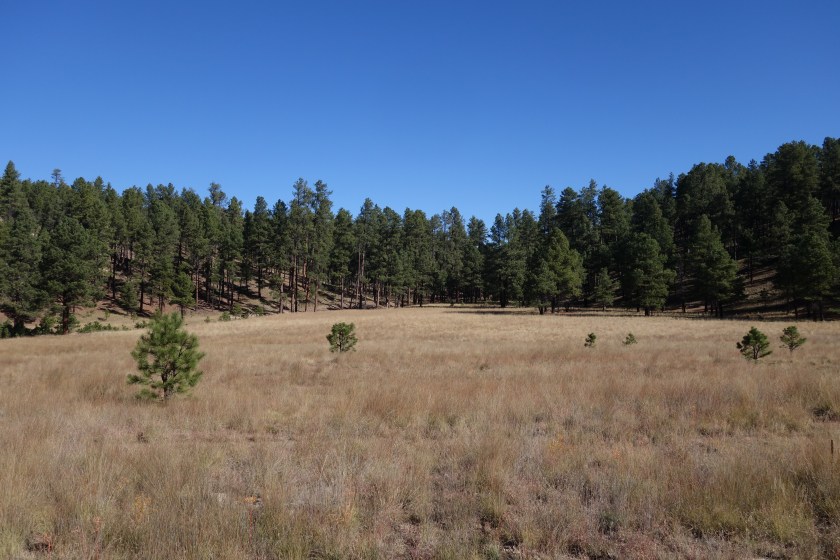
The land then turned to pure seasonal grassland.  Since this was not the season, it was a scratchy brown carpet of dried grass for miles.  Eventually the trail drops into a canyon and follows that providing some interest.

Eventually, I reach Snow Lake.  It is a man made dam with a good sized lake.  To me, the good news was the campground that had well water.  I had a great break there and drank tons of water even though I knew I would soon be dropping down to the Gila (pronounced hee lah) River.  The only  bad part was the name of the campground:  dipping vat.  Nowadays, it seems innocuous, but I believe the term is used to describe a water body into which a ton of chemicals were added and the herds driven through to combat infestations.  Mmm, enjoyed that water.


I went past the dam and dropped down into the canyon.  It was about 4:00 and I knew night would come early,  these are steep river canyons and the Gila is famous as a home to people for thousands of years.  After about an hour I realized I should let Helen know my satellite device will not work in canyons this steep.  I was right. My messages did not go through, no matter how wide the canyon.

dsc06369

I crossed the river about 5 times.  It was obvious that earlier in the year a significant rainfall had occurred.  All plants within 5 feet of either side was still bent over.  The only tread I could see was a pair of horse hoof prints.  I got twisted around a couple time, but the great thing about rivers is that getting back on track is pretty easy.

dsc06372

I finally found a wide flat spot elevated from the river.  The river was about 10 to 15 feet wide and mostly shin deep.  Still, I like to sleep up and away to avoid the sound and the cold valley draft.  I camped next to an abandoned fence and I think the area may have burned. I built a small fire that night and was impressed with how long the old juniper fence posts burned.  It was like oak.  There was no point trying to dry my shoes and socks over the small fire.  I know two things from experience:  1) they are more likely to burn than dry over a fire and 2) tomorrow they will get wet again.

So, I took my shriveled white feet and got in to my tent and went to sleep a little later than normal.  I was not looking forward to cold wet shoes in the morning.