
A long distance hike requires planning. At a minimum, there’s the path and mileage and opportunities to get food and water. For the most popular trails, there has evolved a basic set of GPS locations, topographical maps, and descriptions of communities along the way that might provide food, shelter, resupply packages, or other services.
You first need to decide on a direction. The Triple Crown of U.S. trails (Appalachian, Continental, and Pacific Trails) have historically been followed from south to north. The arguments for this approach include following warmer weather (snow melt) north, starting and finishing earlier, and tradition. Going in a northbound direction is called a “NoBo.” The problem with this approach is that in the case of western trails (PCT and CDT) you are likely to experience two snow challenges in mountains. The first is early on when entering the Sierras or San Juan’s. Remaining winter snow can be a challenge. And if you are not careful towards the northern end, early fall snow in the Cascades or Rockies can be a risk.
A southbound (“SoBo”) trip has some advantages. Satellite imagery and snow sensors tell exactly what starting conditions will be like relative to snowpack. Additionally it is less crowded. The biggest negative is the challenge of getting through the southern end of mountain ranges before winter snows begin.
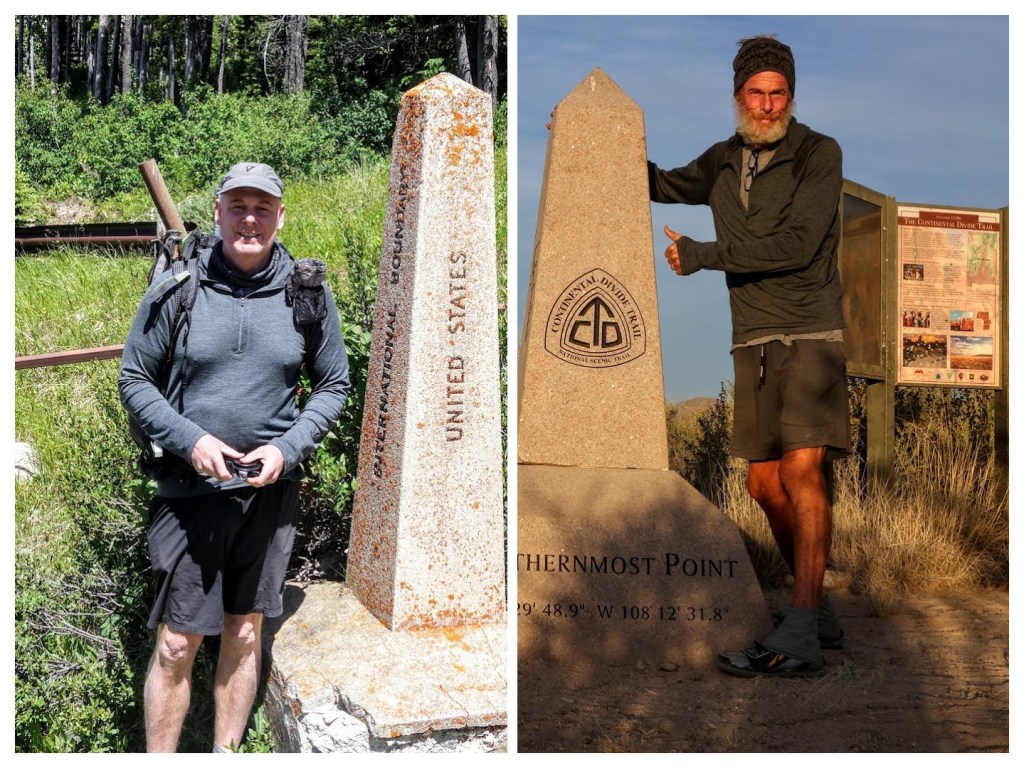
I’m going SoBo on this trip. I have estimated hiking speeds and developed a resupply plan. One goal will be to eat more. On my CDT SoBo, I lost about 50 pounds.
Next, I’ll write about food.
 backpacking over the hill