October 30th
No critters visited me in the night. The javelinas use the arroyos as a highway system. I was afraid they might smell my camp and come up and visit, but they left me lone. The landscape is gradually getting harsher and I think animals must have a very challenging time here. However, I remember reading about a group of big horn sheep that still survive in the Big Hatchet Mountains. I can’t imagine the in-breeding that must occur in these isolated animal communities.
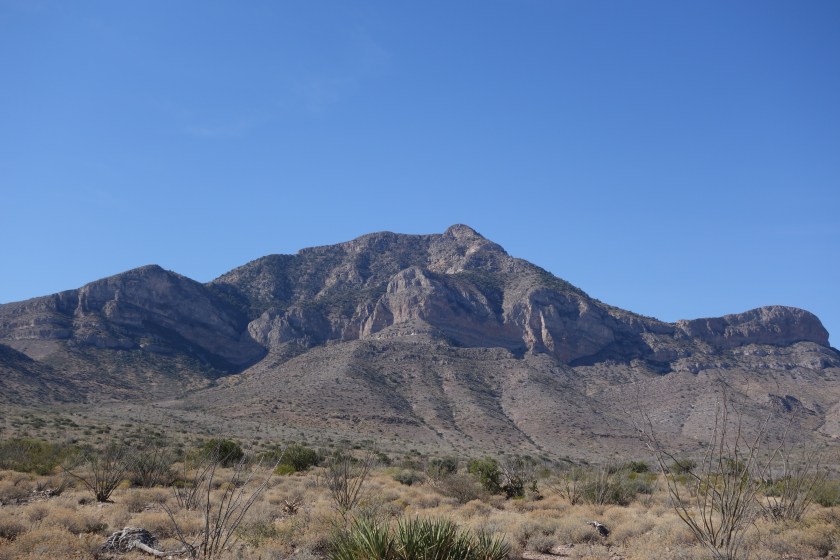
To help the sheep, the BLM has designated much of the area as a Wilderness Study Area (WSA). At face value, that is good. However, the implication for the trail is that no improvements can be made which disturb the surface so metal posts with white signs are not allowed. Instead, the trail markers change to short wooden posts held upright with rock cairns. Incredibly, cattle grazing is an allowed use in a WSA and cattle love to scratch their itches on these posts. As a result, the posts are often toppled and invisible. Thus the trail is more challenging in this section.
Early on I found the highway 81 water cache and stocked up. It felt like it was going to be a hot day. The Big Hatchet Mountains are, not surprisingly bigger than the little Hatchet Mountains. They project a stark image. There are a few canyons that cut through and allegedly Geronimo knew this area and would use the mountains to dodge pursuers.
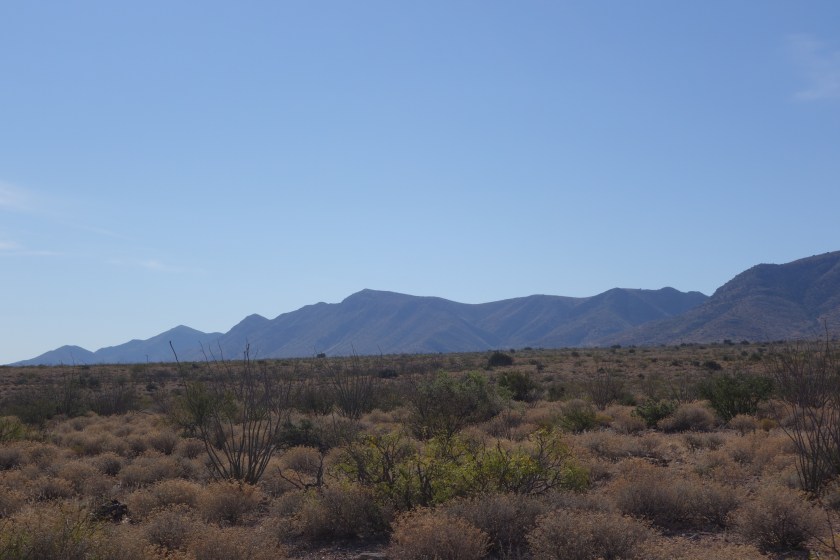
I got tired of trying to follow the trail. I could see the canyon I needed to reach and had had enough of the close calls with the cactus, ocotillo, and other sharp items. I moved east to flatter ground and just navigated towards Sheridan Canyon.
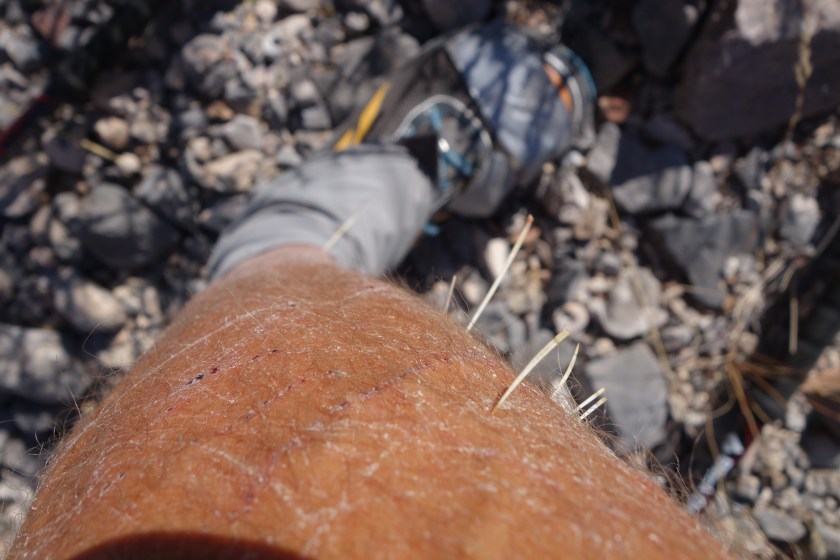
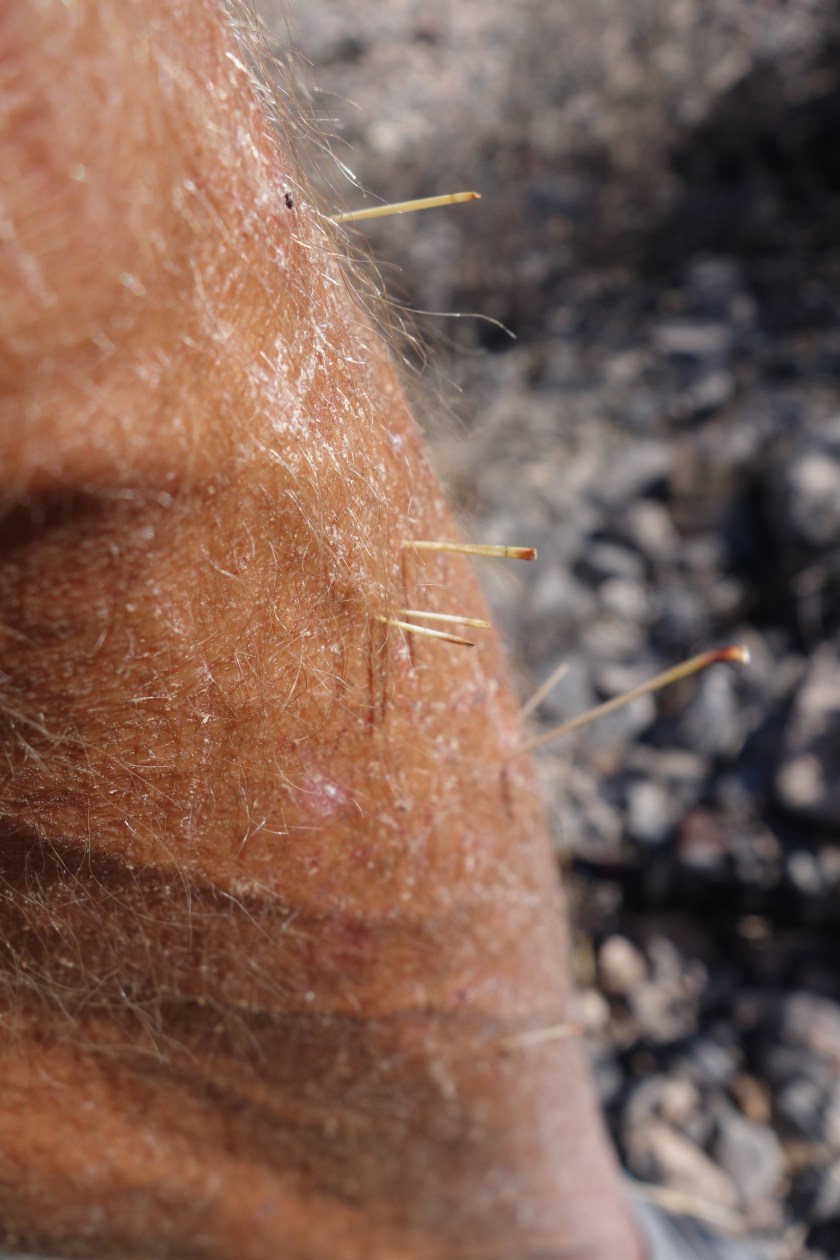
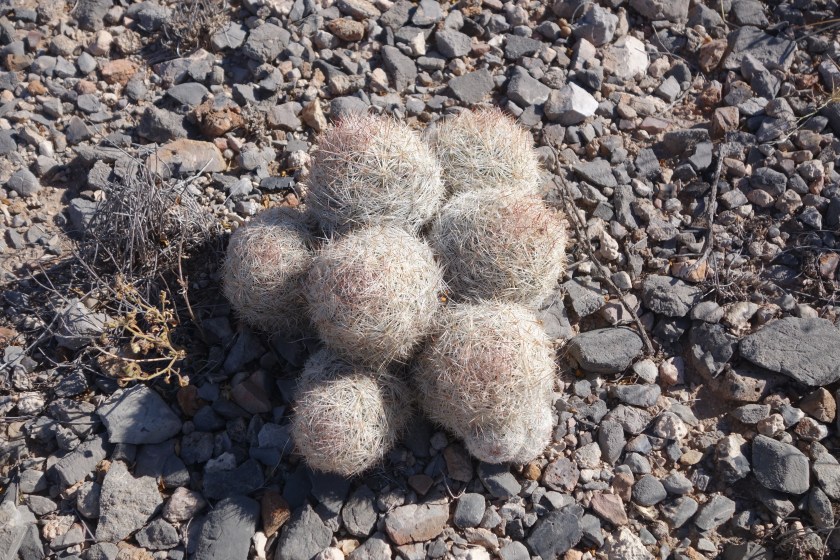
Around 3:30, I reached Sheridan Canyon. this is a gap where the trail cuts through and goes around the last of the mountain range before reaching the border between the USA and Mexico. Also, it is the last water cache. I took some time to hydrate at the cache. The water was a little warm as the brown metal cache was pretty exposed to the sun all day. I didn’t care, it was wet. While reading the register (geez, north bounders write a lot) I heard an ATV approach. I sat perfectly still as it rode by. No idea what the rider was doing, but he didn’t see me and I was fine with that.
I walked up through the canyon in a westerly direction. At its peak it switches south again. The trail drops down into an arroyo. Given the force of the flash floods, any signage gets washed out, so one is always wondering when to climb up out of the arroyo. At this point, the novelty of the CDT is expected but still not appreciated.
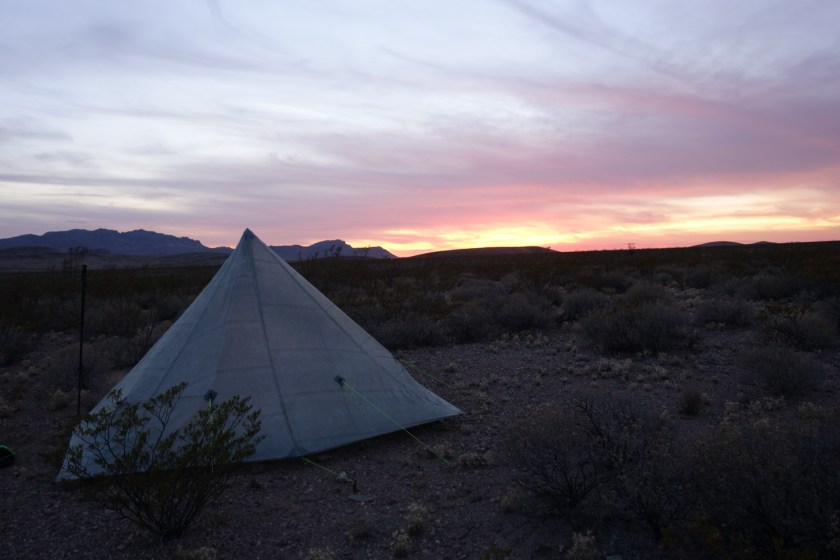
There were a last set of small hills I had selected as a goal. After eventually switching from arroyo walking to gravel road, I made pretty good time. Just as I reached the hills, I found a clear patch and made camp. A stray steer called out to me from the hill, I suppose hoping I was the rest of the herd. Hearing no response, he quieted down quickly.
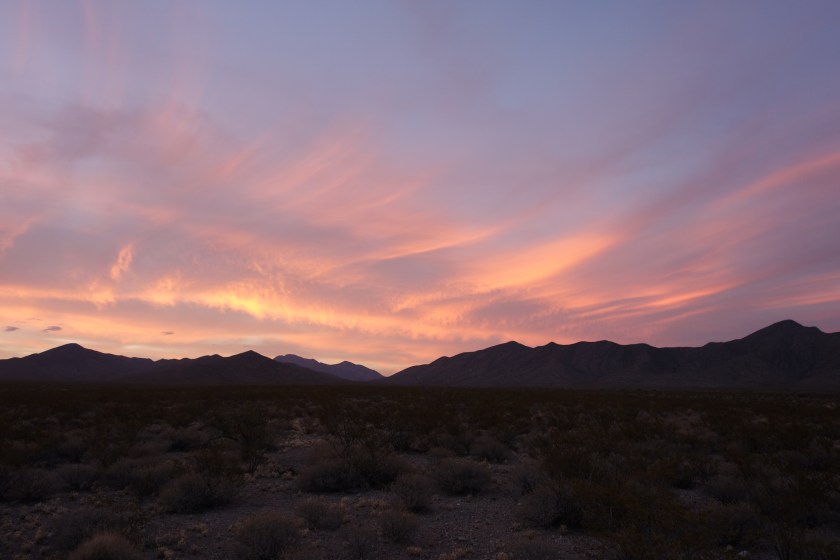
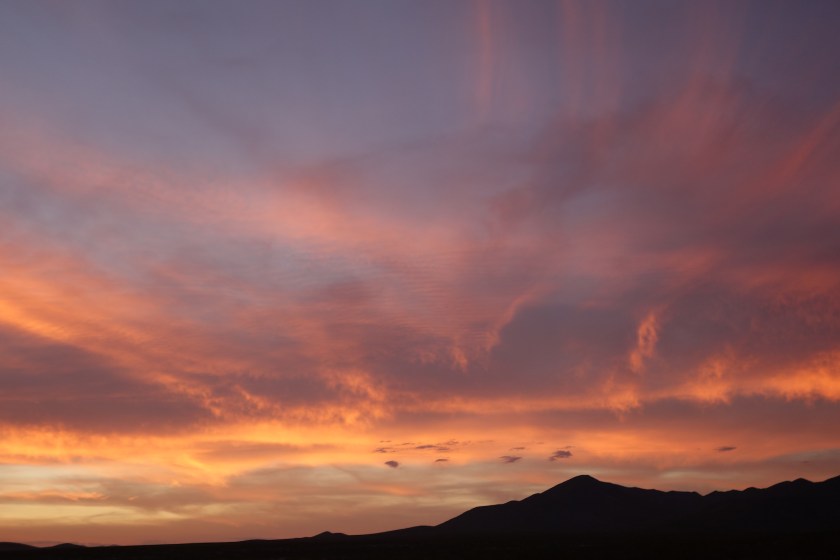
As a good-bye gift, the CDT gave me a nice sunset show. I will miss always being able to watch sunsets. I think a society that forced everybody to stop what they were doing to watch the sunrise and sunset every day might be a pretty good place to live.
 backpacking over the hill